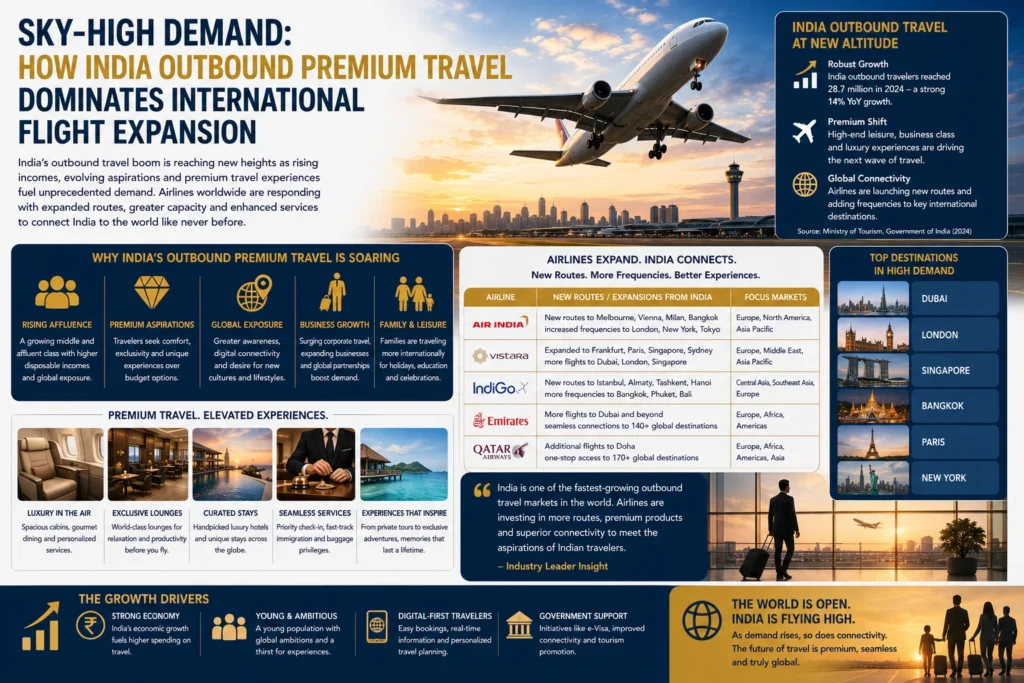
The international aviation sector is experiencing an unprecedented structural transition driven by the continuous expansion of India’s aviation architecture and an evolving consumer base. Official data from the Ministry of Tourism shows that India’s outbound departures surpassed 32.7 million travelers, solidifying the country’s rank as the world’s fifth-largest outbound market and the fastest-growing aviation jurisdiction among the top ten nations globally. This massive migration pattern is no longer focused solely on standard economy seating, as a strong economic foundation and a rapidly growing middle class shift the balance heavily toward long-haul, high-end travel experiences. At the center of this changing market dynamic, Virgin Atlantic has accelerated its operations, naming India as its largest and fastest-growing global development region outside the United States. To capture this surging demand, the carrier has executed a major expansion across its Indian network. This network growth is characterized by significant capacity increases, deep codeshare integrations with domestic carriers, and an upgraded onboard product lineup designed to satisfy the digital and experiential expectations of contemporary long-haul passengers. Enhancing South India’s Global Aviation Grid via BengaluruFor decades, international long-haul networks concentrated their premium capacity primarily around major northern and western Indian urban centers. However, verified flight schedule data demonstrates that South India is experiencing rapid capacity growth, driven by its booming technology ecosystem and a highly affluent, globally mobile workforce. Reflecting this trend, Virgin Atlantic increased its operations between London Heathrow and Bengaluru’s Kempegowda International Airport to 13 weekly flights. This operational upgrade marks a clear path toward establishing full double-daily services on the route. Operated using state-of-the-art Boeing 787-9 Dreamliner aircraft—configured specifically with dedicated Upper Class, Premium, and Economy cabins—the expanded schedule provides immediate flexibility for commercial travelers, IT executives, and premium leisure segments looking for seamless transatlantic transit. This enhanced frequency complements the carrier’s established double-daily services operating directly out of New Delhi and Mumbai. By maintaining an active presence across India’s core aviation markets, the airline has successfully boosted its annual capacity by more than 250% compared to previous operational baselines. The expansion now delivers over 500,000 available seats annually across the UK-India corridor, turning the region into a cornerstone for long-term international growth. Broad-Based Momentum and Evolving DemographicsA key element driving India outbound premium travel is the broad-based nature of its consumer demographics. While traditional premium travel was largely dominated by a narrow set of senior corporate directors, current reservation metrics demonstrate widespread growth across multiple high-value segments, including:Premium Small and Medium Enterprises looking for flexible, well-timed transatlantic routes.Affluent urban families upgrading to premium cabins for long-haul leisure journeys.Multigenerational travelers visiting friends and relatives (VFR) in North America and the UK.High-tier student traffic moving to major global educational centers.To effectively capture travelers beyond primary metro zones, the airline utilizes a major codeshare partnership with IndiGo, India’s largest domestic carrier. This structural alliance seamlessly links international long-haul flights at major gateways to more than 30 domestic destinations, including high-growth Tier-2 cities such as Amritsar, Goa, and Jaipur. This integrated network approach allows passengers to check bags through to final destinations, bypassing traditional booking friction and providing secondary markets with immediate access to premium transatlantic routes. Seamless Integration and the Future of Premium Flight StandardsAs long-haul luxury travel grows increasingly competitive, consumer expectations have expanded to require unified digital and physical wellness environments from check-in to arrival. Travelers moving from India to destinations across the United Kingdom, Europe, and North America now expect uninterrupted digital tools. In response, international fleets are executing a rapid deployment of high-capacity, fleet-wide Starlink Wi-Fi infrastructure, providing reliable, free connectivity directly at 35,000 feet.This digital focus operates alongside an increased investment in physical wellness spaces on the ground. Refurbished airport lounges, such as the flagship London Heathrow Clubhouse, are increasingly introducing specialized wellness amenities, including biometric sensory pods and dedicated productivity suites. These elements cater directly to high-value travelers who utilize travel time to balance active corporate workflows with physical recovery.Navigating Complex Global Airspace Closures and Operational DisruptionsWhile consumer demand continues to hit historic highs, global aviation systems are simultaneously forced to navigate an increasingly complex geopolitical landscape. Ongoing airspace restrictions, route closures, and fluctuating global fuel costs require high levels of corporate resilience and flexible network planning. To maintain schedule integrity and ensure the absolute safety of passengers and flight crews, international carriers continuously coordinate with global civil aviation ministries and monitoring bodies. Where necessary, flight paths are dynamically adjusted to bypass restricted regions, ensuring safe operations while working to minimize arrival delays. This commitment to structural safety and operational resilience ensures that despite complex external environments, international travel pipelines remain open, consistent, and highly secure for the global traveling community.
For more travel news like this, keep reading Global Travel Wire