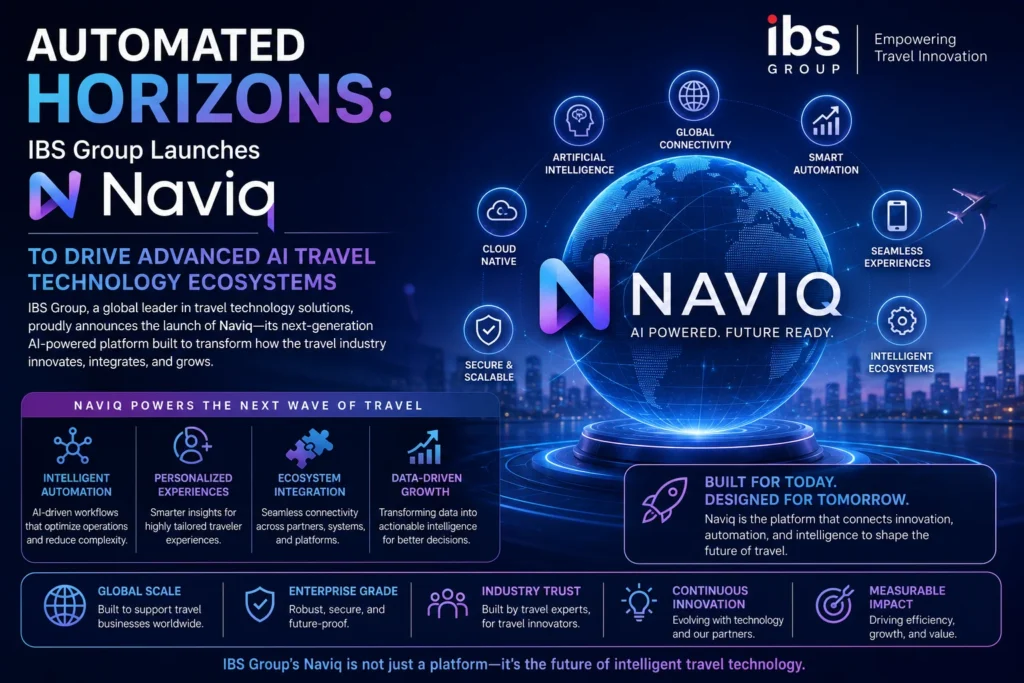
The global landscape of travel software architecture is shifting from basic workflow management into deeply integrated, predictive processing environments. To meet the expanding data requirements of modern tourism providers, international enterprise solution provider IBS Group has officially launched Naviq Technology. Operating as an independent business unit within the broader group structure, the newly formed venture functions as a specialized, AI-first vertical transformation entity purpose-built to service global travel networks, hospitality conglomerates, and major aviation systems.
The creation of a standalone enterprise mirrors a wider structural shift within the industrial tourism sector. As international passenger traffic expands, legacy cloud platforms often encounter limitations when managing complex, real-time datasets like dynamic crew scheduling, fluid hotel room inventories, or volatile multi-channel fare pricing patterns. By creating a dedicated entity anchored in advanced machine learning models, the parent group aims to shorten time-to-value metrics for travel providers looking to move beyond simple digital experimentation into large-scale, automated business transformations.
Integrating Decades of Industry Domain Knowledge with Applied AI
The operational foundation of the new company pairs the deep travel domain experience of affiliate company IBS Software with modern applied intelligence toolsets. Rather than building generic corporate software models that require lengthy modifications to fit the aviation or cruise sectors, the firm designs targeted solutions configured natively for travel workflows. This vertical focus helps airlines, airports, vacation providers, and hospitality brands streamline operational backbones with minimal integration delays.
At the core of the business roadmap is the deployment of smart systems that turn disconnected, fragmented passenger data repositories into highly synchronized operational launch pads. For example, contemporary airline networks must continuously monitor hundreds of overlapping aircraft parameters, terminal variables, and unpredictable weather updates. Transitioning from reactive problem-solving to proactive, data-driven optimization allows carriers to minimize tarmac delays, improve fuel management metrics, and deliver a more stable transit experience for everyday flyers.
Modernizing Touchpoints for Airports, Cruise Lines, and Hospitality
Beyond optimizing behind-the-scenes flight logistics, the AI-first operational architecture targets large-scale transformations across several passenger-facing environments. Modern hospitality groups and cruise lines require deeply personalized, touchless systems capable of managing guest preferences across multiple vacation segments without manual intervention from terminal or onboard staff.
By utilizing unified data fabrics, the platform enables travel providers to seamlessly connect various touchpoints, including:
Automated check-in terminals and biometric security screening validation channels.
Live predictive luggage handling status tracking across transcontinental hubs.
Intelligent in-cabin and onboard hospitality personalization modules.
Real-time automated disruption recovery systems for dynamic re-routing or compensation management.
This approach ensures that every individual journey becomes a smoother, highly communicative experience. For existing clients within the broader group ecosystem, the newly launched branch will function as a preferred transformation and implementation partner, accelerating the modernization of customer-facing portals and core commercial reservation engines.
Global Infrastructure and Tech Talent Recruitment Blueprints
The technology company commences active commercial operations with an established footprint of sixteen development and consulting centers positioned globally. This widespread local presence allows engineering teams to coordinate side by side with regional transportation ministries, corporate headquarters, and municipal transit hubs to tackle localized market demands in real time.
To support its ambitious expansion trajectory, the group has outlined a five-year investment plan to systematically scale its technological capabilities and professional workforce. Human resource projections indicate the company intends to grow its headcount to more than 5,000 highly specialized professionals worldwide within the next five years. The recruitment campaign is specifically structured to attract a new generation of technological innovators, including dedicated data scientists, artificial intelligence researchers, and veteran travel domain specialists eager to develop next-generation solutions.
Ultimately, the deployment of specialized, vertical AI environments signals a turning point for the international tourism economy. As organizations move past early software models, the commercial requirement for flexible, scalable platforms becomes paramount to defending corporate margins against rising labor costs and changing global market demands. Through strategic, data-driven system consolidation, the technology sector continues to clear the path for highly resilient, efficient, and interconnected travel networks worldwide.
For more travel news like this, keep reading Global Travel Wire