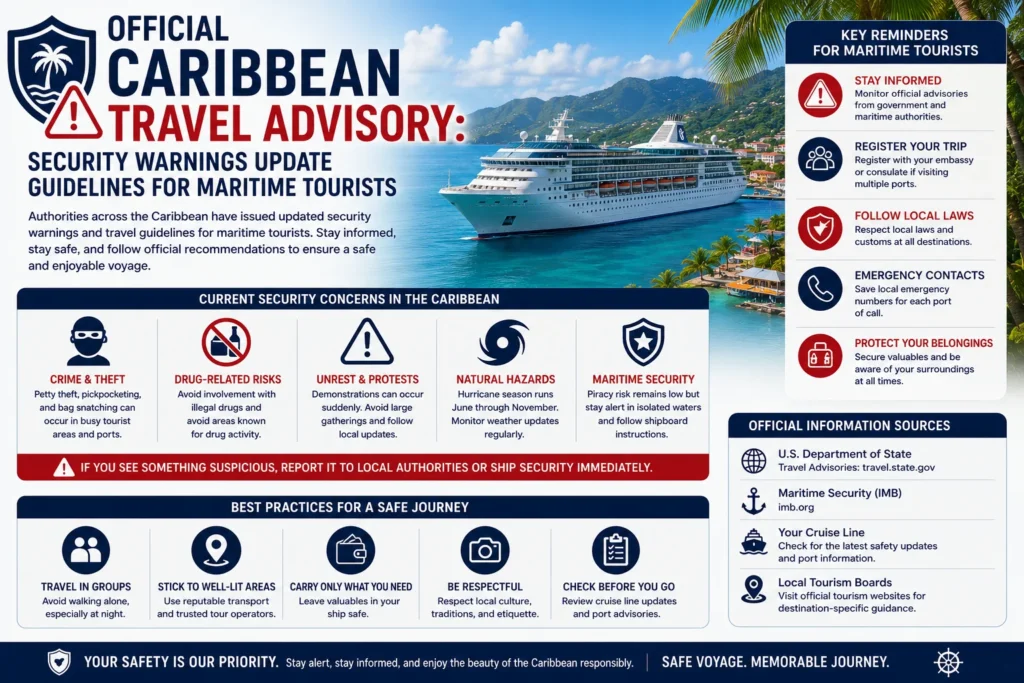
International safety agencies have expanded their official security alerts across several premier destinations, with the Turks and Caicos Islands officially added to the list of territories requiring heightened visitor awareness. The regulatory updates join existing warnings for Jamaica, the Bahamas, and the Dominican Republic. Consular bureaus from the United States, Canada, the United Kingdom, and Australia are advising international travelers to implement advanced situational vigilance due to a documented rise in seasonal petty crime, localized scams, and security incidents.
While the region remains a global anchor for luxury resort developments and high-volume cruise itineraries, recent updates from the United States Department of State Bureau of Consular Affairs and Global Affairs Canada emphasize preparedness. Tourism ministries note that these advisories are designed to educate and equip visitors rather than halt international travel, focusing specifically on risks present in crowded nightlife zones, unregulated transport settings, and isolated coastal areas.
Security Profile Changes in the Turks and Caicos Islands
The Turks and Caicos Islands, recognized globally for high-end luxury hideaways, are now facing heightened diplomatic monitoring. The United States federal government has applied a Level 2: Exercise Increased Caution advisory to the British Overseas Territory. Simultaneously, Canadian public safety frameworks recommend that their citizens maintain a high degree of caution throughout their stay.
The primary risk dynamic across the archipelago involves crimes of opportunity. Public statistics show the territory welcomes roughly two million annual visitors, which includes 640,000 stayover hotel guests and 1.3 million cruise passengers arriving at regional deep-water docks. The high concentration of high-value tourism assets can draw opportunistic theft, with the primary urbanized and tourist-dense island of Providenciales experiencing the highest frequency of these occurrences.
Sovereign security updates highlight specific vulnerabilities for incoming holidaymakers:
Opportunistic Scams: Reports indicate a rise in aggressive local vendors who present “free items” or complimentary services, only to demand immediate, inflated financial compensation once the traveler accepts.
Property Violations: Authorities have recorded instances of residential villa break-ins and sophisticated overcharging schemes operating within unregulated private sectors.
Strict Local Weapon Statutes: The territory enforces strict laws against firearms and ammunition. International passengers who accidentally leave spent cartridges, loose casing, or hunting gear in their luggage face immediate arrest, severe detention periods, and mandatory minimum prison sentences, as international licenses carry no legal weight.
Personal Integrity Incidents: Consular records include reports of assault within specific entertainment venues, prompting directives for travelers to avoid isolated walking routes after dark.
The Bahamas: Monitoring Jet Ski Sectors and Urban Security Boundaries
The Bahamas remains an incredibly popular destination, capturing approximately 9.6 million arrivals annually. Despite this massive traffic, the country maintains its Level 2 distinction from American consular agencies due to distinct regional crime patterns.
Safety concerns across the Bahamian islands are split between specific urban neighborhoods and the recreational water sports sector. In metropolitan centers like Nassau and Freeport, municipal security reports indicate recurring incidents of residential burglary and armed robbery, particularly outside designated resort perimeters.
Of significant interest to international regulators is the independent watercraft rental industry. Diplomatic missions have issued formal alerts due to poor regulatory oversight among independent operators on New Providence and Paradise islands. These notices advise travelers to avoid unlicensed jet ski providers entirely due to frequent reports of mechanical failures, lack of mandatory insurance, and serious personal safety violations. Utilizing exclusively authorized, hotel-sanctioned tour agencies and confirming all pricing agreements in writing before boarding watercraft remains the standard safety directive.
The Dominican Republic: Combating Digital Entry Fraud and Urban Theft
Welcoming over ten million travelers per year, the Dominican Republic represents one of the largest hospitality operations in the Caribbean. While the national ministry of tourism has successfully deployed specialized tourist police squads to fortify primary resort compounds like Punta Cana, security vulnerabilities persist outside these heavily patrolled corporate zones.
Active threats identified by global safety boards include quick-strike street robberies, frequently conducted by individuals operating light motorcycles to target mobile electronics, high-end watches, and visible jewelry in downtown areas. Furthermore, cyber-security units have detected a significant rise in digital fraud. Illegitimate websites designed to perfectly mirror official government portals have emerged online. These fraudulent platforms attempt to deceive international arrivals into paying substantial administrative fees for the mandatory electronic entry ticket, which is provided completely free of charge by the official Dominican immigration ministry.
Trinidad and Tobago: Advanced Caution for Cultural and Business Excursions
In contrast to the mass-market resort frameworks seen in the Bahamas or the Dominican Republic, Trinidad and Tobago records a more specialized volume of roughly 400,000 annual arrivals, largely tied to corporate energy sectors and historic cultural festivals. However, the regional security assessment issued by international ministries remains stringent.
Sovereign travel alerts maintain strict warnings regarding violent crime patterns, including armed carjackings and commercial robberies. While these serious events are historically concentrated away from primary cultural landmarks and secure business infrastructure, international citizens are advised to avoid unfamiliar residential zones entirely and eliminate all non-essential nighttime travel through isolated rural corridors.
Comparative Regional Security Architecture
The current administrative classifications illustrate the varied landscape of regional travel warnings:
| Destination Territory | Estimated Annual Arrivals | Sovereign Advisory Status | Core Security Vulnerabilities |
| Turks and Caicos | 2,000,000 | Level 2: Exercise Increased Caution | Localized property theft, severe ammunition laws, vendor scams |
| The Bahamas | 9,600,000 | Level 2: Exercise Increased Caution | Urban street crime, unregulated independent water sports operators |
| Dominican Republic | 10,000,000+ | Level 2: Exercise Increased Caution | Quick-strike motorcycle robberies, fraudulent digital entry portals |
| Trinidad and Tobago | 400,000 | High Degree of Caution Mandate | Organized violent crime networks, localized vehicular carjackings |
Essential Risk Mitigation Protocols for International Travelers
To effectively navigate these updated security metrics, global travelers should integrate specific operational safeguards into their travel planning. All digital documentation, including health declarations and entry permits, must be processed exclusively through authenticated government domains ending in the official .gov suffix to prevent financial skimming.
Prior to packing, individuals must execute a rigorous, multi-compartment audit of all luggage pieces previously utilized for domestic hunting, target practice, or sporting activities to ensure no stray ammunition components remain inside the linings. Finally, minimizing the public display of high-value mobile devices and corporate assets in dense transit hubs ensures travelers do not become targets for opportunistic theft, allowing for a secure and highly successful Caribbean itinerary.
For more travel news like this, keep reading Global Travel Wire