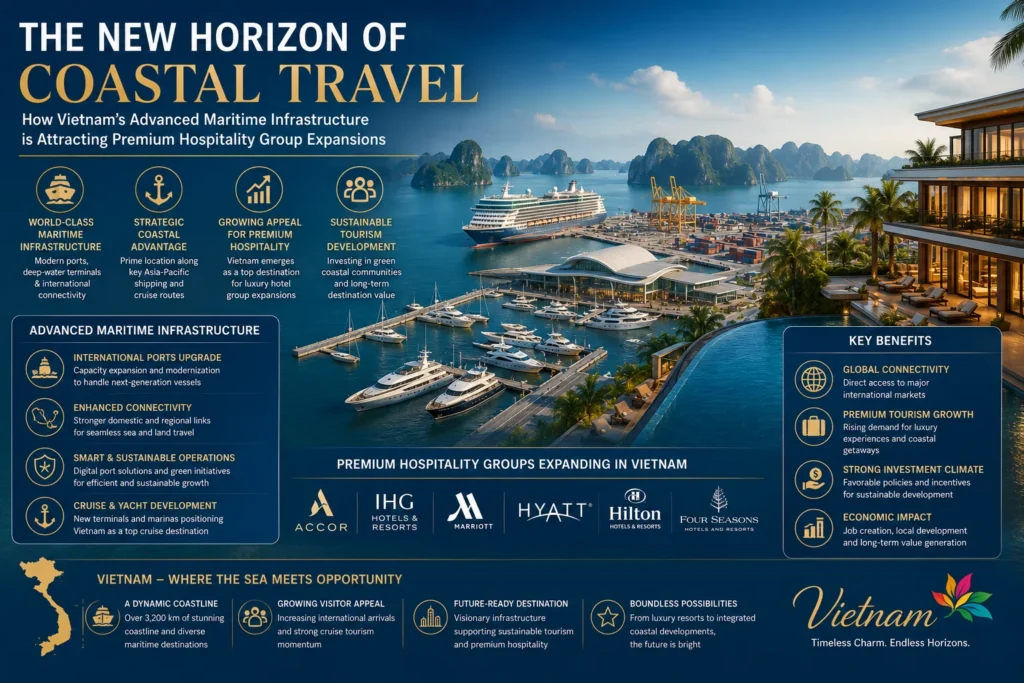
The international leisure travel market in Southeast Asia is experiencing a structural evolution, driven by comprehensive state-led infrastructure upgrades and a strategic pivot toward secondary destination development. Official operational releases from the Vietnam National Administration of Tourism (VNAT) highlight a coordinated national effort to position the northeastern coastal corridors as premier hubs for eco-sensitive luxury travel. Central to this regional growth strategy is the development of the Van Don district in Quang Ninh province, an area that combines pristine maritime landscapes with next-generation transit infrastructure.
In an official public announcement regarding regional hospitality expansion, prominent Southeast Asian hospitality firm Centara Hotels & Resorts revealed the first comprehensive specifications of its upcoming flagship property: Centara Hotel & Residences Van Don. Scheduled to open its doors to international travelers in the final quarter of 2026, the upcoming premium address represents the group’s second major property footprint within the borders of Vietnam. The project signals a broader macroeconomic trend where institutional hospitality capital is moving directly into newly accessible, high-growth coastal zones.
The Strategic Synergy of Transit Infrastructure and Natural Capital
The commercial viability of modern tourism hubs is increasingly dependent on seamless integration with global transportation networks. According to regional development blueprints issued by the Ministry of Transport, the establishment of the Ao Tien High-Class Port and Tourism Urban Area represents a critical milestone in upgrading maritime passenger transit. By positioning the new property directly within this high-end urban enclave, planners are directly linking premium accommodations with sophisticated marine transport systems.
The geographic positioning offers guests panoramic views across the sheltered waters and unique limestone karsts of Bai Tu Long Bay. Long-term environmental management plans published by provincial authorities highlight a strict commitment to preserving the ecological integrity of this marine sanctuary, making it a highly attractive alternative for travelers seeking low-impact, sustainable coastal exploration.
Logistical data confirms that the resort sits exactly fifteen minutes away from Van Don International Airport, the country’s first privately developed international aviation gateway. This close physical proximity allows high-yield international leisure travelers and corporate delegations to bypass long secondary ground transfers, creating a highly efficient transit corridor that connects global destination markets directly to the tranquil coastline of northeastern Vietnam.
Architectural Capacity and the Evolution of Extended-Stay Accommodations
To address the diversifying needs of modern cross-continental travelers, the resort introduces a highly flexible structural configuration. Official project blueprints detail a total capacity of 481 meticulously designed rooms and suites distributed systematically across 12 distinct accommodation categories. This diverse configuration is specifically engineered to accommodate a wide spectrum of visitor demographics, ranging from independent couples and multi-generational family groups to large corporate retreat assemblies.
Recognizing a significant global shift toward flexible travel and extended-stay remote working arrangements, every individual unit within the property comes equipped with integrated kitchenette facilities. This functional architectural layout provides inbound travelers with greater operational autonomy during extended visits, effectively blending the premium services of a high-end luxury resort with the utilitarian conveniences of a private residential apartment.
Comprehensive Profile of the New Coastal Gateway Infrastructure
The operational specifications of the upcoming northern coastal development illustrate a highly balanced allocation of hospitality and corporate assets:
Location Matrix: Situated within the Ao Tien High-Class Port and Tourism Urban Area, directly fronting the protected waters of Bai Tu Long Bay.
Transit Proximity: Structured exactly fifteen minutes from Van Don International Airport, optimizing international flight connections.
Inventory Scale: Features 481 rooms and suites optimized across 12 independent categories, each integrating built-in kitchenette spaces.
Wellness & Family Assets: Incorporates the signature SPA Cenvaree wellness complex, specialized fitness hubs, a dedicated Kids’ Club, and dual indoor-outdoor pool networks.
MICE Capabilities: Built with two large-scale grand ballrooms and a series of multi-functional meeting rooms tailored for corporate events.
Culinary Blueprint: Hosts multiple distinct dining venues offering authenticated Vietnamese, classic Italian, traditional Chinese, and global flavors.
Driving Regional Economic Diversification Through Corporate Travel and Wellness
Beyond providing premium lodging capacity, the upcoming complex is structured to operate as a self-contained lifestyle and corporate exhibition ecosystem. According to regional tourism master plans, the expansion of high-capacity Meetings, Incentives, Conferences, and Exhibitions (MICE) facilities outside of major metropolitan centers like Hanoi and Ho Chi Minh City is a vital component of national economic diversification. By incorporating two expansive grand ballrooms and a suite of technological meeting spaces, the resort provides the necessary infrastructure to host large-scale international trade summits and corporate retreats.
Simultaneously, the integration of premium wellness infrastructure—headlined by the group’s signature therapeutic concept, SPA Cenvaree—supports the Ministry of Health’s broader goals to establish the region as a primary center for wellness and restorative travel. These dedicated wellness pavilions work in tandem with extensive family-focused recreational assets, including fully supervised activity zones and curated eco-tours across the bay, to ensure that the economic benefits of traveler expenditure are distributed across local maritime guides, retail artisans, and conservation workers.
Through this balanced deployment of advanced transport integration, versatile accommodation design, and sustainable destination management, the new development establishes a resilient operational standard for the future of coastal hospitality. As the project advances toward its formal late-2026 operational launch, it effectively highlights how well-planned infrastructure investments can successfully transform a historic maritime gateway into a world-class center for high-yield, responsible international tourism.
For more travel news like this, keep reading Global Travel Wire