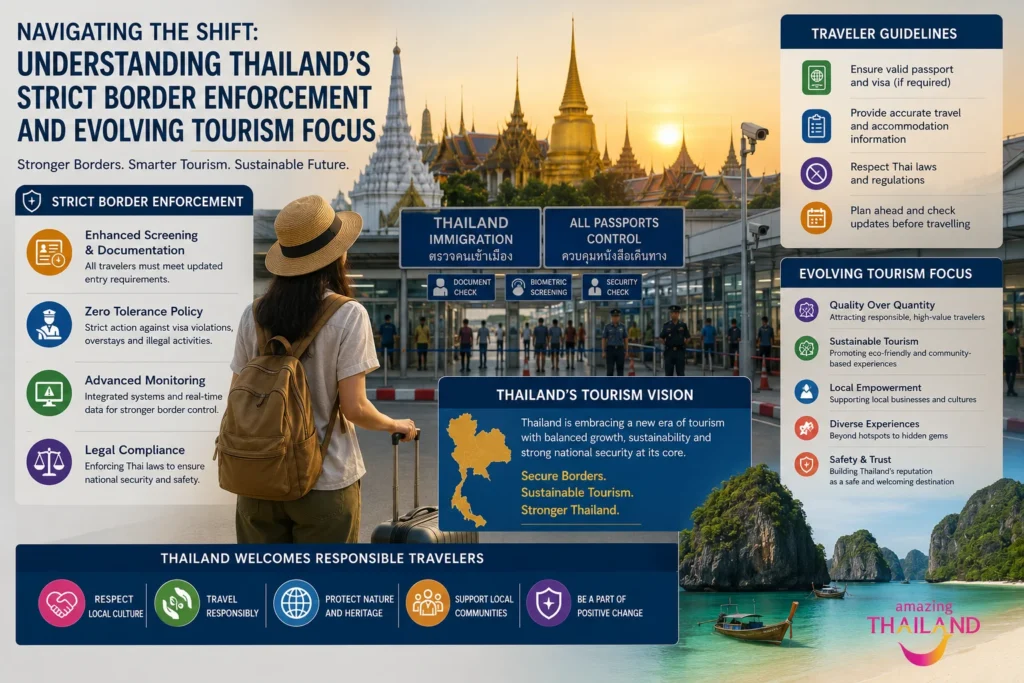
The international travel landscape is experiencing an important period of regulatory adaptation as major Southeast Asian destinations recalibrate their domestic public health frameworks and transit protocols. In an official security notification issued from Bangkok, global consulates and state departments have updated safety guidelines regarding international border crossings into the Kingdom of Thailand. The high-priority administrative update emphasizes that the legal classification of specific controlled herbs under national customs enforcement acts has transitioned from simple asset confiscation to rigorous prosecution, setting a maximum penalty of a ten-year prison sentence for unauthorized import or export activities.
According to institutional reports from the Ministry of Public Health and the Royal Thai Government’s Office of the Narcotics Control Board, the updated enforcement framework is designed to target transnational smuggling networks and unauthorized cross-border cargo transit. For the international travel sector, these operational changes represent a significant shift from the highly liberalized open-market approach seen in previous years, requiring heightened awareness from incoming leisure and corporate travelers.
The Legal and Logistical Architecture of Border Control
The foundational mechanism behind the intensified airport inspections rests upon Section 244 of the Customs Act B.E. 2560 (2017). Under the latest directives implemented nationwide, the unauthorized introduction, removal, or attempted transit of cannabis plants, flowers, or related high-THC derivatives through international ports of entry is treated as a major customs violation. Royal Thai Customs authorities have deployed specialized screening protocols at primary aviation hubs, including Suvarnabhumi Airport and Don Mueang International Airport, to systematically inspect incoming and outbound baggage matrices.
Official statutory guidelines dictate that individuals found in violation of these strict cross-border regulations face serious legal consequences:
Imprisonment Vectors: A maximum judicial prison sentence of up to ten years depending on the volume and intent of the unauthorized transit.
Financial Penalties: Statutory administrative fines reaching up to 500,000 Thai Baht (approximately $15,000 USD), or four times the duty-inclusive value of the intercepted cargo.
Joint Judgments: The legal authority for courts to impose both the full institutional detention term and the maximum financial penalty simultaneously.
To ensure seamless alignment with these updated domestic frameworks, consular advisory divisions recommend that international visitors thoroughly audit all personal luggage items before checking in for international flights. Furthermore, transport authorities strongly warn travelers against accepting paid courier assignments, agreeing to transport third-party parcels, or holding baggage for unknown individuals, as ignorance of concealed contents provides no valid defense under national customs laws.
Rebalancing the Domestic Wellness and Retail Framework
The recent border enforcement updates align directly with Thailand’s broader domestic policy transition back toward a strictly regulated medical tourism framework. Following the initial decriminalization period of 2022, the Ministry of Public Health enacted comprehensive updates to its controlled herb notifications, establishing clear legal boundaries to limit recreational usage while preserving access for authentic healthcare, pain management, and research purposes.
Under contemporary domestic trade guidelines, retail dispensaries are legally obligated to verify that consumers possess a valid medical prescription issued by a licensed local practitioner before dispensing products. These strict commercial regulations are intended to shift the country’s macro-tourism brand away from casual recreational nightlife associations, positioning the Kingdom instead as a high-value cultural, wellness, and medical tourism center.
Concurrently, municipal bodies have clarified the operational status of secondary lifestyle commodities, such as regional alcohol retail regulations. The Alcoholic Beverage Control Committee confirmed that standard commercial sales windows remain fixed between 11:00 AM and 12:00 AM. However, strict spatial prohibitions remain fully active across all public transport networks, petrol stations, and public parks, with immediate administrative fines enforced for localized violations. The legal consumption and purchase age remains strictly set at 20 years across all licensed venues, bars, and duty-free areas.
Comprehensive Profile of Regional Risk Assessments and Classifications
The updated global travel advisories assign a standard baseline precaution level for the majority of the country, while designating specific sub-regions for heightened situational awareness:
Primary Urban & Coastal Zones: Designated under baseline Level 1 guidelines, indicating that standard personal safety precautions are sufficient for typical tourist corridors.
Thai-Cambodian Land Borders: Assigned specific security alerts due to localized cross-border infrastructure variations and historic territorial monitoring protocols.
Southern Border Provinces: Incorporating Yala, Pattani, and Narathiwat, where regional security boards advise travelers to exercise increased caution due to long-standing localized civil unrest.
Metropolitan Transport Hubs: Subject to intensified multi-agency customs screening, requiring travelers to register via the official Thailand Digital Arrival Card (TDAC) platform prior to arrival.
Through the systematic implementation of these updated border control mechanisms, the Kingdom successfully shapes a highly organized, secure environment for its growing volume of international cultural travelers. By prioritizing clear structural definitions at international ports of entry, the revised Thailand travel advisory ensures that global visitors can navigate the country’s rich historical landmarks and world-class medical facilities with complete regulatory clarity.
For more travel news like this, keep reading Global Travel Wire