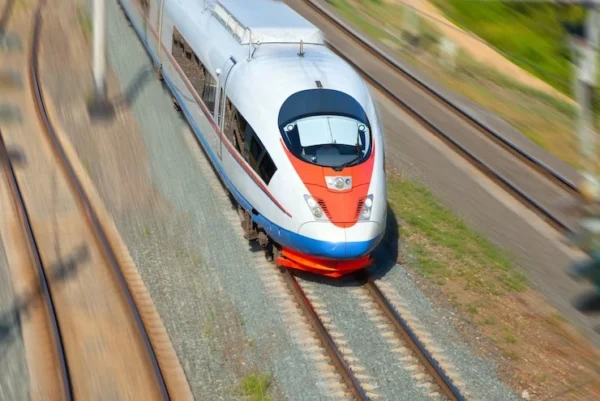
India is moving closer to a historic railway transformation as its first high-speed train service targets an August 2027 launch.
The opening phase will form part of the 508-kilometre Mumbai–Ahmedabad High Speed Rail corridor, India’s first dedicated bullet train project.
The latest official update identifies the Surat–Vapi stretch as the first section expected to begin operations. Earlier project announcements had highlighted Surat–Bilimora for the initial 2027 launch.
This phased approach will allow railway authorities to complete testing, staff training and safety assessments before expanding passenger services across the entire corridor.
Trains will operate at speeds of up to 320 kilometres per hour. The infrastructure has a design speed of 350 kilometres per hour.
For passengers, the project promises faster journeys, modern stations and an alternative to road, conventional rail and short domestic flights.
Surat–Vapi Section Leads the Opening Phase
The first operational stretch will connect Surat with Vapi in Gujarat during August 2027, according to the latest government timeline.
Authorities have not officially confirmed August 15 as the opening date. Therefore, passengers should treat that date as provisional unless the government issues a specific launch announcement.
Surat, Bilimora and Vapi sit within one of Gujarat’s busiest industrial and commercial regions. High-speed services could improve movement between these cities while supporting business and tourism activity.
The initial section will also help operators test real passenger services before extending operations towards Ahmedabad and Maharashtra.
Earlier plans focused on opening the shorter Surat–Bilimora section. The expanded Surat–Vapi phase indicates that more of the Gujarat corridor may become available during the first rollout.
Mumbai–Ahmedabad Corridor Links 12 Stations
The complete corridor will connect Mumbai and Ahmedabad through Maharashtra, Gujarat and Dadra and Nagar Haveli.
Twelve stations are planned along the route:
Mumbai, Thane, Virar, Boisar, Vapi, Bilimora, Surat, Bharuch, Vadodara, Anand, Ahmedabad and Sabarmati.
The system will use dedicated high-speed tracks, advanced train controls and specialised signalling technology.
Engineers are also constructing bridges, viaducts, mountain tunnels and a major underground section near Mumbai.
Once complete, the railway is expected to reduce travel between Mumbai and Ahmedabad to around two hours.
That journey currently requires much longer by conventional rail or road. Air travel is faster in the air but includes airport transfers, security procedures and waiting periods.
Faster Rail Could Transform Passenger Choices
High-speed rail could change how travellers plan journeys across western India.
Business passengers may complete same-day meetings between major commercial centres without relying on flights. Leisure travellers could visit several cities during shorter holidays.
Rail services also connect city centres more directly than many airports. This advantage could make the bullet train attractive for journeys of several hundred kilometres.
Passengers may gain modern seating, improved accessibility and more predictable travel times. Frequent services could also reduce pressure on highways and selected domestic air routes.
However, fares will play an important role in passenger demand. The bullet train must balance premium speed with prices that attract both business and leisure travellers.
Tourism Destinations Could Gain New Visitors
The corridor passes through cities with strong cultural, culinary and commercial tourism appeal.
Ahmedabad attracts visitors through heritage architecture, museums and its historic old city. Vadodara offers palaces, cultural attractions and access to major sites across central Gujarat.
Surat serves as an important centre for textiles, diamonds, food tourism and business travel. Mumbai remains India’s leading aviation gateway and one of its largest leisure destinations.
Faster connections could encourage travellers to combine these cities within one itinerary.
International tourists arriving in Mumbai may eventually use high-speed rail to explore Gujarat without taking another flight.
Hotels, restaurants, tour operators and transport providers near stations could benefit from increased passenger movement.
Project Supports Jobs and Regional Development
The bullet train programme is creating demand across construction, engineering, technology and railway operations.
Station development may also encourage new hotels, offices, retail areas and transport connections in surrounding districts.
Improved mobility can support industries by making it easier for employees, suppliers and customers to travel between economic centres.
The National High Speed Rail Corporation is implementing the project with technical and financial assistance from Japan.
Training programmes are preparing Indian drivers, maintenance workers and operational teams to manage advanced high-speed railway systems safely.
India Plans Wider High-Speed Rail Network
The Mumbai–Ahmedabad route may become the foundation for a much larger national network.
Seven additional high-speed corridors have been announced for further development and assessment.
Hyderabad could emerge as an important southern hub through proposed links towards Bengaluru, Chennai and Pune.
These corridors could connect major technology, manufacturing, education and tourism centres across southern and western India.
However, they remain at earlier planning stages. Detailed studies, financing, land requirements and government approvals will shape their progress.
Safety and Testing Will Guide the Rollout
Before carrying passengers, the new railway must complete extensive track, signalling, train and emergency-response testing.
Teams must also assess stations, control centres and maintenance systems under different operating conditions.
The phased launch gives authorities time to study performance before extending the network.
India’s bullet train project represents more than a faster railway. It introduces a new transport system that could reshape tourism, business travel and regional mobility.
If the August 2027 opening remains on schedule, the first Surat–Vapi service will mark the beginning of a new high-speed era for Indian passengers.
For more travel news like this, keep reading Global Travel Wire