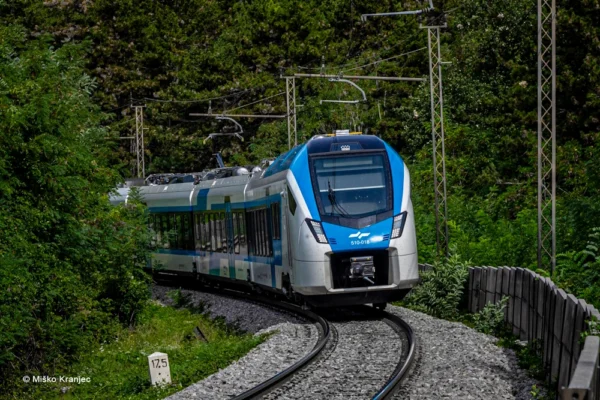
Rail passengers travelling across Europe need to prepare for passport inspections and possible journey delays as several Schengen countries maintain temporary controls at internal borders during 2026.
The Schengen system normally allows travellers to cross participating countries without routine internal border checks. However, European Union rules permit member states to temporarily restore controls when serious threats affect public policy or internal security.
The European Commission stresses that such action should remain exceptional, proportionate and limited to what is necessary. Nevertheless, temporary controls are currently operating across several important European borders, making document readiness increasingly important for tourists planning multi-country rail holidays.
Major European Borders Face Temporary Controls
Current measures affect several countries used heavily by international rail travellers.
Germany has notified controls at its land borders through September 15, 2026, while France has controls covering its internal borders with neighbouring Schengen countries through October 31.
The Netherlands has measures involving its borders with Belgium and Germany through September 30. Poland is maintaining controls along borders with Germany and Lithuania through October 1, while Italy has controls on its Slovenian border through December 18.
Sweden is also maintaining internal border controls into November.
These measures do not mean every train passenger will automatically be stopped. However, authorities can conduct checks on affected routes, at stations or around border areas.
Rail Passengers Should Carry Passports
International rail travel within Schengen can often feel similar to a domestic journey. Passengers may board a train in one country and arrive in another without passing through a conventional immigration checkpoint.
Temporary border controls change that expectation.
Travellers should carry a valid passport or recognised identity document throughout cross-border journeys. Non-EU visitors should also retain any visas or other immigration documents required for their stay.
Checks can potentially add time to international services, particularly when authorities inspect passengers while trains are stopped or after crossing a border.
Tourists using short connections should therefore allow additional flexibility in their itineraries.
Multi-Country Europe Holidays Need More Planning
The changes are especially relevant for visitors travelling through several European countries on one holiday.
Rail itineraries connecting destinations such as Paris, Amsterdam, Berlin, Vienna, Prague and Milan remain possible. However, passengers crossing borders where temporary controls apply should avoid assuming every international journey will operate without additional formalities.
Backpackers, families and travellers using rail passes may need to reconsider tight connections.
The same applies to business travellers connecting international trains with flights, meetings or conferences.
Europe’s railway system remains highly integrated, but temporary border checks introduce another variable into journey planning.
Schengen Free Movement Remains in Place
The return of temporary checks does not signal the end of the Schengen Area.
Under the Schengen Borders Code, temporary internal controls are considered a measure of last resort. Governments must justify their necessity and proportionality, while their duration and geographic scope should be restricted to what is required to address the identified threat.
This distinction matters for tourism.
Travellers can continue crossing Schengen countries, and international railway services continue operating. The main change is that identity checks may temporarily return on selected borders.
EES Adds Another Digital Border Change
Europe’s temporary internal controls are developing alongside a much larger transformation of its external borders.
The Entry/Exit System, or EES, is now fully operational after completing its phased introduction on April 10, 2026.
The system digitally records qualifying non-EU nationals entering and leaving 29 European countries for short stays. It uses travel-document information and biometric identifiers, replacing routine manual passport stamping for affected travellers.
EES primarily concerns external borders rather than normal journeys between Schengen countries.
Therefore, travellers should not confuse EES registration with temporary internal border controls. They are separate processes serving different purposes.
ETIAS Is Still Ahead for Travellers
Another major European travel change is approaching.
ETIAS, the European Travel Information and Authorisation System, is expected to begin operations in the final quarter of 2026 for eligible visa-exempt non-EU travellers.
As of August 2026, ETIAS is not yet operational and applications are not being accepted. The European Union has said travellers will be informed before the system starts.
Once introduced, qualifying travellers will need an approved ETIAS authorisation before travelling to participating European countries.
Tourism Businesses Must Keep Travellers Informed
Temporary border controls also create operational considerations for rail companies, tour operators and businesses organising multi-country holidays.
Clear communication will become important when customers travel through controlled borders.
Tour companies may need to allow more time for group movements, while hotels and attractions could see arrival times affected when passengers encounter checks.
Rail remains one of Europe’s most important tourism transport modes, particularly for travellers seeking convenient and lower-carbon multi-destination journeys.
Europe Rail Travel Remains Open but Requires Preparation
Europe remains one of the world’s easiest regions for international railway exploration, but travellers in 2026 need to be more prepared.
Temporary Schengen border controls mean passengers should carry valid documents, monitor official travel information and avoid excessively tight connections on affected international routes.
At the same time, EES is reshaping external border processing, while ETIAS will introduce another digital requirement later.
For tourists, the message is straightforward: Europe’s trains remain connected and international travel continues, but passport-ready, flexible journey planning is becoming increasingly important as border procedures evolve.
For more travel news like this, keep reading Global Travel Wire