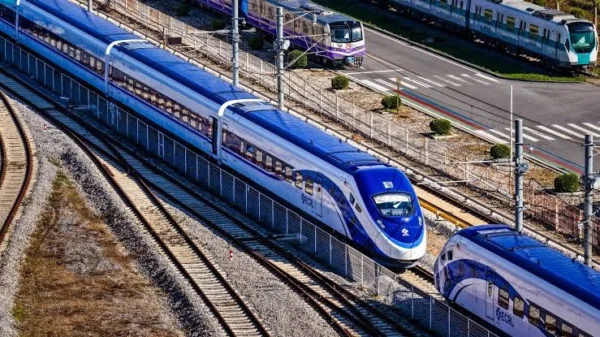
Malaysia’s East Coast Rail Link is moving closer to passenger operations as the 665-kilometre electrified railway enters the critical final stages before its first section is scheduled to open in January 2027.
The major infrastructure project will eventually connect Kota Bharu in Kelantan with Port Klang in Selangor, creating a new passenger and freight corridor across Peninsular Malaysia. The route passes through Kelantan, Terengganu, Pahang and Selangor, connecting East Coast communities with the Greater Klang Valley.
For travellers, the railway promises significantly shorter journeys and easier access to destinations that have traditionally depended heavily on road transport.
Phase 1, running from Kota Bharu to the Gombak Integrated Terminal, remains scheduled for completion by December 2026, with commercial services targeted for January 2027. The Gombak-Port Klang section is expected to follow in December 2027, allowing full operations from January 2028.
Testing becomes critical before passengers board
The project is now moving beyond large-scale civil construction toward the operational preparation needed before trains can safely carry passengers.
Railway commissioning requires signalling, communications, traction power and other interconnected systems to work reliably together.
The transition is particularly important because infrastructure completion does not automatically mean passenger services can start. Extensive testing and safety verification must take place before commercial operations receive approval.
Malaysian authorities have previously indicated that even if construction advances ahead of schedule, testing remains essential before opening the railway to passengers.
For travellers planning journeys in 2027, January therefore remains the official target for the first commercial section.
Four-hour journey could reshape East Coast tourism
Travel-time reductions could become one of the ECRL’s strongest tourism advantages.
Malaysia’s Ministry of Transport says the railway is expected to reduce the journey between Kota Bharu and the Klang Valley to approximately four hours, compared with about seven hours by road.
That improvement could significantly change how domestic and international visitors plan East Coast itineraries.
Travellers arriving around Kuala Lumpur will eventually have another practical way to reach communities across Pahang, Terengganu and Kelantan without depending entirely on long-distance road journeys or domestic flights.
Faster rail connections could also encourage visitors to combine several destinations within one holiday.
Hotels, restaurants, attractions and tourism businesses along the corridor may consequently gain access to a larger visitor market as previously distant destinations become easier to reach.
Kelantan, Terengganu and Pahang gain stronger access
The ECRL has particular significance for Malaysia’s East Coast tourism economy.
Kelantan offers distinctive cultural traditions, food and heritage experiences. Terengganu combines coastal attractions, local communities and access to some of Malaysia’s best-known island destinations, while Pahang offers beaches, nature experiences and urban gateways including Kuantan.
Improved railway connectivity could encourage travellers to explore these regions more independently instead of concentrating their holidays around Malaysia’s largest established urban gateways.
The Ministry of Transport has specifically identified boosting tourism in rural areas as one of the expected benefits of the ECRL.
Stations could therefore become new gateways for secondary destinations and communities along the line.
Gombak emerges as an important transfer gateway
The Gombak Integrated Terminal will play a central role during the first phase.
Its position on the edge of Greater Kuala Lumpur will allow ECRL passengers to connect with the Klang Valley’s wider transportation network.
This creates important possibilities for tourism.
International visitors staying in Kuala Lumpur could potentially incorporate an East Coast railway journey more easily into their itineraries, while residents of Kelantan, Terengganu and Pahang will gain faster access to the capital region.
The link could become especially valuable during major Malaysian holiday periods when highways experience strong demand.
China partnership remains central to ECRL development
Malaysia Rail Link is the project and asset owner, while China Communications Construction Company is responsible for engineering, procurement, construction and commissioning.
Operations and maintenance will be undertaken through a 50:50 joint venture between MRL and CCCC, according to Malaysia’s Ministry of Transport.
The arrangement highlights the major role of Malaysia-China infrastructure cooperation in delivering the railway.
For passengers, however, the long-term test will be service reliability, accessibility and convenient integration with other transport networks.
Electrified railway supports sustainable mobility
Sustainability adds another dimension to the project.
The entire 665-kilometre network will be electrified and designed to carry both passengers and freight. Malaysia Rail Link has said the railway is expected to reduce carbon emissions as transportation shifts toward electrified rail.
Moving some passenger journeys from highways to trains could support lower-impact domestic tourism while reducing dependence on private vehicles.
The ECRL could therefore influence not only where travellers go, but how they explore Malaysia.
As the Kota Bharu-Gombak section approaches its scheduled January 2027 opening, Malaysia is nearing one of its most significant railway transformations in decades.
Once the entire Kota Bharu-Port Klang corridor becomes operational, the ECRL could create a new east-west tourism spine, bringing Kuala Lumpur and Malaysia’s East Coast closer together while opening new possibilities for regional exploration, sustainable travel and local tourism growth.
For more travel news like this, keep reading Global Travel Wire