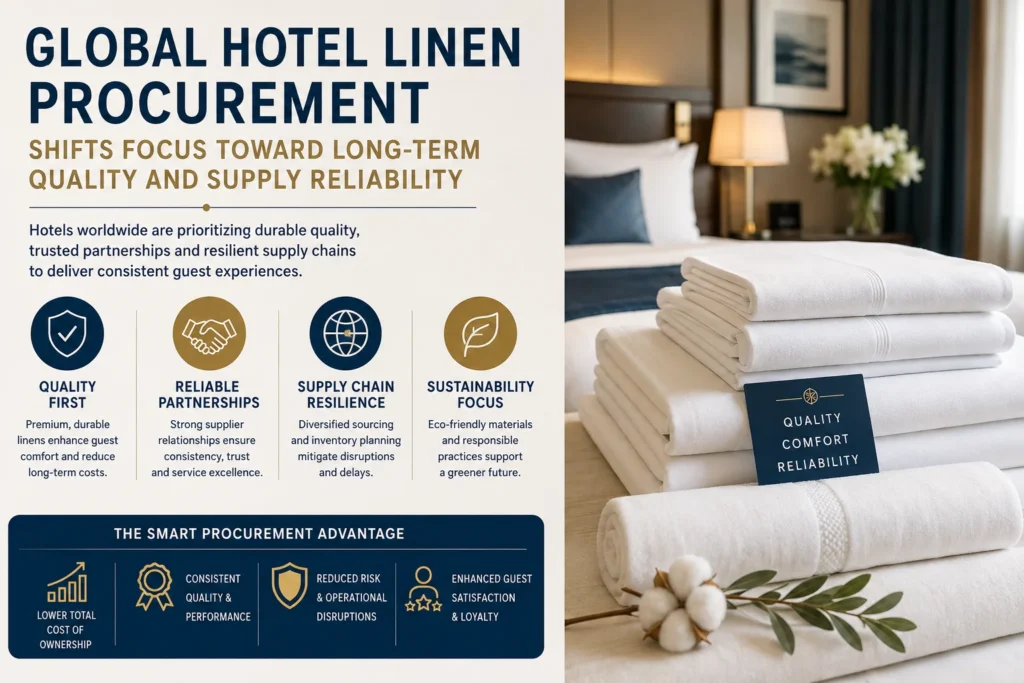
The landscape of global hotel linen procurement is undergoing a fundamental transformation as international hospitality groups prioritize repeatable quality and supply chain reliability over initial purchase costs. As worldwide lodging inventory expands at historic rates, major hotel buyers and procurement executives are re-evaluating traditional vendor selection criteria. The focus is shifting away from low-cost sourcing toward trusted manufacturing partnerships capable of delivering strict quality consistency across large-scale, multi-property portfolios.
Official data released by international hospitality development tracking agencies highlights a record-breaking expansion within the global hotel development pipeline. At the close of recent development reporting cycles, active hotel projects worldwide reached an unprecedented 15,922 properties totaling 2.44 million rooms. Early planning stages also recorded substantial growth, rising four percent year over year to reach nearly 6,000 projects. With thousands of new hotel openings scheduled across key global travel markets annually, the volume of textile procurement required to outfit guest rooms, dining facilities, and wellness centers has reached record operational highs.
This rapid expansion presents complex operational challenges for hotel procurement directors. Equipping a new luxury resort or boutique property requires thousands of specialized items, including high-thread-count bed sheets, plush bath towels, banquet table linens, and customized room accessories. However, the initial opening order represents only a fraction of a property’s total lifetime textile expenditure. Hotel textiles undergo rigorous commercial laundering cycles daily, necessitating periodic replenishment orders that must precisely match original specifications in fabric weight, dimensions, color retention, and brand embroidery.
When global suppliers fail to maintain exact manufacturing standards between batches, hotel operators face operational friction, compromised brand standards, and increased administrative overhead. Industry procurement analysis indicates that repeated vendor qualification procedures and inconsistent product shipments generate cumulative expenses that far exceed initial price savings. As a result, international hospitality buyers are increasingly measuring manufacturing partners by their ability to execute stringent quality controls across recurring order cycles spanning multiple years.
The shift in international procurement preferences aligns with a broader structural modernization within China’s industrial manufacturing and textile sectors. Official statistical releases from national textile and apparel industry councils show that fixed-asset investment across the domestic textile sector grew by 17.6 percent year over year during the first quarter of 2026. This capital expenditure acceleration reflects widespread investment in high-end automated machinery, intelligent production tracking systems, and green manufacturing technologies.
For global hospitality brands, this systematic industrial upgrading changes the definition of manufacturing efficiency. Rather than relying on low production costs, leading accommodation suppliers build competitive positioning around technological precision, optimized supply chain logistics, and automated quality control protocols. Advanced manufacturing execution systems allow specialized hospitality suppliers to conduct full pre-packing inspections, maintain precise fabric standardization, and offer rapid customization options for global clients.
These structural capabilities enable specialized hotel suppliers to support massive global distribution networks. Industry statistics show that established manufacturing leaders now supply comprehensive linen solutions to thousands of luxury resorts, full-service hotels, and boutique properties across more than 150 countries. Operational expertise gained over decades allows high-trust suppliers to manage custom interior design proposals, process technical fabric specifications, and maintain round-the-clock service infrastructure for international buyers.
Regulatory and sustainability certifications have also become vital baseline criteria within the international hotel linen procurement process. Global hotel chains increasingly mandate compliance with international quality management benchmarks, such as ISO 9001 standards, alongside environmental safety accreditations like OEKO-TEX Standard 100. Environmental certifications ensure that commercial textiles are free from harmful substances while meeting strict corporate sustainability goals established by global travel brands.
As the global travel and lodging industries continue to expand, procurement strategies across international hotel groups are expected to remain focused on operational risk mitigation and long-term value creation. By partnering with advanced manufacturing facilities that demonstrate consistent quality control, reliable replenishment capabilities, and verified environmental compliance, global hospitality operators can ensure uniform guest experiences while maintaining efficient, scalable supply chain management across their worldwide property portfolios.
For more travel news like this, keep reading Global Travel Wire