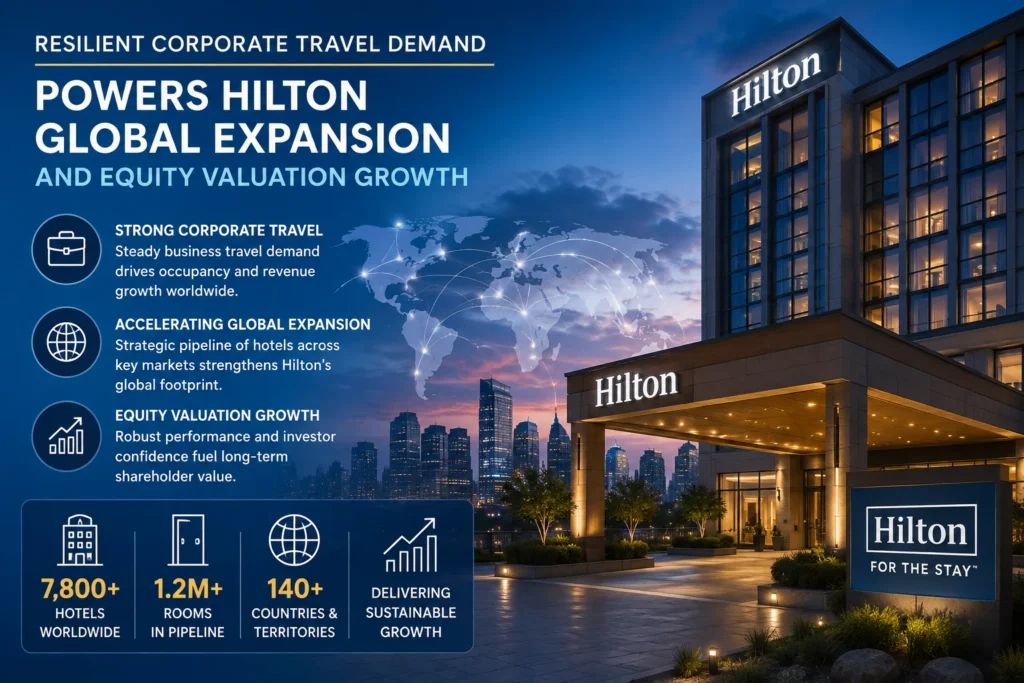
Strong performance figures for the second quarter of 2026 continue to highlight sustained momentum across the international accommodation and travel sectors. As corporate travel continues its steady post-pandemic normalization, global hotel operators are witnessing a definitive shift toward balanced demand drivers. The return of midweek business travelers, coupled with resilient leisure stays and expanded infrastructure project travel, provides a solid financial backdrop for global lodging leaders.
Within this favorable operating environment, Hilton Worldwide Holdings Inc. has demonstrated consistent financial resilience and strategic brand scaling. The company’s performance highlights the ongoing strength of fee-based hospitality business models, which capture revenue streams from room sales, franchise royalties, and loyalty program ecosystem expansions across diverse worldwide destinations.
According to official hospitality sector performance disclosures and secondary quarterly earnings announcements, system-wide comparable revenue per available room (RevPAR) across global lodging portfolios recorded robust single-digit gains during the second quarter. A major contributor to this performance was the acceleration of business transient revenue. Globally, business transient RevPAR experienced a solid upward shift, expanding between 2.0 percent and 5.7 percent across key markets. This midweek growth was led primarily by small- and medium-sized enterprise travel, alongside sustained accommodation demands from infrastructure, industrial technology, and data center development projects across major metropolitan areas.
The return of high-yield corporate travelers plays an essential role in stabilizing average daily room rates (ADR) and bolstering overall hotel profitability. While leisure travel remains steady across key resort markets, business transient and group event bookings provide predictable occupancy patterns throughout the business week. Group travel demand also recorded positive expansion, supported by a resurgence in corporate conferences, professional association gatherings, and favorable event calendar shifts across major international convention hubs.
In addition to operational demand growth, global lodging brands are expanding their physical footprint through aggressive unit additions and system-wide room development pipelines. Official corporate earnings statements show that global development pipelines for major hotel networks reach hundreds of thousands of active rooms spanning more than 130 countries and territories. A significant portion of current expansion activity relies on strategic hotel conversions. By converting existing independent properties or unbranded assets into established global brand banners, hotel groups lower overall capital expenditure requirements and achieve faster operational deployment.
This system expansion strategy is further supported by the debut of targeted hospitality offerings, including new lifestyle, upper-midscale, and college-market accommodation brands designed to tap into specialized travel segments. By broadening portfolio coverage across luxury, lifestyle, full-service, and focused-service categories, major hospitality brands maximize market coverage and capture market share across varied traveler demographics.
The fundamental strength of the broader travel industry is also reflected in public performance reporting across consumer booking platforms and travel distribution ecosystems. Official financial filings from major global online travel agencies confirm that room-night volume expansion and firm room pricing drove high single-digit percentage revenue increases during the second quarter. The compound impact of higher occupancy and sustained pricing power underlines a broad-based structural health across regional and international travel markets.
From a market perspective, investment analysts maintain a positive consensus outlook for global hotel asset management operations, driven by asset-light franchise structures and disciplined capital return programs. Large hotel operators continue to return significant capital to equity holders via quarterly dividend distributions and targeted common stock repurchases. Equity valuation profiles across the consumer discretionary and lodging sectors remain supported by long-term earnings expansion projections rather than immediate yield payouts, reflecting investor confidence in sustainable long-term cash flows.
Looking ahead through the remainder of the annual operational cycle, official travel board metrics and corporate guidance projections point toward sustained system-wide RevPAR increases. While global macro-environmental factors and geopolitical localized headwinds remain operational considerations in select regional markets, overall demand trends remain structurally intact. The ongoing convergence of resilient consumer leisure travel, accelerating business transient midweek stays, and expanding global room inventories ensures that international hospitality brands remain uniquely positioned to capitalize on global travel growth.
For more travel news like this, keep reading Global Travel Wire