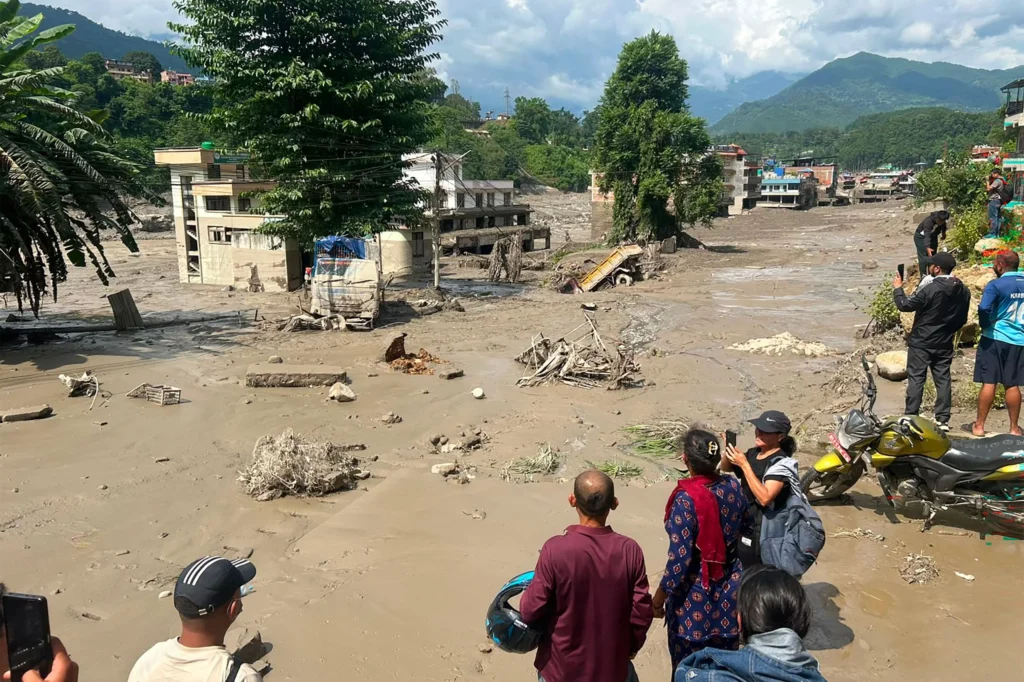
The United States has issued emergency travel guidance for Nepal after a catastrophic flash flood and debris flow struck Rasuwa District on August 26, damaging Himalayan transport routes and endangering travellers.
The U.S. Embassy in Kathmandu advised American citizens in Rasuwagadhi, Timure, Syafrubesi, Langtang and other affected locations to contact the embassy when it becomes safe. Travellers should provide their name, location and current condition to help officials coordinate assistance.
American citizens have also been advised not to travel to Rasuwa District until authorities and tour operators confirm that conditions are safe. The warning covers Langtang, Gosaikunda, the Tamang Heritage Trail, Syafrubesi, Timure and Rasuwagadhi.
The emergency does not represent a nationwide closure of Nepal. However, it creates significant disruption across an important northern tourism region used by trekkers, pilgrims and travellers moving towards the Nepal-China border.
Flood strikes important Himalayan corridor
The disaster developed when a major surge entered Nepal from Tibet and struck Rasuwagadhi, Timure, Syafrubesi and downstream communities.
Floodwater and debris damaged buildings, roads, bridges, electricity systems and communications infrastructure. The resulting destruction has made it difficult for rescue teams to reach some locations or establish contact with affected travellers.
Rasuwagadhi is an important border gateway supporting trade and cross-border travel. Timure and Syafrubesi also serve visitors moving through Rasuwa and towards the Langtang region.
Syafrubesi is widely used as an entry point for trekking itineraries. Therefore, damage in the surrounding transport network can affect accommodation, guiding services, local vehicles and other businesses serving Himalayan tourism.
The emergency has also exposed the vulnerability of mountain destinations where steep terrain and limited road alternatives can turn a local disaster into a major regional travel interruption.
US Embassy urges travellers to report safely
The embassy’s guidance prioritises locating American citizens and confirming their welfare. Travellers should make contact only when doing so does not expose them to additional danger.
Anyone unable to reach the embassy immediately should conserve telephone power and maintain communication with accommodation providers, guides and family members whenever networks permit.
Travellers should share accurate information about their most recent confirmed location. They should also identify their tour company, guide, planned itinerary and travelling companions where relevant.
These details can help emergency officials reconcile incomplete traveller records during damaged communications. Satellite tracking devices and offline itinerary records may also support rescue efforts in remote areas.
Visitors should not enter unsafe locations solely to obtain a mobile signal. They must follow instructions from Nepali authorities, emergency services and local accommodation providers.
Major roads face travel restrictions
Nepali authorities have restricted travel on several important routes following the disaster. These include the Prithvi Highway, the Galchhi–Nuwakot–Rasuwa–Syafrubesi road and the Mugling–Narayangadh road.
These corridors support domestic movement and connect Kathmandu with tourism destinations across Nepal. Restrictions may therefore create delays extending beyond the immediate flood zone.
Visitors must not attempt to bypass roadblocks or use unverified mountain diversions. Floodwater may weaken road foundations, while landslides, falling debris and unstable bridges can remain dangerous after rainfall ends.
Travellers with upcoming transfers should contact their airline, trekking company, hotel or transport operator before departure. A confirmed booking does not guarantee that the road to an airport, trailhead or accommodation property remains accessible.
Alternative travel arrangements should only be made after authorities confirm that the route is open and suitable for visitor movement.
Langtang tourism faces immediate disruption
The Langtang region attracts international travellers with trekking routes, mountain settlements and protected Himalayan landscapes. The current Nepal travel alert places temporary pressure on this important tourism economy.
Tour operators may need to postpone departures, reroute groups or cancel sections of affected itineraries. Guides and accommodation businesses should provide travellers with realistic information about access, communications and evacuation options.
Visitors outside Rasuwa should not assume that all travel across Nepal has stopped. Kathmandu and many other tourism regions may continue operating, although nationwide transport connections could experience delays.
Accurate destination-specific communication will be essential for preventing unnecessary cancellations while keeping travellers away from genuinely dangerous areas.
Travellers must prioritise official instructions
People in river valleys and low-lying communities should move to safer ground when directed by Nepali authorities. Conditions may change rapidly because damaged slopes, blocked waterways or further rainfall can generate secondary hazards.
Travellers should avoid riverbanks, damaged bridges, landslide zones and visibly unstable roads. They should keep passports, medication, water, warm clothing, emergency food and charged power banks accessible.
International visitors requiring help should contact their respective embassy or consular authority. They should also keep relatives informed without sharing unverified casualty or road information.
Travel insurance providers must be contacted before arranging private evacuation whenever circumstances allow. However, immediate life-saving instructions from emergency authorities always take priority over insurance procedures.
Recovery will determine return of tourism
Nepal’s immediate priorities remain search and rescue, protection of affected communities and restoration of communications and transport access.
Engineers will need to inspect roads and bridges before visitor movement can safely resume. Tourism recovery will depend on transparent updates and close coordination between authorities, embassies, trekking businesses and local communities.
The U.S. emergency guidance sends a clear message: travellers should avoid Rasuwa, remain in contact when safely possible and never attempt restricted routes. Nepal remains a major Himalayan destination, but the affected region needs time to rescue travellers, restore infrastructure and establish safe access.
For more travel news like this, keep reading Global Travel Wire