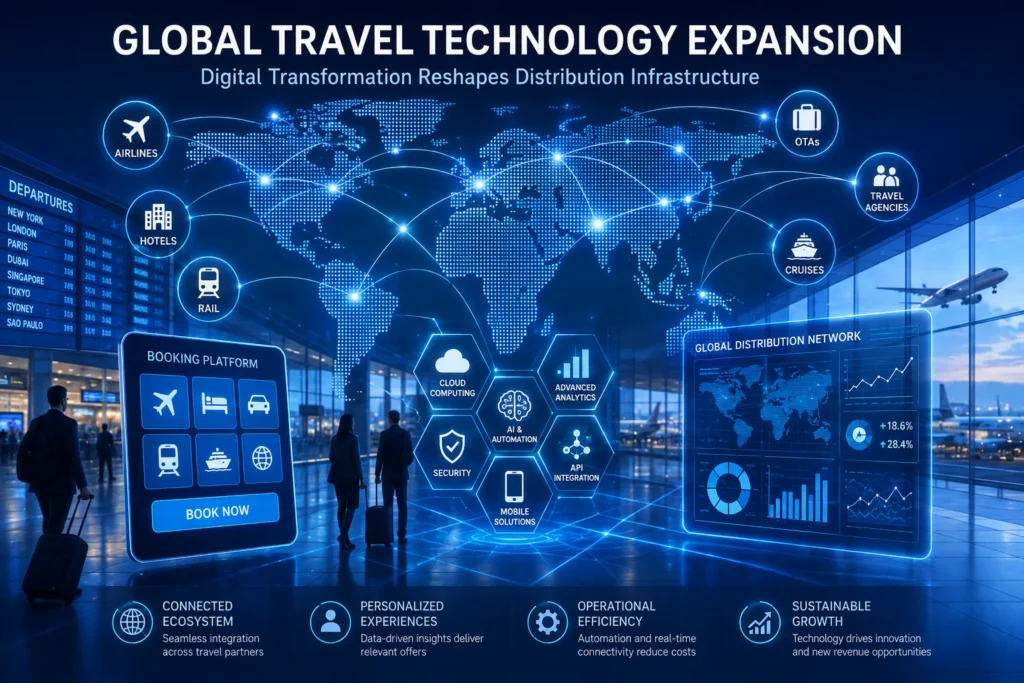
The global travel distribution software sector continues to undergo rapid technological transformation, fueled by rising demand for integrated reservation systems, cloud-native architecture, and autonomous artificial intelligence across global travel networks. As international passenger volumes expand and corporate travel requirements grow increasingly complex, global distribution systems (GDS) and enterprise software providers are expanding their core digital infrastructure to serve airlines, hotel groups, travel management companies, and online booking engines worldwide.
Among the major enterprise software organizations driving this digital transition is Sabre Corporation, a primary global distribution software and technology provider headquartered in the United States. Processing more than 11 billion shopping requests every month and executing approximately 14,000 transactions per second across its global travel marketplace, the enterprise manages upwards of $260 billion in annual global travel expenditure. Recent strategic initiatives highlight how public-private technology partnerships and advanced artificial intelligence integrations are modernizing international travel operations.
Expanding Global Technology Partnerships and Strategic Alliances
In official industry announcements, event organizers confirmed Sabre Corporation as the official travel technology strategic partner for the upcoming Arabian Travel Market conference series. The strategic collaboration highlights a broader operational push across the global tourism sector to integrate agentic artificial intelligence, advanced analytics, and automated retailing systems into core reservation platforms.
Industry representatives emphasize that travel software architecture is transitioning from basic algorithmic recommendation engines to fully integrated, autonomous systems capable of searching, booking, and servicing complex multi-leg itineraries in real time. By deploying secure translation layers and specialized application programming interfaces (APIs), software providers are connecting third-party digital channels directly to live airline and hotel inventory networks.
International airline carriers and hospitality brands are actively expanding their distribution partnerships to broaden market reach across high-growth regions. Major international air carriers, including Air India, have expanded multi-year global distribution agreements to distribute both international and domestic flight content across unified global reservation networks. These expanded agreements enable travel agencies worldwide to access comprehensive flight schedules, dynamic pricing options, and next-generation distribution capability (NDC) content through a centralized digital marketplace.
Driving Operational Efficiency Through Next-Generation Infrastructure
The modernization of travel distribution software infrastructure addresses key operational challenges facing global travel sellers and transportation providers. Modern cloud-native platforms allow travel agencies to aggregate flight inventory, hotel accommodations, rail connections, and car rental availability within a single operational interface, significantly reducing transaction processing times and administrative overhead.
Key focus areas driving enterprise software investments across the international travel sector include:
Autonomous Retailing and Retargeting: Deploying predictive intelligence algorithms that analyze vast repositories of travel data to anticipate shifting demand patterns and optimize personalized fare offerings.
Next-Generation Distribution Standards: Integrating New Distribution Capability (NDC) standards to allow carriers to offer customized ancillary products, rich media, and tailored seat selection directly to travel agents.
Operational Scalability and System Resilience: Enhancing high-speed transaction networks capable of processing millions of concurrent booking queries during peak travel demand periods without system latency.
Official travel statistics from international aviation and tourism ministries indicate that demand for seamless, multi-modal travel bookings is growing rapidly across both leisure and corporate sectors. By establishing unified technology standards, global distribution software providers offer the foundational infrastructure required to support multi-carrier travel packages, streamline cross-border ticketing, and deliver real-time flight updates to passengers worldwide.
As travel technology providers continue to scale their cloud platforms and deploy advanced automation capabilities, public and private stakeholders across the tourism ecosystem remain focused on building resilient, scalable digital systems. These continuous software developments ensure that international travel networks remain equipped to accommodate expanding global passenger traffic while delivering consistent, high-quality service across every stage of the traveler journey.
For more travel news like this, keep reading Global Travel Wire