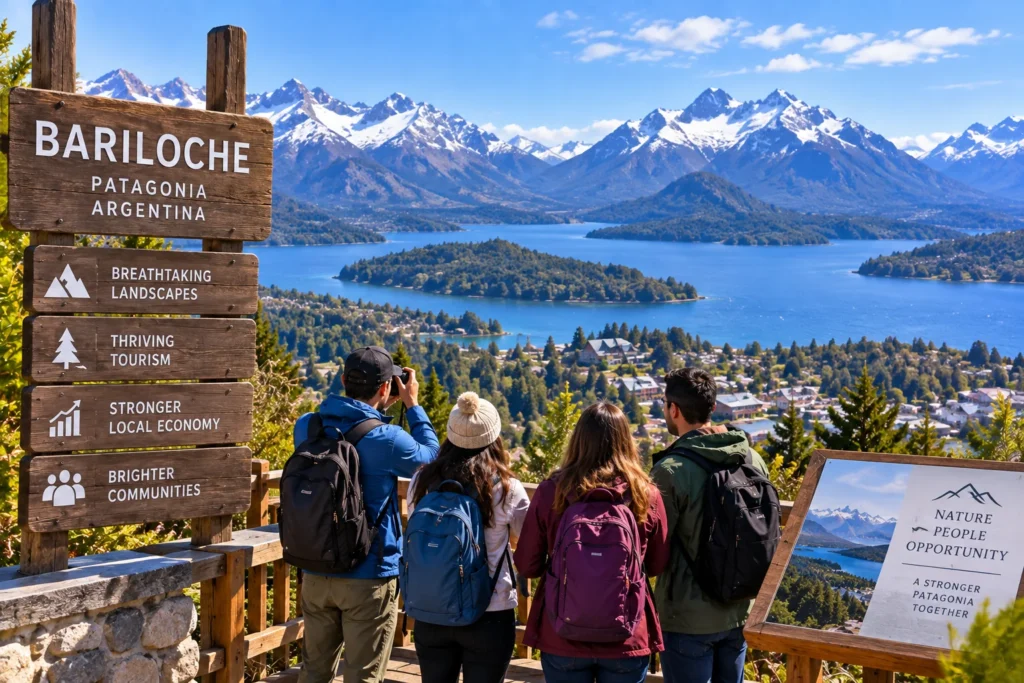
San Carlos de Bariloche has reaffirmed its status as a leading travel destination in southern Argentina, with local accommodation hosts generating more than $30 million in cumulative revenue over the past year. Official statistics highlight sustained domestic demand and an increasing traveler preference for community-connected local stays across the Patagonian region.
Market search volume and booking reservations rose by nearly 10 percent year-over-year, while the average visitor length of stay reached 4.5 nights. This extended duration reflects the area’s multifaceted tourist appeal, anchored by outdoor alpine adventures, lakeshore ecotourism, regional gastronomy, and vibrant mountain urban culture.
Domestic Travel and Younger Demographics Drive Regional Demand
Domestic travel serves as the primary engine for accommodation growth in Bariloche, accounting for nearly half of all registered bookings. Key domestic feeder markets include the city of Buenos Aires alongside the provinces of Mendoza and Neuquén.
Demographic data reveals a strong shift toward younger generations and family travel segments across the regional tourism landscape:
Millennial Travelers: Account for approximately 40 percent of total regional booking volume.
Generation Z Guests: Represent nearly 30 percent of confirmed reservations.
Family Travel Units: Comprise more than 20 percent of overall stay bookings.
Local host metrics demonstrate significant micro-economic impact. Median annual host earnings reached approximately $3,800 per active property. High service quality remains a standout feature of the local market, with nearly 30 percent of listed properties earning Guest Favorite designations and a matching proportion of hosts attaining Superhost status—metrics that systematically outpace national benchmarks. Furthermore, women account for almost 60 percent of active accommodation hosts across the municipality.
Micro-Level Travel Activity Generates $2.3 Billion National GDP Impact
The steady performance in Bariloche mirrors a broader surge in community-based lodging impacts across Argentina. Comprehensive economic evaluations indicate that short-term rental activity delivered a direct and indirect contribution exceeding $2.3 billion to national Gross Domestic Product during 2025.
This sustained travel activity supported roughly 116,000 jobs nationwide, translating into more than $900 million in direct labor income for Argentine families. Destination spending patterns confirm that approximately 50 percent of guest expenditure occurs directly within the neighborhood commercial corridors where visitors reside. In areas located outside conventional tourism hubs, this localized economic diffusion generated an estimated $335 million for local merchants, artisanal producers, and municipal service providers.
Emerging Patagonian Destinations Gain Traction Among Regional Travelers
Beyond the established hub of Bariloche, official travel metrics indicate growing visitor interest in secondary and emerging destinations throughout the Patagonian provinces, spreading economic benefits across lesser-known corridors.
Comodoro Rivadavia: Located in Chubut Province, the destination experienced a 20 percent year-over-year increase in confirmed bookings and a 30 percent rise in search queries. Argentine guests constitute nearly 60 percent of visitors—primarily hailing from Chubut and Buenos Aires—alongside notable demand from Chilean Patagonia. With an average stay of three nights, local hosts generated over $140,000 in total revenue.
Río Gallegos: The capital of Santa Cruz Province maintains strong regional connectivity, drawing heavy visitor inflows from neighboring Chile. Local accommodation hosts generated approximately $100,000 in earnings over the 12-month period.
Los Antiguos: The lakeside destination recorded a year-over-year booking growth exceeding 10 percent. International travelers make up more than three-quarters of all visiting guests, driving total local host earnings above $40,000.
This shifting distribution of visitor arrivals reflects a dynamic regional ecosystem. Established destinations like Bariloche maintain steady economic momentum while emerging Patagonian towns expand their tourism footprints, diversifying visitor flows and opening sustainable income opportunities for local communities across southern Argentina.
For more travel news like this, keep reading Global Travel Wire