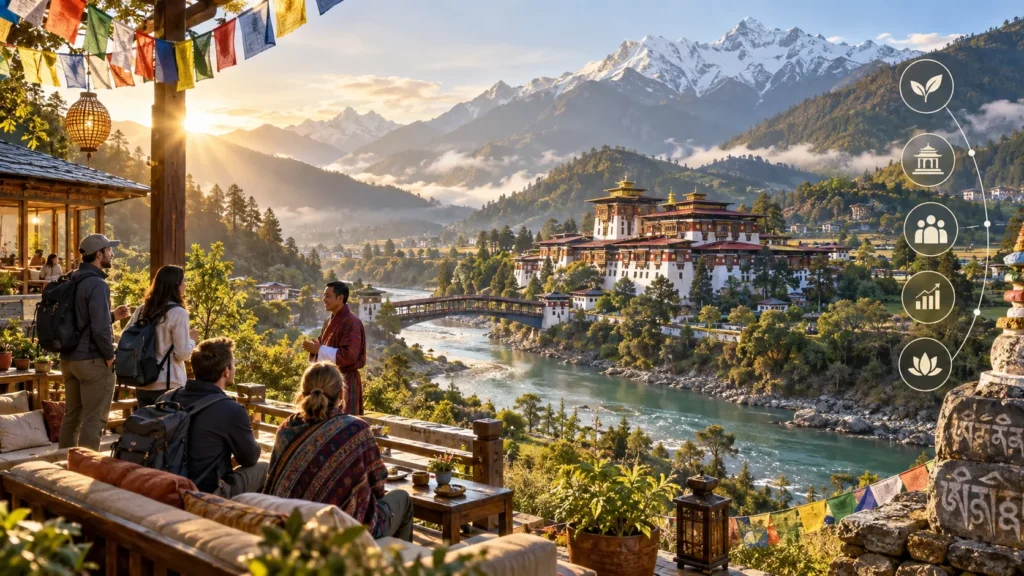
The Kingdom of Bhutan continues to expand its signature “high-value, low-volume” framework, presenting a national model for sustainable destination management. By embedding Gross National Happiness principles directly into public policy, the Department of Tourism and national government authorities manage visitor numbers to fund social development while protecting fragile Himalayan ecosystems.
Rather than measuring national growth exclusively through arrival counts or traditional gross domestic product metrics, the nation utilizes a Sustainable Development Fee. This mandatory levy functions as a core funding mechanism for public infrastructure, universal healthcare, and free education across all twenty dzongkhags.
+------------------------+---------------------------------------+------------------------------------------+
| Administrative Zone    | Regulatory Protection Status          | Impact on Visitor Infrastructure         |
+------------------------+---------------------------------------+------------------------------------------+
| Paro Valley & Sacred   | Strict carrying-capacity limits and   | Mandatory local licensed guide services; |
| Cultural Monasteries   | visitor flow controls                 | designated pilgrimage walking routes     |
+------------------------+---------------------------------------+------------------------------------------+
| High-Altitude Alpine   | Enforced environmental conservation;  | Zero-trace trekking mandates; monitored  |
| Ecosystems & Parks     | protected wildlife corridor status    | seasonal permits for high-trail routes   |
+------------------------+---------------------------------------+------------------------------------------+
| Urban Thimphu & Regional| Unified traditional architectural      | Hotel infrastructure compliance with     |
| Heritage Municipalities| building codes and heritage standards | national cultural design specifications  |
+------------------------+---------------------------------------+------------------------------------------+
How Controlled Entry Mechanisms Fund Bhutan’s Social Infrastructure
Central to Bhutan’s destination strategy is the daily Sustainable Development Fee assessed on international visitors. According to official releases from the Department of Tourism, revenue generated from foreign visitors flows directly into national development funds. These resources support carbon-offset projects, tree-planting initiatives, free medical care, public education, and traditional heritage preservation programs.
By imposing entry regulations, the state prevents mass-market overcrowding that frequently degrades cultural heritage and strains municipal services in high-density global destinations. Official statistics demonstrate that this financial distribution model ensures foreign visitor receipts directly benefit local communities rather than being externalized to foreign travel intermediaries.
Ministry regulations also enforce strict architectural guidelines across all hospitality projects. Commercial hotels, mountain resorts, and guest accommodations must incorporate traditional woodwork, sloped roofs, and authentic stonework. This architectural policy prevents urban homogenization, ensuring modern lodging developments blend seamlessly into the surrounding alpine geography.
Impact on High-Altitude Trekking and Cultural Heritage Zones
The enforcement of Gross National Happiness frameworks influences key travel sectors and sacred geography throughout the kingdom:
Protected Cultural Excursions: Iconic landmarks such as Paro Taktsang (Tiger’s Nest Monastery) are managed as sacred cultural sites rather than standard commercial attractions. Official regulations govern visitor numbers, require certified local guides, and enforce conduct codes to preserve spiritual integrity.
Eco-Trekking Corridors: High-altitude trekking routes through the Jigme Dorji National Park and surrounding wilderness areas operate under strict conservation protocols. Waste management rules, controlled camping zones, and pack-animal limits protect fragile high-altitude soil from erosion.
Regional Entry Hubs: Gateway border crossings such as Phuentsholing and international air routes via Paro Airport maintain synchronized immigration databases to monitor visitor capacity limits in real time.
Essential Travel Requirements for Visiting Bhutan
Travelers planning an itinerary to Bhutan must comply with official government entry regulations and administrative rules:
Pay Mandatory Sustainable Development Fees: All foreign visitors must settle the official daily Sustainable Development Fee through authorized visa channels prior to arrival, ensuring compliance with current national tariff schedules.
Engage Certified Local Guides: Government rules mandate that international tourists arrange guided services through certified local tour operators or licensed guides to ensure cultural respect and environmental compliance.
Respect Heritage and Dress Codes: Visitors entering active monasteries, dzongs, and religious festivals must adhere strictly to formal national dress guidelines and follow instructions regarding photography prohibitions.
By placing social well-being, cultural preservation, and environmental conservation above raw volume growth, Bhutan continues to demonstrate how national tourism policy can protect cultural heritage while advancing sustainable development.
Frequently Asked Questions
What is the primary purpose of Bhutan’s Sustainable Development Fee?
The daily levy is a government-mandated fee collected from international visitors to fund social welfare programs—including free healthcare and education—while supporting environmental conservation and carbon-neutral infrastructure.
How does Gross National Happiness guide national tourism policy in Bhutan?
Gross National Happiness prioritizes sustainable socio-economic development, cultural preservation, environmental protection, and good governance over rapid volume growth, ensuring tourism directly improves resident well-being.
Are independent or unguided tours permitted for foreign tourists in Bhutan?
No. Government guidelines require international tourists to travel with certified local guides and utilize licensed transport and accommodation providers to maintain safety and cultural compliance.
For more travel news like this, keep reading Global Travel Wire