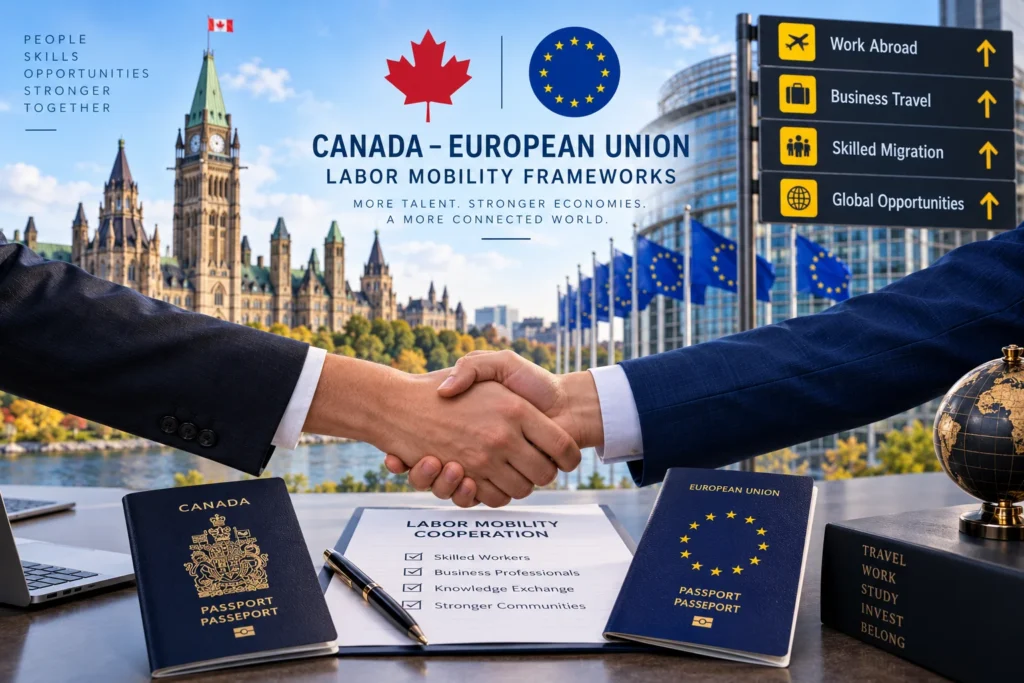
Global travel dynamics and international mobility strategies are entering an era of significant transformation as diplomatic alignment between Canada and the European Union deepens. For internationally minded entrepreneurs, investors, and frequent travelers, Canadian permanent residency and subsequent citizenship have long represented a clear value proposition: establish an economic foothold in North America, build regional enterprises, and gain access to one of the world’s most reputable travel documents.
Recent high-level diplomatic discussions suggest this proposition could eventually expand into a broader transatlantic framework. While no legal entitlement or residence right currently allows Canadian citizens to reside and work freely across European Union member states, expanding economic cooperation has introduced a compelling prospect. Closer bilateral integration could gradually pave the way for enhanced labor mobility, simplified travel authorizations, and streamlined business transit between the two major economic blocs.
Strategic Diplomatic Bilateral Summits Pave the Way for Enhanced Cooperation
The evolving relationship between Ottawa and Brussels has shifted beyond conventional trade agreements toward comprehensive strategic alignment. During recent Canada-EU summit proceedings, government leadership formally committed to advancing labor mobility initiatives, easing transit regulations for highly skilled professionals, and exploring structured immigration partnerships.
Canada’s integration into European frameworks is already demonstrating practical momentum. The nation became the first non-European country to participate in the EU’s European Defence Industry Reinforcement through Common Procurement Act (SAFE) instrument, signaling a level of institutional trust that extends into security, digital trade, and industrial policy.
While these agreements do not grant automatic residency rights across Europe for Canadian passport holders, they place Canada at the center of international discussions regarding cross-border talent movement. Public statements from foreign affairs ministries emphasize that easing the movement of professionals, researchers, and business leaders remains a mutual policy objective aimed at boosting economic resilience and international competitiveness.
Unlocking Optionality and Flexibility for Globally Mobile Travelers
For global business travelers, frequent flyers, and multi-jurisdictional founders, the value of a top-tier citizenship is increasingly measured by geographical optionality and mobility flexibility. Modern commercial enterprises rarely operate within a single sovereign border; they rely on international networks of capital, remote workforces, and cross-border client bases.
A formalized Canada EU labor mobility framework could deliver substantial advantages for international travel and cross-border commerce:
Seamless Transatlantic Transit: Streamlining entry protocols and work authorizations for executives, technical specialists, and investors operating across European and North American markets.
Diversified Commercial Base: Allowing business founders to maintain operational hubs in North America while establishing secondary management locations within European Union member states.
Enhanced Travel Freedom: Complementing existing visa-free travel privileges with long-term stay flexibility for professional, educational, and entrepreneurial endeavors.
Long-Term Enterprise Resilience: Expanding personal and corporate choices during shifts in global trade policy, regulatory environments, or regional economic conditions.
For globally mobile families, business immigration decisions involve evaluating long-term security, access to premier educational institutions, and international mobility. Establishing a base in a strategically connected jurisdiction enhances an individual’s ability to navigate changing international travel landscapes.
Assessing Current Immigration Realities Versus Future Frameworks
Despite promising diplomatic momentum, international policy experts emphasize a crucial distinction between emerging strategic directions and existing legal rights. Enhanced reciprocal mobility between Canada and the European Union remains a policy goal under discussion rather than an active immigration program.
Public authorities urge investors, corporate planners, and prospective immigrants to evaluate current pathways under existing immigration laws. Today, Canadian immigration applications are processed under established economic programs, provincial nominee initiatives, and founder visa pathways without reference to potential European residence entitlements.
International observers and policy analysts are monitoring upcoming diplomatic engagements, including high-level bilateral meetings scheduled in Montreal, for further indications of how quickly labor mobility negotiations will progress. Official communiqués from these summits are expected to outline specific focus areas, particularly regarding professional credential recognition, youth mobility expansions, and short-term business visa exemptions.
Should reciprocal mobility agreements materialize in the coming years, the strategic appeal of Canadian citizenship could undergo a fundamental shift. Rather than serving solely as a premier North American destination, Canada could emerge as one of the world’s most connected international transit hubs—linking North American commercial markets directly with the European economic ecosystem.
For more travel news like this, keep reading Global Travel Wire