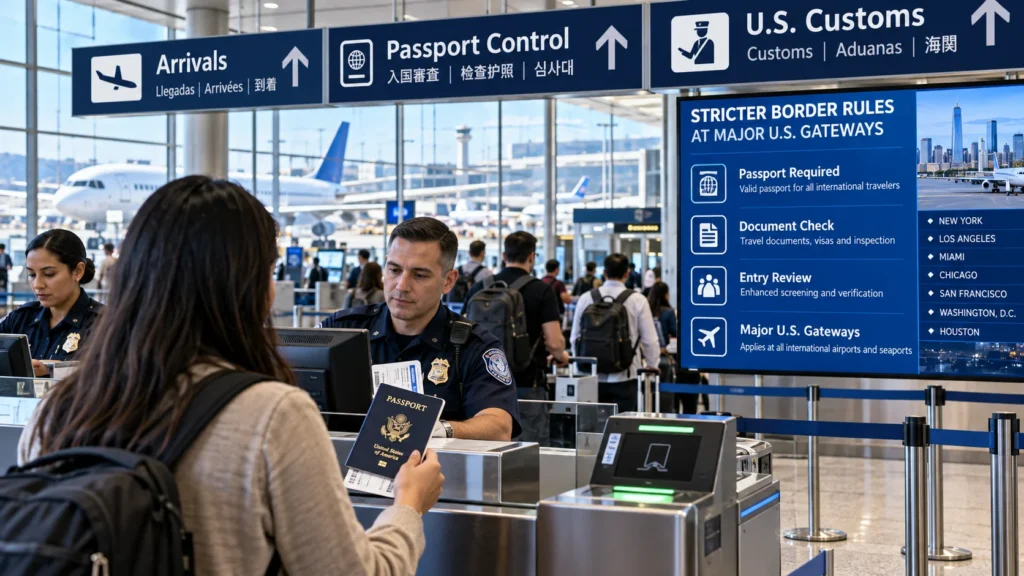
Customs and border protection operations at major international gateways—including John F. Kennedy International Airport, Dallas/Fort Worth International Airport, Hartsfield-Jackson Atlanta International Airport, and Newark Liberty International Airport—are enforcing strict documentation checks for incoming international air travelers. Federal border regulations dictate that travelers presenting expired passports, damaged travel credentials, or invalid visa permissions will face immediate boarding denials at foreign departure gates or entry blocks upon arrival at United States ports of entry.
Official directives published by U.S. Customs and Border Protection (CBP) and the U.S. Department of State reiterate that holding valid, undamaged travel documentation remains an mandatory prerequisite for entering the country. While commercial airlines perform preliminary document verifications prior to passenger boarding, final authority to grant or deny entry rests exclusively with border inspection officers.
Core Document Rules for International Arrivals
To satisfy statutory entry standards at major international airports across New York, New Jersey, Texas, and Georgia, foreign travelers must comply with established passport and visa regulations prior to embarking on their journeys:
Six-Month Passport Validity Standard: Under general immigration regulations, foreign passports must remain valid for at least six months beyond the traveler’s intended date of departure from the United States.
Reciprocal Exemption Agreements: Citizens of more than 100 designated partner nations included in the official government exemption list are required only to maintain passport validity covering the actual duration of their authorized stay.
Visa Waiver Program and ESTA: Travelers originating from designated Visa Waiver Program countries must secure an approved Electronic System for Travel Authorization (ESTA) linked to an unexpired, machine-readable digital passport prior to airport check-in.
B-1 and B-2 Visitor Visas: Non-immigrant travelers from non-waiver nations must hold an active B-1/B-2 visitor visa issued by a U.S. embassy or consulate, corresponding directly to their travel purpose, such as leisure tourism, business consultations, or medical treatment.
Physical Condition Standards: Passports presenting structural damage, torn pages, altered security features, or compromised biographical data chips are classified as invalid by border authorities and will result in transport refusal.
Unexpired Visas in Expired Passports
Border regulations provide a specific operational exception for travelers who hold an unexpired, valid visa attached to an expired passport book. Official CBP entry guidelines confirm that a traveler may lawfully enter the United States using a valid visa inside an expired passport, provided the individual presents a newly issued, valid passport from the same issuing country alongside the older document.
The biological details, nationality, and name on both passport documents must match, and the visa sticker itself must remain completely undamaged and unexpired. If an individual’s legal name has changed since the visa was issued, official supporting legal documentation, such as a marriage certificate or court decree, must be presented during border inspection.
Electronic Arrival Tracking via Form I-94
Federal border management utilizes automated digital tracking mechanisms to record passenger arrivals and departures across all domestic international airports. Paper Form I-94 arrival and departure records have been replaced by electronic records automatically generated from commercial flight manifests and passport scan data at border checkpoints.
International visitors can access and verify their official admission record and authorized duration of stay digitally through the official CBP Form I-94 web portal. Because physical departure stamps are no longer routinely placed in passports upon exiting the country, travelers are advised to retain electronic flight receipts, boarding passes, and transportation records as proof of timely departure to maintain clean international travel records.
For more travel news like this, keep reading Global Travel Wire