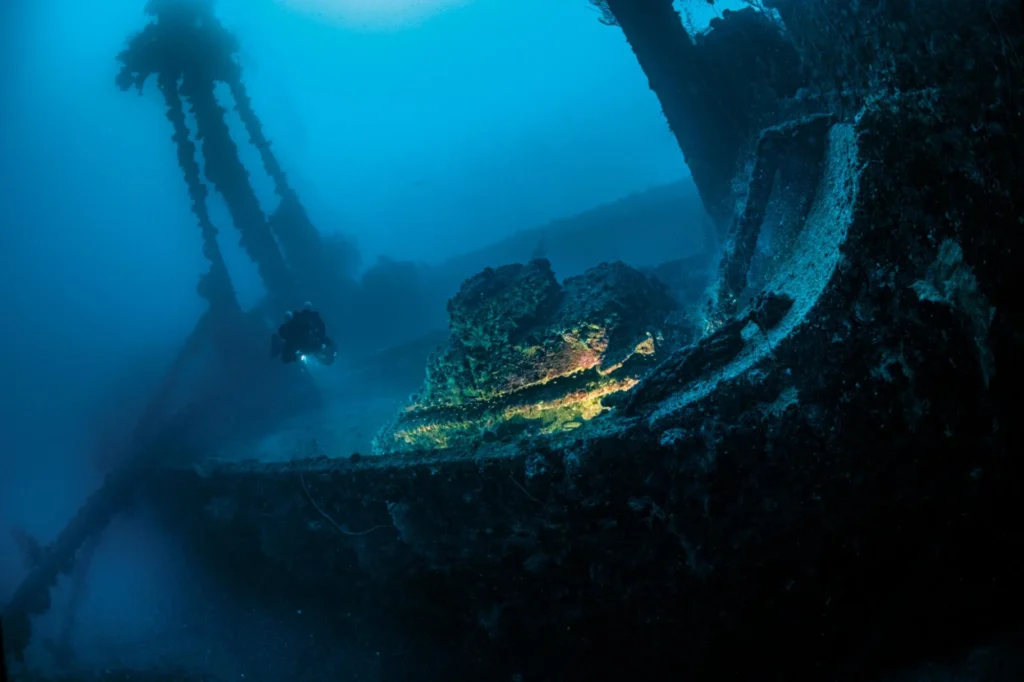
Chuuk Lagoon in the Federated States of Micronesia is known for its Second World War wrecks, which draw divers to the Pacific destination. Digital interpretation could eventually help more people understand that underwater history, including visitors who cannot dive.
That prospect remains an opportunity rather than an announced tourism product. As of 29 September 2026, there is no confirmed public digital platform offering virtual visits to Chuuk’s wrecks. Existing work on underwater heritage and digital documentation shows what a carefully developed service might make possible.
For Chuuk, the central question is how to improve access to historical knowledge while protecting sites that remain vulnerable underwater. Any future visitor experience would need to serve both goals.
Wreck Diving Gives Chuuk Its Tourism Identity
Chuuk Lagoon holds a concentration of sunken ships and aircraft linked to the Second World War. The wrecks have made the lagoon an established destination for recreational and specialist divers.
A dive offers a direct encounter with these places, but the historical story can be harder to convey beneath the surface. Time underwater is limited, and conditions may prevent a guide from explaining every structure or artefact in detail.
Digital material could prepare travellers before a dive. Maps, photographs and historical accounts could help them recognise a site and understand why its remains matter. Afterward, the same material could support a more detailed discussion of what they saw.
Such an approach would complement qualified local dive operators and guides. It would also require careful choices about which information to share publicly, particularly where a site contains fragile objects or potential hazards.
Weno Could Connect Visitors With the Story
Weno is Chuuk’s main arrival and service centre for many visitors heading into the lagoon. Accommodation and dive operations based there make it a practical location for any future heritage interpretation.
A visitor experience on Weno could reach people before they board a dive boat. It could also serve companions who do not dive, students and travellers interested in the islands’ wider history.
For example, a locally developed exhibition or digital display could explain how wrecks relate to the surrounding communities and marine environment. A virtual model could show the layout of a site that visitors cannot safely enter.
These are possible uses, not facilities confirmed for launch. The value of a future project would depend on Chuuk’s heritage authorities, residents and tourism operators deciding what should be documented and how it should be presented.
Mapping Can Serve Conservation First
Underwater mapping offers more than a way to create striking images. Accurate records can help specialists study the condition of wrecks and identify changes over time.
Photogrammetry, which combines overlapping images into a three-dimensional model, is one method used to document maritime heritage elsewhere. Survey information could also inform a virtual visitor experience, provided the data is suitable and its use has been approved.
In Chuuk, conservation involves environmental concerns as well as historical ones. Some wartime wrecks contain fuel or other hazardous material. Regional environmental work has examined pollution risks and the potential effects on the lagoon.
A digital tourism proposal would therefore need to fit alongside site management and environmental protection. A compelling virtual view cannot by itself make a wreck safe to enter or remove the need for careful monitoring.
Wider Digital Heritage Work Offers a Model
UNESCO’s Dive into Heritage platform demonstrates how digital tools can present cultural places to audiences beyond the physical site. Its development shows the growing role of online exploration in heritage education and preservation.
Chuuk Lagoon has not been confirmed as part of that platform. Nor should a global heritage project be taken as evidence that a virtual tour of the lagoon is already available.
The wider lesson is practical: useful digital interpretation begins with reliable records and a clear purpose. For Chuuk, that purpose might include preparing divers, making history accessible to non-divers and encouraging respect for underwater remains.
A Visitor Experience Still to Be Built
A well-designed project could give Chuuk another way to share its history while supporting local guides, educators and tourism businesses. It might also help travellers understand why wrecks should be left undisturbed.
The details would matter. Historical accuracy, local involvement, access to technology and the protection of sensitive site information would all shape whether a future platform succeeds.
For now, Chuuk Lagoon’s wrecks remain the destination’s established draw, and Weno remains a starting point for exploring them. Digital heritage tourism is a credible next chapter to examine, but it awaits a confirmed project and a plan rooted in the lagoon’s conservation needs.
For more travel news like this, keep reading Global Travel Wire