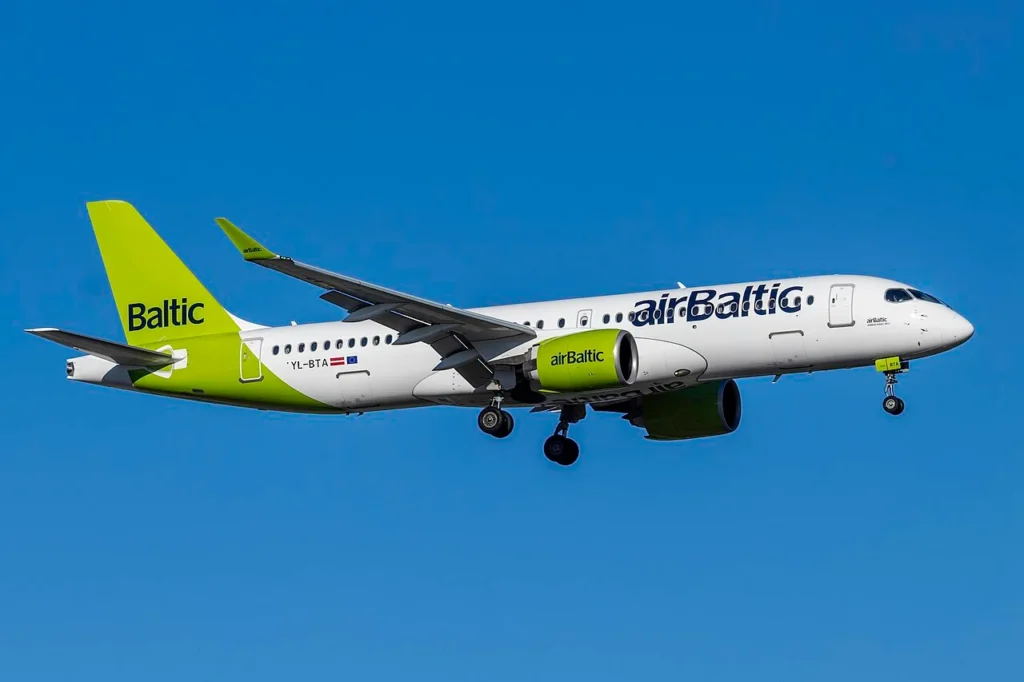
Latvia’s national carrier airBaltic carried a record 4,040,800 passengers during the first nine months of 2026, strengthening its regional aviation role. The total rose 3.5% compared with the same period in 2025, marking its highest January–September passenger figure.
September delivered steady passenger traffic alongside increased flight activity. The airline welcomed approximately 474,000 travellers and operated 4,387 flights, up 2.5% year on year.
For Baltic tourism, the results highlight the importance of international air access across Latvia, Lithuania and Estonia. However, September also showed that additional capacity does not automatically generate matching passenger demand.
September Flights Increase as Traffic Holds Steady
airBaltic’s September passenger total remained broadly unchanged from the 474,200 travellers recorded a year earlier. Meanwhile, flight operations increased from 4,281 to 4,387 services.
The figures show that the airline expanded operations while carrying almost the same number of passengers. This distinction matters when assessing aviation growth and its potential contribution to tourism.
More flights can improve travel options, depending on their distribution across routes and departure times. However, flight growth alone does not establish whether more international visitors reached Baltic destinations.
The reported passenger figures cover airBaltic’s route network. They do not separately identify inbound tourists, outbound residents, business travellers or passengers connecting between destinations.
Consequently, September’s performance offers a useful measure of airline activity, while leaving the precise tourism contribution unquantified.
Additional Capacity Lowers Seat Occupancy
The airline recorded a September passenger load factor of 79.4%, below the previous year’s level. Load factor measures the proportion of available passenger seats occupied.
Increased seat capacity primarily explained the decline, as available seats grew faster than passenger demand during the month. airBaltic therefore offered more capacity without recording a comparable increase in travellers.
For the airline, this creates a practical balance between expanding services and attracting sufficient demand. For tourism businesses, it highlights the difference between improved accessibility and actual visitor growth.
Additional seats can create opportunities for destinations to welcome more travellers. Nevertheless, hotels, attractions and tour operators benefit most when those opportunities translate into arrivals and spending.
The September figures do not establish changes in ticket prices, booking patterns or passenger spending. They therefore cannot demonstrate whether increased capacity made holidays cheaper or generated additional tourism revenue.
Record Traffic Strengthens the Wider Picture
The nine-month results provide a broader view than September’s relatively stable performance. airBaltic carried 4,040,800 passengers between January and September, achieving 3.5% annual growth.
During the same period, the carrier completed 37,607 flights, an increase of 5.3% compared with 2025. Flight activity therefore expanded faster than passenger numbers across the reporting period.
Even so, the record passenger total demonstrates increased use of the airline’s network over nine months. September’s flat traffic did not prevent airBaltic from reaching its strongest January–September result.
For destinations served by the carrier, sustained network activity supports access throughout a longer reporting window. This matters because tourism businesses depend on travel flows across multiple months.
However, the cumulative figures should not be interpreted as a record for Baltic tourist arrivals. Airline passenger totals and destination visitor statistics measure different activities.
Baltic Connectivity Supports Tourism Opportunities
airBaltic connects Latvia, Lithuania and Estonia with destinations across Europe and beyond. Those links help travellers reach major cities, holiday destinations and business centres.
For international visitors, air connectivity can make Baltic trips easier to plan. Accessible services support journeys centred on historic cities, cultural attractions, natural landscapes and local experiences.
The potential benefits extend across accommodation, restaurants, visitor attractions and organised tours. When overseas travellers arrive, their spending can support businesses throughout the destination economy.
Business connectivity also contributes to the region’s travel activity. International services help companies maintain relationships, reach overseas markets and coordinate visits with commercial partners.
These journeys can generate demand for hotels, hospitality and local transport alongside leisure tourism. Nevertheless, the published figures do not separate business travel from other passenger categories.
Demand Remains Central to Aviation Growth
airBaltic’s latest results present two connected developments: record cumulative passenger traffic and September capacity growth that outpaced demand. Together, they show expansion alongside a continuing need to fill available seats.
For Baltic destinations, the opportunity lies in turning aviation access into visits, overnight stays and local spending. Greater connectivity provides a foundation, while traveller demand determines how strongly tourism businesses benefit.
The record nine-month total reinforces airBaltic’s importance within regional travel. September’s lower seat occupancy adds a clear reminder that sustainable growth requires passenger demand to develop alongside flight operations.
For more travel news like this, keep reading Global Travel Wire