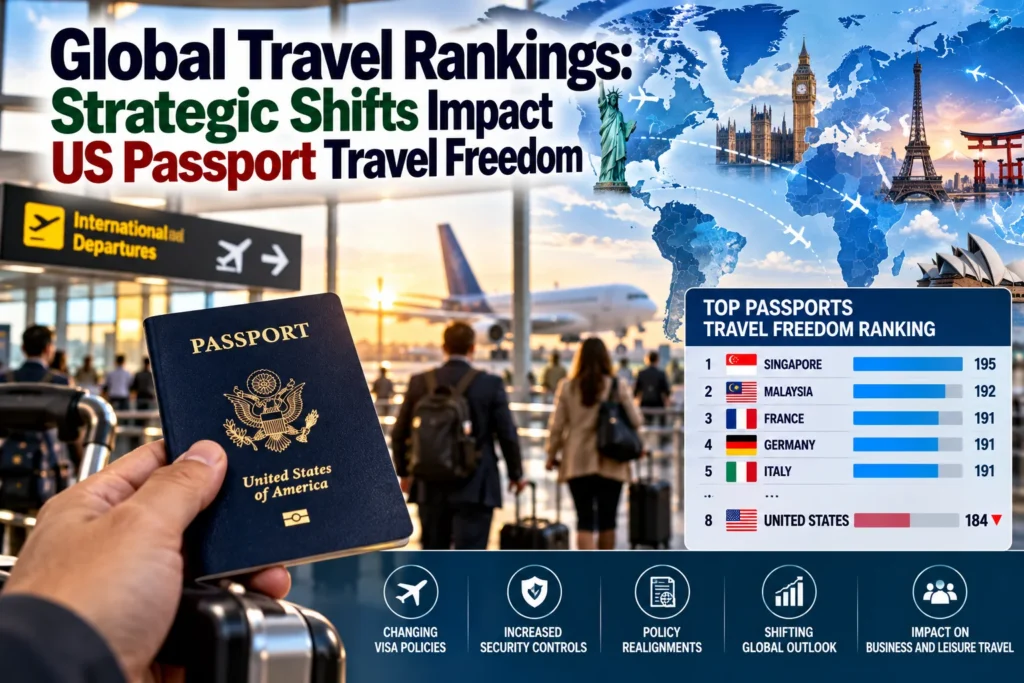
For decades, holding a United States passport represented unmatched international mobility, granting travelers seamless access across global destinations with minimal administrative requirements. However, official evaluations of global mobility systems highlight a changing landscape for international transit. Updated mobility indices place the U.S. passport at 12th worldwide, reflecting a long-term shift from its top position held when original mobility indexes debuted.
While the nation continues to score exceptionally well in global economic competitiveness, foreign direct investment, and domestic quality of life, its comparative standing for visa-free entry has experienced a noticeable decrease. International transport policies, reciprocal visa regulations, and evolving border screening rules are reshaping how American travelers navigate foreign entry requirements across multiple continents.
Tracking Shifts in International Travel Access
The position of travel documents worldwide depends on dynamic bilateral agreements and government immigration policies. Recent comparative studies evaluate 199 global passports based on direct entry privileges, administrative entry pre-authorizations, and overall freedom of movement. While the U.S. passport retains entry privileges to numerous global destinations, other nations have expanded their international agreements at a faster pace, reshaping the global mobility list.
Separately published mobility evaluations from international migration advisory frameworks place the United States in a tie for 10th place alongside Iceland. This represents a clear contrast to two decades prior, when U.S. travelers shared top-tier global access alongside leading European destinations like Denmark and Finland.
Key Factors Driving Changes in Visa Privileges
The underlying factor behind changing mobility scores is the growing requirement for international pre-travel clearances, electronic visas, and formal visa applications prior to departure. A prime example of this policy shift occurred when the Brazilian government officially reinstated visa requirements for American citizens entering the country.
The policy update introduced an electronic visa requirement accompanied by a standard processing fee. Government authorities attributed the decision directly to international diplomatic reciprocity, which seeks to match the specific entry and visa standards that host nations apply to incoming foreign visitors.
Reciprocal agreements form the foundation of global diplomatic relations, yet research into international immigration policies reveals that only a fraction of global visa relationships operate on complete reciprocity. Many high-income economies enjoy broad visa-free access in international jurisdictions without offering identical entry exemptions to citizens of those same nations. As partner nations update their border entry frameworks to emphasize equal diplomatic treatment, traditional travel exemptions are being re-evaluated globally.
The Rising Importance of Digital Border Clearance
Beyond individual country exemptions, global travel infrastructure is shifting rapidly toward advance electronic screening and biometric tracking systems. This transition impacts not only U.S. passport holders but travelers worldwide navigating modern border administration.
Advance Electronic Clearances: Governments are replacing traditional on-arrival entry stamps with mandatory pre-travel authorizations that must be requested days before departure.
Biometric Tracking Implementations: Automated digital systems at international airports capture facial scans and fingerprints to log entry and exit timestamps, ensuring compliance with short-stay allowances.
Standardized Reciprocity Measures: Partner governments are increasingly implementing fee-based electronic travel approvals to equalize diplomatic entry policies.
Impacts on the Modern Global Travel Sector
Changes in document power directly influence consumer travel behavior, flight bookings, and international tour routing. When entry requirements transition from automatic visa-free access to formal visa applications or paid digital permissions, travelers face additional planning steps and administrative expenses.
Tour operators, cruise lines, and corporate mobility managers are adapting to these updates by incorporating entry compliance checks into early booking stages. For long-haul destinations, clear entry guidelines prevent last-minute airport delays and ensure seamless transit through international hub facilities.
Adapting to Evolving Border Frameworks
As global transport authorities modernize border controls, travelers must take proactive measures to prepare for international journeys well in advance of departure.
Audit Entry Rules Early: Confirm destination entry requirements weeks before departure, taking note of electronic visa processing timelines and health documentation rules.
Monitor Passport Validity Balances: Ensure passports maintain at least six months of validity beyond intended departure dates, as required by many foreign ministries.
Prepare Digital Supporting Documents: Keep electronic copies of return flight itineraries, confirmed hotel reservations, and travel authorizations stored securely on personal devices.
The ongoing evolution of global passport rankings highlights the dynamic nature of international relations and immigration governance. While the U.S. passport remains a robust travel document for international exploration, adapting to updated visa requirements ensures smooth and hassle-free transit across modern international borders.
For more travel news like this, keep reading Global Travel Wire