Crossing European borders for corporate assignments is becoming increasingly complex as digital screening architectures take effect across the Schengen Area. For human resources managers, global mobility directors, and travel coordinators, managing international travel now extends far beyond booking flights or reserving hotel accommodations. Modern corporate mobility requires strict compliance management to address evolving visa guidelines, electronic pre-screenings, and automated biometric border checks.
Governments and European border management authorities have introduced advanced digital systems designed to record comprehensive traveler information, biometric identifiers, and entry-exit logs. While these technology upgrades streamline border traffic over the long term, they create an auditable digital trail of all cross-border business activities. Unprepared organizations risk itinerary delays, posted-worker compliance non-compliance, social security liabilities, and potential border entry rejections.
Navigating EES and ETIAS Operational Frameworks
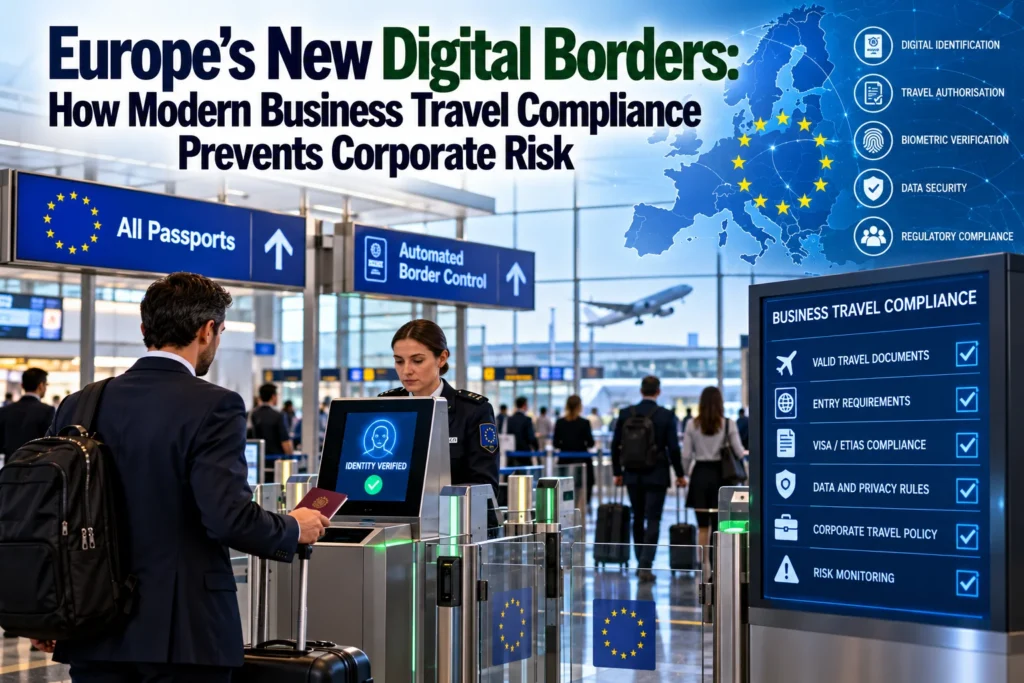
Two core digital infrastructure platforms govern the updated European border architecture: the Entry/Exit System (EES) and the European Travel Information and Authorisation System (ETIAS). Together, these systems modernize border verification for non-European Union travelers entering the Schengen zone for short stays.
Entry/Exit System (EES): Replaces physical passport stamps with an automated digital register. The platform captures a traveler’s biometric details—including facial images and fingerprint scans—alongside personal information, passport numbers, and exact timestamps of entries and exits. Stored digital data remains active across subsequent visits for up to three years, enabling authorities to track the standard short-stay limit of 90 days within any 180-day window.
European Travel Information and Authorisation System (ETIAS): Functioning as an advance screening framework for visa-exempt travelers, ETIAS requires pre-travel clearance prior to departure. Linked directly to a traveler’s passport, the authorization evaluates security risk profiles across participating European nations.
Together, ETIAS evaluates entry eligibility prior to transit, while EES logs physical movements at border crossings. For corporate teams moving personnel through busy travel hubs, non-compliance with either platform can disrupt corporate schedules and cause immediate boarding denials.
Immigration, Corporate Tax, and Operational Exposure
Border compliance represents only one element of modern travel governance. Human resource teams must also evaluate whether an employee’s proposed day-to-day duties align with the host nation’s visitor activity parameters. European border regulations draw clear legal distinctions between general business visits and active, hands-on employment.
Attending an industry conference or internal strategic planning session falls under standard visitor permissions. Conversely, activities such as installing hardware, conducting specialized engineering work, or delivering direct client deliverables often trigger additional work permit requirements or posted-worker notifications. Inaccurate travel descriptions given during digital pre-screening or border interviews can lead to administrative penalties or refused entry.
Furthermore, cumulative days spent working in a host jurisdiction can trigger corporate tax obligations or establish permanent establishment liabilities. As border systems digitize travel histories, regulatory authorities gain greater transparency to cross-reference movement records with tax filings, posted-worker declarations, and social security coverage certificates.
Essential Pre-Travel Compliance Strategies for Corporate HR
To safeguard traveling employees and maintain corporate compliance across European routes, organizations should implement structured pre-travel review processes before authorizing international bookings.
Verify Entry Eligibility and Stay Accumulation: Audit passport validity, active visa statuses, and remaining allowance under the Schengen 90/180-day rule. Maintain centralized travel tracking to monitor cumulative time spent in European destinations.
Define the Purpose of Travel: Establish whether planned on-site activities meet local visitor exemptions. Replace generic descriptions such as “business meeting” with precise document explanations detailing specific scopes of work, such as contract negotiations or quarterly strategy reviews.
Assemble Consistent Supporting Documentation: Provide employees with comprehensive travel packets prior to departure. Documentation should include formal corporate invitation letters, confirmation of host facility details, return itineraries, and proof of adequate financial resources.
Maintain Auditable Compliance Records: Store up-to-date records of employee passport details, active travel clearances, posted-worker filings, and social security certificates (such as A1 coverage forms).
Building Future-Ready Corporate Mobility Frameworks
The transition toward fully digital European border management reflects a global shift in international travel administration. Advanced travel authorization, biometric verification, and centralized data sharing require businesses to approach cross-border mobility with structured oversight.
Integrating pre-travel risk assessments directly into corporate booking tools ensures that compliance obligations are verified before tickets are issued. Advanced mobility management platforms help align itinerary data with real-time tax thresholds, immigration criteria, and labor laws.
By establishing rigorous corporate travel policies and staying updated on regulatory changes in the European Union, organizations can avoid border friction, protect operational timelines, and ensure personnel move across international borders safely and fully compliant.
For more travel news like this, keep reading Global Travel Wire