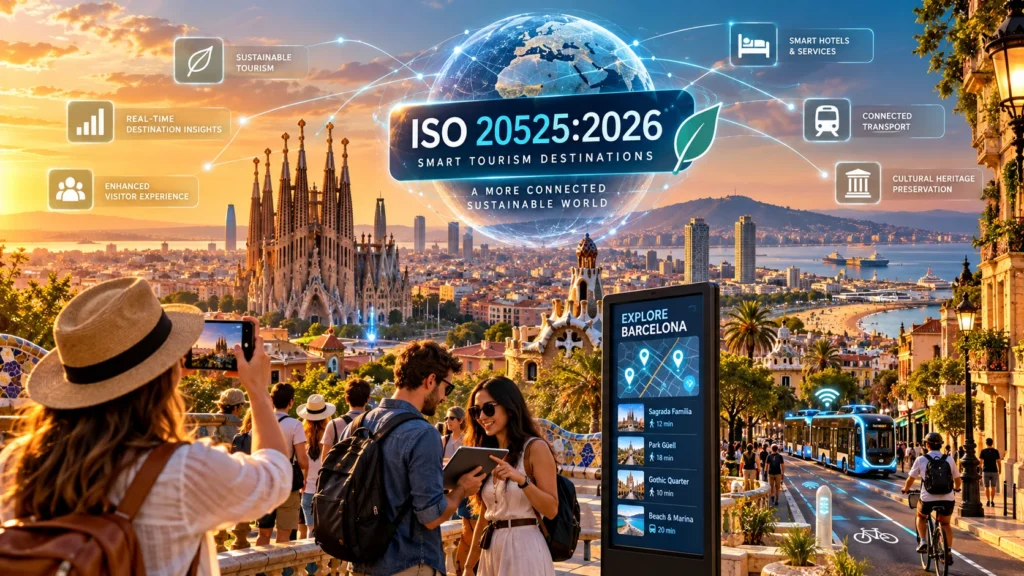
Spain has solidified its role as an international pioneer in digital travel innovation by spearheading the creation of ISO 20525:2026. Official ratification by the International Organization for Standardization establishes a global framework designed to harmonize how tourist data is collected, organized, and shared across international borders.
This benchmark initiative was advanced by Spain’s Ministry of Industry and Tourism through the State Mercantile Society for the Management of Innovation and Tourist Technologies, in close collaboration with the Spanish Association for Standardization. The global standard introduces a unified semantic language for digital platforms, transforming how smart tourism destinations connect and process complex travel information.
Interoperability and Standardized Tourism Data
At the heart of the standard is a shared semantic architecture that structures tourist data into machine-readable formats. By establishing standardized definitions for travel concepts, public sector institutions and private industry players can connect disparate software platforms without costly manual integrations.
This automated interoperability enables municipal systems, regional travel hubs, and national tourism databases to exchange real-time information effortlessly. Destination management organizations can streamline service delivery, enhance public infrastructure oversight, and foster an ecosystem capable of generating highly personalized, real-time travel experiences for international visitors.
Strategic Implementation and Regional Adaptability
The standard targets public entities, municipal authorities, data managers, content publishers, and software developers building next-generation destination management tools. By adopting a standardized data foundation, destinations gain significant structural benefits:
Personalized Visitor Experiences: Destinations can deliver tailored itineraries, dynamic accessibility maps, and real-time cultural event updates across multilingual applications.
Elevated Business Intelligence: Standardized data flows empower local governance bodies to analyze visitor movement patterns, peak overcrowding times, and resource consumption accurately.
Data-Driven Decision Making: Tourism boards can adjust public transportation schedules, heritage site access, and promotional campaigns based on verified live usage metrics.
Designed with flexible parameters, the global model balances international compatibility with regional sovereignty. Municipalities and regional tourism boards can embed localized cultural definitions, municipal laws, and regional attractions into their systems without breaking compatibility with global software tools or third-party travel platforms.
International Collaboration and Standardization Foundations
The development of the standard took place within the ISO technical committee specialized in tourism and related services, utilizing the administrative framework provided by the Spanish Association for Standardization.
The project incorporates structural principles from existing national benchmarks, including Spain’s established standard on semantics applied to smart tourist destinations. Technical expertise was provided by Spanish technology consultancies Globaldit and Sismotur, ensuring real-world operational challenges in municipal travel administration directly informed the international framework.
Reinforcing National Digital Innovation Frameworks
The global rollout of ISO 20525:2026 aligns directly with Spain’s national digital roadmap, led by official tourism bodies. The framework will directly support national digital infrastructure projects, including the Intelligent Destination Platform and the Open Innovation Platform, which houses an expansive dedicated tourism data space.
By establishing an open, interoperable global standard, Spain continues to drive international progress in sustainable travel management, smart city integration, and digital tourism transformation.
For more travel news like this, keep reading Global Travel Wire