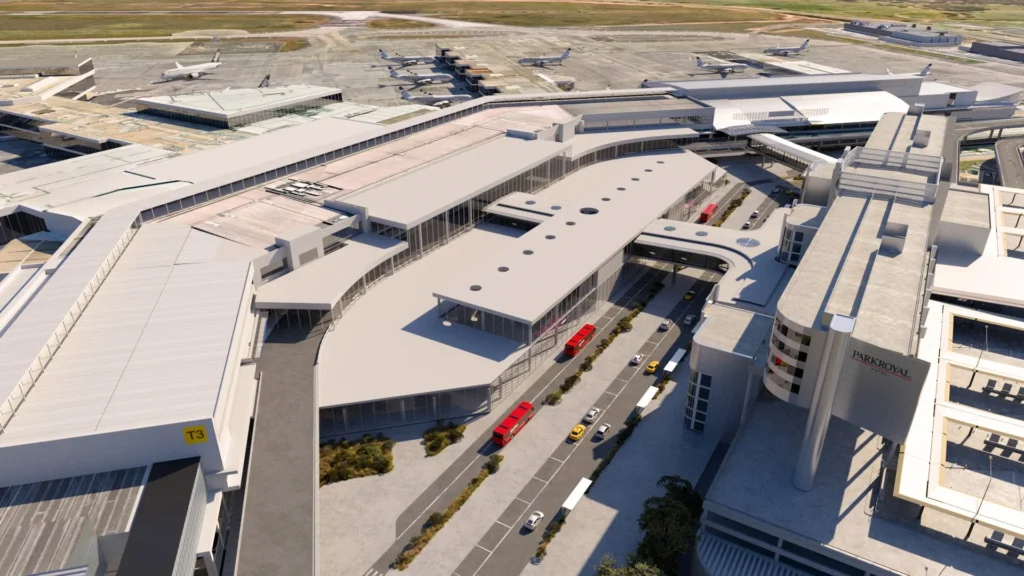
Melbourne Airport has unveiled designs for a A$4.5 billion international terminal expansion, strengthening preparations for growing overseas travel demand. The project will enlarge passenger areas, improve facilities and add five aircraft stands.
The development coincides with British Airways’ planned return to Melbourne in January 2027. Daily, year-round flights will connect London Heathrow and Melbourne through Kuala Lumpur, adding another option for UK–Australia travellers.
Together, the developments could support Victoria’s tourism industry by improving international access and increasing the airport’s capacity. However, terminal improvements will arrive through staged construction rather than alongside the airline’s launch.
Terminal Designs Put Passenger Space First
Released on 20 October 2026, the designs extend the international terminal into the existing forecourt. Recently opened pick-up and drop-off facilities have freed space for that expansion.
Plans include larger check-in, arrivals and departure areas, alongside additional baggage carousels. Higher ceilings and extensive windows aim to create a brighter, more open environment.
Passengers will also gain expanded lounge facilities and more retail and dining options. These additions address several stages of the journey, from checking baggage to waiting for departure.
Five new stands could accommodate five widebody aircraft or eight narrowbody aircraft. That flexibility would help the airport handle different aircraft sizes and airline schedules.
A separate A$500 million international baggage system investment complements the terminal programme. The airport says this system will more than double existing outbound baggage capacity.
International Demand Supports Investment
Melbourne Airport handled 1,261,361 international passengers in January 2026, its international terminal’s busiest month on record. The figure increased 1.8% compared with January 2025.
International traffic reached 45,106 passengers on 9 January, the terminal’s busiest day. Seasonal journeys and the Australian Open helped support demand.
Nevertheless, overall airport traffic did not grow that month. Combined domestic and international passenger numbers reached 3,376,879, slightly below the previous January.
September subsequently brought a record monthly total of 3,143,097 passengers. International throughput reached 998,271, marginally above September 2025.
These results highlight the importance of coordinating terminal space, baggage processing and aircraft parking as travel patterns evolve.
British Airways Restores Melbourne Connection
British Airways will return after last operating Melbourne services in 2006. Its new route will use Boeing 787-9 aircraft and operate through Kuala Lumpur.
The outbound BA33 service is scheduled to begin from London Heathrow on 9 January 2027. The return BA34 service starts from Melbourne on 11 January.
Travellers will have four cabin choices: World Traveller, World Traveller Plus, Club World and First. The routing provides a one-stop journey between London and Melbourne.
Passengers should review their booking for precise timings, baggage conditions and arrangements during the Kuala Lumpur stop.
The service also creates another option for travellers combining Melbourne with onward destinations through Heathrow. Its tourism value will depend on demand, bookings and how visitors structure their stays.
Victoria Tourism Could Reach Wider Markets
Additional international capacity gives tourism businesses more opportunities to attract overseas visitors. Hotels, restaurants, attractions and tour operators could benefit when extra flights bring additional guests.
Melbourne’s cultural venues, food scene and sporting events provide reasons for city stays. Visitors can also extend itineraries into regional Victoria.
The Great Ocean Road, regional wine destinations and the Grampians offer opportunities to spread visitor spending beyond Melbourne. Convenient international access can help travellers consider longer, more varied holidays.
However, extra flights do not guarantee specific increases in arrivals, employment or tourism revenue. Those outcomes require subsequent passenger and spending data.
Third Runway Supports Longer-Term Growth
The international terminal programme forms part of wider infrastructure planning that includes Melbourne Airport’s third runway.
The planned 3,000-metre runway will sit approximately 1.3 kilometres west of the existing north–south runway. The airport expects it to open in 2031.
Parallel operations should provide greater flexibility for arrivals and departures. Meanwhile, the terminal expansion addresses passenger processing and aircraft stands.
The airport forecasts growth from approximately 36 million passengers in financial year 2024–25 to around 76 million by 2042.
Construction Makes Journey Planning Important
Melbourne Airport intends to maintain round-the-clock operations while delivering the expansion in stages. Travellers should check current terminal access and pick-up arrangements before departing.
Passengers using the new British Airways service should also compare total journey times and fare conditions. The Kuala Lumpur stop remains an important part of itinerary planning.
For visitors travelling beyond Melbourne, allowing sufficient connection time will help coordinate domestic flights and ground transport. The combined aviation developments create more travel possibilities while preparing Victoria’s principal gateway for future demand.
For more travel news like this, keep reading Global Travel Wire