The international travel sector is confronting an essential turning point as commercial growth intersects with structural, environmental, and macroeconomic pressures. While travel continues to serve as an indispensable catalyst for employment and gross domestic product across continents, international tourism bodies and official statistical agencies indicate that future stability requires deliberate intervention. Sector authorities warn that sustaining long-term competitiveness depends on navigating climate vulnerability, infrastructure constraints, digital transformations, and complex geopolitical shifts.
Recent international economic assessments outline both the strength and fragility of this recovery. The World Economic Forum, through its Travel and Tourism Development Index, documented that ninety-two percent of one hundred and ten assessed economies made tangible structural improvements to their tourism operating environments over a two-year evaluation period. Complementing these findings, forecasts from the World Travel and Tourism Council project the global travel economy to reach twelve trillion United States dollars, generating approximately three hundred and seventy-six million jobs worldwide.
Official arrival data, however, highlights an emerging operational plateau. Figures released by the United Nations World Tourism Organization indicate that international tourist arrivals expanded by merely point four percent during the opening half of the year. Rising operational expenses, tighter consumer budgets, and regional volatility continue to constrain momentum. Consequently, tourism boards and economic ministries are shifting priority from unmanaged volume to structural resilience, seeking concrete answers to preserve host ecosystems, channel green capital, and align intergovernmental policies.
Uniting Public Governance and Industry Leadership in Paris
These systemic questions form the core framework of the seventh annual A World for Travel summit, scheduled to convene two hundred international ministers, destination directors, and corporate strategists in Paris. Operating under the strategic mandate of navigating global disruption through collective governance, the gathering centers on resolving structural tensions that dictate destination viability.
Key sessions examine the balance between numerical growth and territorial resilience. With biodiversity degradation and volatile weather patterns registered as direct economic liabilities, delegates are prioritizing Nature Intelligence frameworks and ocean conservation policies. Discussions surrounding the Blue Economy aim to coordinate coastal tourism expansion with maritime ecological protection. Similarly, regional dialogues focusing on the African continent, featuring representatives from regional tourism authorities and national ministries, center on overcoming commercial connectivity deficits and accelerating cross-border public-private partnerships.
Directing Capital Toward Measurable Decarbonization
Sustainable transformation across the international hospitality supply chain requires substantial capital allocation, upgraded civic infrastructure, and verifiable metrics rather than aspirational targets. European policymakers and global hospitality sustainability directors will deliberate on scalable models for verified net-zero accommodation, demonstrating how regional energy grids, municipal suppliers, transport operators, and private investors can systematically eliminate carbon footprints.
Further investment sessions, led by European Commission policy representatives and former national tourism ministers, analyze the changing profile of tourism assets. Discussions focus on reassessing institutional investment risks, enhancing domestic leisure networks, and adjusting municipal planning frameworks to meet modern travel expectations without depleting local community resources.
Establishing Ethical Frameworks for Connected Travel Technologies
Beyond ecological stewardship, the integration of advanced artificial intelligence into destination management systems represents a pivotal transformation. Technology debates at the summit will evaluate open data networks and transparent digital architectures designed to prevent monopolistic distribution models. By encouraging interoperable platforms, policymakers aim to ensure that regional tourism boards, local hospitality operators, and independent travel businesses retain direct control over travel intelligence and visitor data.
Complementary forums will examine the future of sustainable passenger mobility, highlighting cross-border rail infrastructure, low-emission aviation initiatives, and maritime transport routes.
A Dedicated Platform for Global Policy Implementation
The forum brings together prominent international figures, including the President of the World Travel and Tourism Council, regional executive leadership from the Île-de-France administrative authority, former European tourism ministers, and special advisory leadership from the United Nations World Tourism Organization.
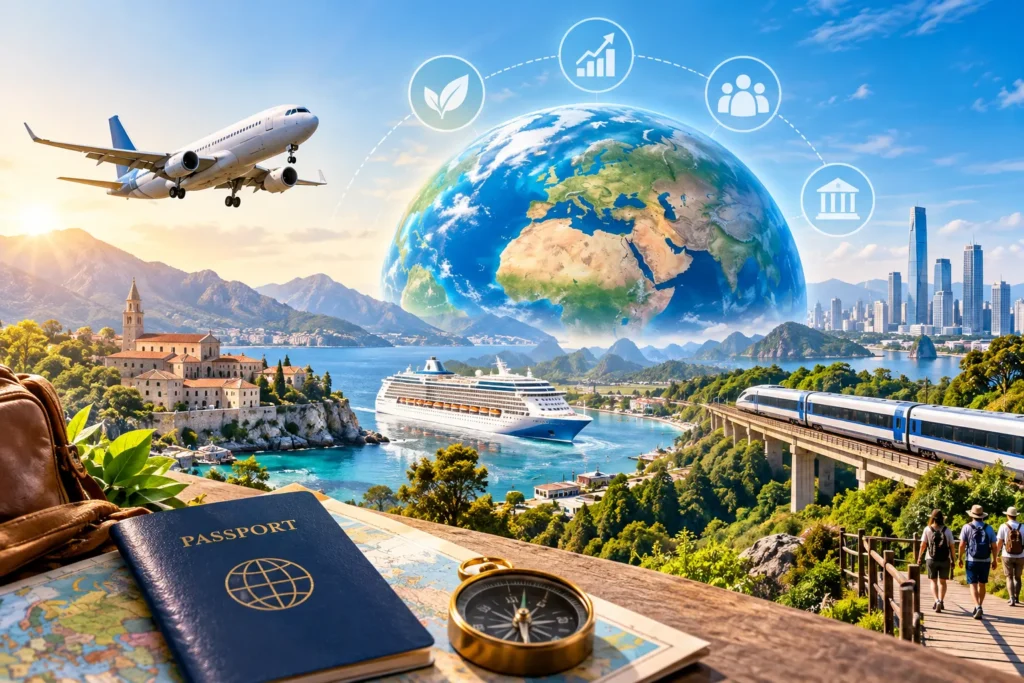
Structured across five core developmental pillars comprising Climate, Environment, Economy, Technology, and Social Impact, the initiative seeks to bridge the gap between high-level intergovernmental policy and commercial implementation. As international travel matures, the prevailing challenge transitions from generating raw arrival numbers to engineering balanced, resilient destination models that deliver enduring public value while safeguarding cultural and ecological heritage worldwide.
For more travel news like this, keep reading Global Travel Wire