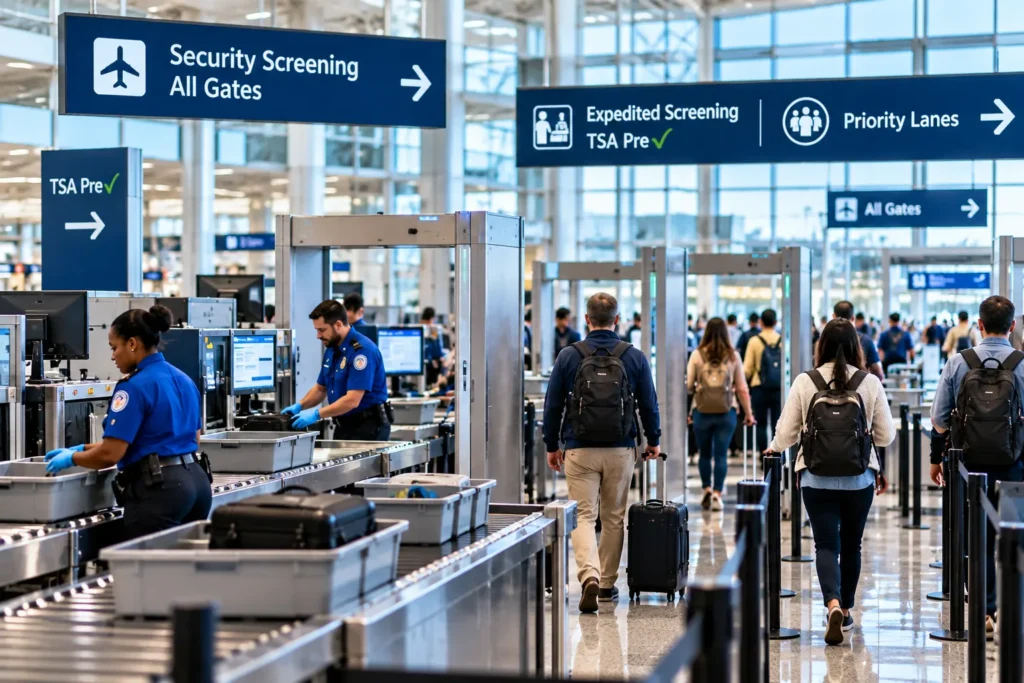
The Department of Homeland Security has confirmed that pre-vetted traveler programs, including TSA PreCheck and Global Entry, remain operational across major airports. Following administrative reviews regarding staffing allocations during federal budget discussions, security officials determined that maintaining expedited processing lanes provides the most effective pathway for reducing overall terminal congestion and maintaining continuous screening standards.
Official statements from civil aviation and border protection leadership confirm that expedited screening lanes will remain open wherever local staffing permits. Security managers at individual airport facilities retain flexibility to adjust lane configurations on a case-by-case basis to balance general passenger throughput with security mandates during peak departure hours.
Strategic Importance of Pre-Vetted Screening Programs
The decision to preserve trusted traveler services highlights the critical role expedited screening plays within the broader national aviation ecosystem. Trusted traveler initiatives allow security agencies to focus detailed inspection resources on non-vetted passengers while moving pre-screened travelers efficiently through designated lanes.
Official security administration assessments emphasize several operational benefits of maintaining operational TSA PreCheck status:
Queue Reduction: Expedited screening lanes process passengers at significantly higher rates per hour compared to standard checkpoints, preventing terminal overflow into landside public areas.
Workforce Efficiency: Pre-vetted lanes require fewer dedicated screening assets per thousand passengers, allowing airport directors to deploy security personnel to high-density general screening points.
Resource Optimization: Terminating specialized administrative escorts allows security agencies to redirect trained personnel directly to frontline traveler inspection checkpoints.
By preserving these systems, aviation managers maintain a balanced throughput capacity across major metropolitan transit hubs during high-volume travel periods.
Operational Flexibility Across Regional Aviation Hubs
While national policy affirms the continuation of expedited travel programs, local checkpoint operations depend on daily airport staffing assessments. At major gateways—including Los Angeles International Airport, Boston Logan International Airport, and international pre-clearance facilities—local administrators dynamically evaluate lane openings based on real-time traveler density.
Aviation directives issued to airport authorities outline key operational protocols:
Dynamic Lane Management: Local airport directors monitor security line lengths continuously and open or consolidate PreCheck lanes based on available screening staff.
International Port Coordination: Customs and border officials coordinate international entry facilities to maintain Global Entry kiosk availability while prioritizing primary passport control lanes during peak arrival banks.
Prioritization of Main Checkpoints: Dedicated escorts and non-essential administrative personnel are assigned directly to general screening lanes to assist the broader traveling public.
These measures ensure that while localized adjustments may occur, the structural framework supporting expedited traveler processing remains intact across the national airport network.
Airport Navigational Strategies for Peak Travel Periods
Aviation authorities and passenger advocacy groups advise travelers to prepare for dynamic airport conditions, particularly during severe weather events or high-density seasonal travel windows. Operating during periods of high demand requires proactive planning to avoid missed flights and terminal delays.
Travelers navigating US airports during high-density periods should observe standard security recommendations:
Verify Local Checkpoint Status: Passengers should monitor real-time security line updates published on official airport digital channels prior to departing for the terminal.
Arrive Early: Airport operators recommend arriving at least two to three hours before domestic departures and three to four hours prior to international flights.
Prepare Documentation: Ensuring digital boarding passes and trusted traveler identification credentials are readily accessible helps accelerate checkpoint processing times for all passengers.
By keeping expedited traveler lanes active and focusing personnel on core security operations, federal transportation authorities aim to safeguard passenger mobility, protect airport security standards, and support stable economic activity across the commercial travel sector.
For more travel news like this, keep reading Global Travel Wire