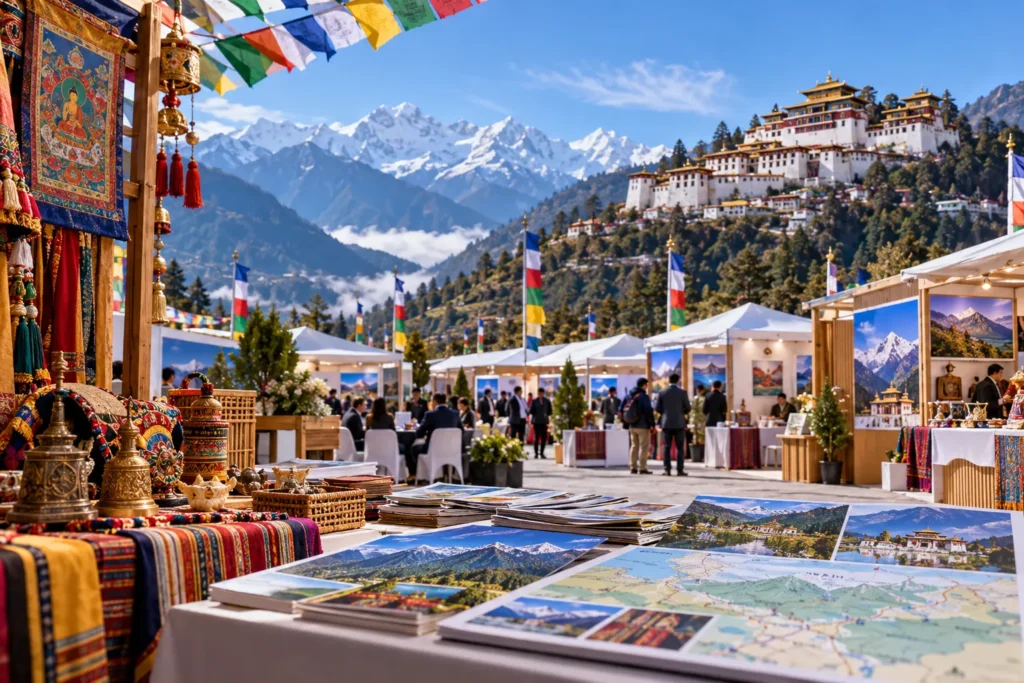
The Ministry of Tourism has successfully concluded the fourteenth edition of the International Tourism Mart in Tawang, Arunachal Pradesh. The multi-day summit brought together forty-three international buyers representing twenty-two countries, forty-two domestic buyers from sixteen Indian states and Union territories, and eighty-one regional sellers. Designed to establish commercial linkages and highlight the rich cultural and natural landscape of the northeastern states, the event generated 1,580 business-to-business meetings, placing digital tourism architecture, administrative access reforms, and regional economic development at the forefront of national travel policy.
Commercial Engagements and Regional Policy Coordination
Organized by the central government, the mart served as an institutional bridge between local hospitality stakeholders, destination operators, and global travel buyers. Participants from across Asia, Europe, and the Americas engaged in focused commercial interactions to develop packaged itineraries tailored to experiential, eco-friendly, and adventure-seeking travelers. Domestic buyers from diverse states explored collaborative partnerships to channel visitor traffic into lesser-known circuits across the eight northeastern states.
Alongside commercial negotiations, Union Minister for Tourism and Culture Gajendra Singh Shekhawat convened a high-level ministerial conference with tourism ministers and administrative secretaries from across the northeastern region. The joint ministerial conference established a synchronized policy agenda to coordinate infrastructure development, align destination branding, and expand both domestic and inbound international journeys. Central authorities reiterated their strategic focus on positioning the Northeast as an accessible, premier ecological and cultural destination for global travelers.
Digital Public Infrastructure and Administrative Reforms
During the technical sessions of the mart, the Ministry of Tourism outlined several flagship programs aimed at transforming visitor discovery and accessibility. Delegations received detailed briefings on the second phase of the nationwide Dekho Apna Desh campaign, which encourages citizens to explore domestic destinations through structured thematic circuits and community engagement initiatives.
The ministry highlighted the development of the National Digital Tourism Stack, an open, shared digital public infrastructure intended to integrate travel service discovery, certified operator registries, and unified booking interfaces for tourism enterprises. Presenters also reviewed the growing economic influence of the live concert economy and international music festivals as significant drivers of youth and cultural travel across northeastern cities.
A critical policy area examined during official deliberations was the ongoing proposal to simplify visitor access procedures, specifically regarding Restricted Area Permits and Protected Area Permits. Because certain border zones and sensitive ecological tracts across the northeastern states require administrative clearances for incoming travelers, easing permit documentation and accelerating processing turnaround times represent essential steps toward reducing friction for international tourists. The central administration reiterated its commitment to streamlining these regulatory clearances through integrated online verification platforms.
Record Expansion in Domestic Tourist Visits
Statistical reviews delivered during the event emphasized the remarkable resilience and upward trajectory of travel within the country. Director General of the Ministry of Tourism Suman Billa presented official figures illustrating the exponential expansion of domestic tourism over the past decade.
According to official statistics from the Ministry of Tourism, total domestic tourist visits across the country expanded from 1.32 billion recorded in 2014 to 4.34 billion by the end of 2025. This threefold increase reflects substantial improvements in national highway connectivity, the continuous expansion of regional airports under civil aviation connectivity programs, and rising disposable incomes among leisure travelers.
Ministry representatives noted that this significant nationwide momentum provides an unprecedented foundation to distribute high-volume domestic footfall into northeastern hill stations, biodiversity parks, and heritage destinations. By channeling a greater proportion of these domestic journeys toward local homestays and community cooperatives, destination authorities seek to generate sustainable employment and protect fragile Himalayan environments.
Future Outlook for Himalayan Tourism Corridors
The commercial meetings conducted in Tawang mark a strategic transition from broad promotional campaigns toward targeted enterprise development. For destinations like Tawang, renowned for high-altitude glacial lakes, historical monasteries, and distinct indigenous traditions, translating institutional dialogue into commercial tour operations is key to sustained economic expansion.
The operational success of the commercial tie-ups established during the mart will depend on the development of comprehensive seasonal tour itineraries, reliable ground logistics, and clear access protocols for visiting delegations. The coordinated approach between the Ministry of Tourism and regional state governments establishes an active framework to address connectivity challenges, promote ecological stewardship, and ensure that local communities directly benefit from expanding international and domestic travel to Northeast India.
For more travel news like this, keep reading Global Travel Wire