International travel trends indicate that modern globetrotters increasingly build global itineraries around iconic athletic grounds, historical stadiums, and cultural sports heritage. Within this evolving segment, the French capital stands as one of the world’s preeminent hubs for athletic exploration. Official tourism assessments published by the Paris Convention and Visitors Bureau, alongside updates from Atout France, consistently point to major tournament venues as primary anchors for regional hospitality, international visitor arrivals, and long-term economic activity. Among these venues, the Stade Roland Garros complex at Porte d’Auteuil represents an intersection of premier competition, architectural heritage, and youth sporting diplomacy that extends far beyond the annual Grand Slam calendar.
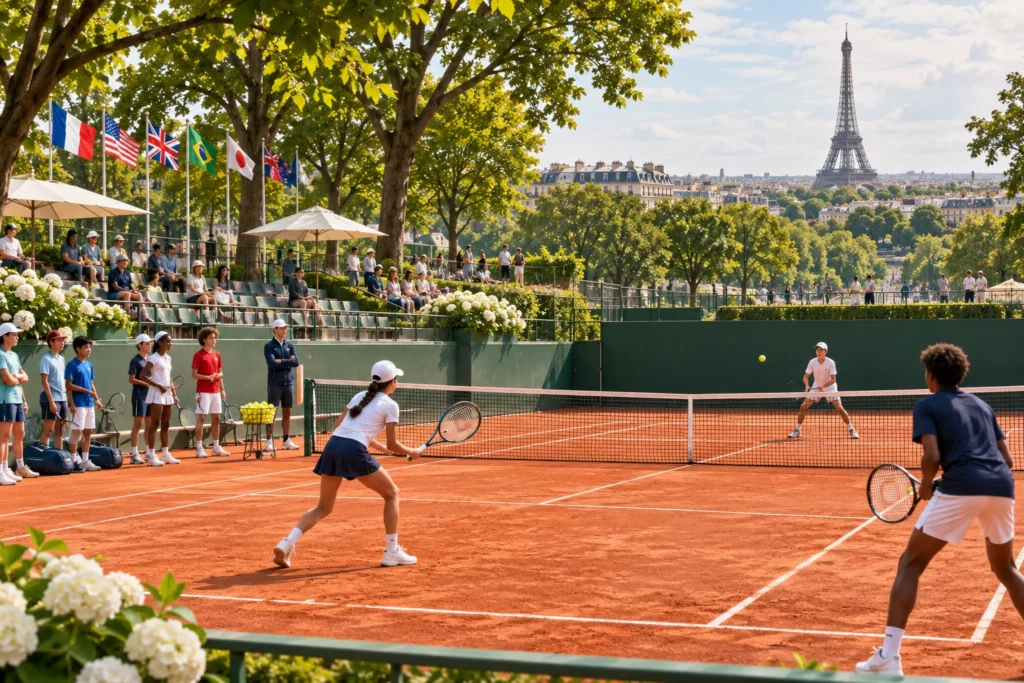
The enduring appeal of Parisian tennis landmarks dates back to decades of transformative athletic history. When tennis icons Andre Agassi and Steffi Graf completed their historic French Open singles triumphs in 1999, they cemented their names in the international sporting pantheon and brought unprecedented global attention to the historic red clay of Paris. Marking the milestone anniversary of those victories, the two champions returned to the Parisian clay on Court Number Seven for a high-profile international showcase with sixteen emerging talents from ten nations, including France, Germany, Spain, China, Taiwan, Mexico, Singapore, Russia, and Poland. Held in front of international attendees and accompanied by an eighty-thousand-dollar contribution divided between the Andre Agassi Foundation and Graf’s Children for Tomorrow organization, the gathering highlighted how iconic venues serve as cross-border meeting grounds where sport, youth development, and global community outreach converge.
The gathering culminated at the Tenniseum, the official Roland Garros museum, which functions year-round as an essential stop for cultural travelers, sports historians, and school delegations from around the world. At this dedicated preservation facility, former champions and global sporting ambassadors have repeatedly underscored that public interest generated by championship venues can be harnessed to support vulnerable youth through education, specialized trauma support, and structured athletic pathways. For inbound visitors exploring the sixteenth arrondissement, the venue illustrates how world-class sports destinations balance major commercial spectator events with sustainable cultural programming and social heritage.
From a broader developmental perspective, the French Ministry of Sports and Olympic and Paralympic Games, together with municipal tourism directorates, highlights sports tourism as an engine of sustainable economic growth. Official statistical documentation on Parisian inbound travel reveals that major sporting venues draw hundreds of thousands of overseas ticket holders, international delegates, and independent travelers annually. Major championships at Porte d’Auteuil consistently register record attendance figures, bringing over six hundred thousand visitors into the metropolitan area across qualifying and main tournament draws. This sustained influx delivers broad economic benefits, filling registered hotels, energizing culinary establishments from Saint-Germain to the Bois de Boulogne, and generating sustained patronage across public transit networks and regional rail lines.
Official releases from regional tourism boards emphasize that the appeal of world-class facilities is no longer confined to tournament fortnights. Modern sports travelers increasingly book curated museum visits, guided architectural tours, and community youth clinics throughout the off-season. By opening museum exhibitions, preservation archives, and stadium passageways to regular guided tours, the venue allows travelers to walk the same grounds where sporting legends etched their legacies. This model directly supports national tourism frameworks designed to distribute visitor traffic across the calendar year, mitigating seasonal hospitality lulls and promoting sustainable, low-impact cultural exploration.
Government strategies in France continue to prioritize youth sporting infrastructure, international cultural exchange, and accessible recreation. Public statements from national tourism and sporting ministries emphasize that major athletic sites serve as tangible inspiration for young travelers and aspiring competitors worldwide. By hosting multi-nation youth clinics, charity exhibitions, and educational initiatives on legendary courts, Paris reinforces its reputation as a city that celebrates human potential, international solidarity, and cultural prestige alongside athletic excellence.
For travelers planning visits to the French capital, sports heritage facilities present an enriching complement to traditional landmarks such as the Louvre or the Eiffel Tower. Surrounded by the classic green chestnut trees bordering the western avenues of Paris, the distinctive terracotta courts of Roland Garros remain a living monument to sporting history. As national tourism boards continue to promote active, heritage-centered travel itineraries, the ongoing legacy of classic championship moments and philanthropic youth partnerships guarantees that Paris will remain a global beacon for sports tourism, historical discovery, and international goodwill for generations to come.
For more travel news like this, keep reading Global Travel Wire