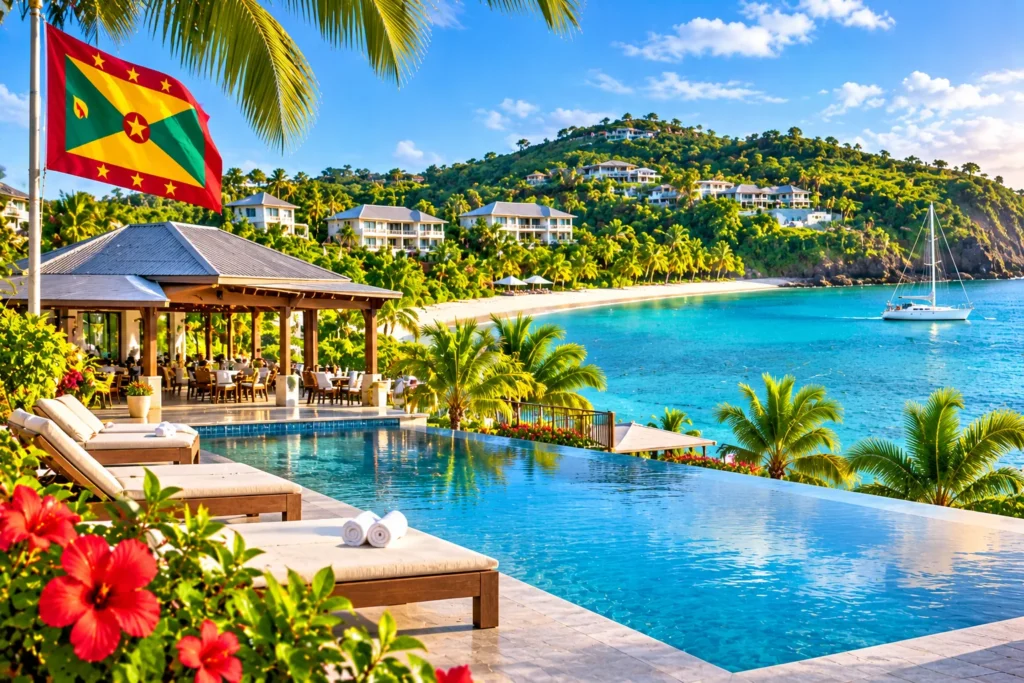
The landscape of Caribbean travel and hospitality development is experiencing a significant structural shift as international travelers look beyond conventional leisure vacations toward long-term destination investment. In Grenada, renowned globally as the Spice Isle, official statutory reports and administrative performance records confirm that the nation’s luxury tourism infrastructure is capturing steady international capital. While overall regional citizenship and migration volumes have undergone programmatic recalibration across the Eastern Caribbean, dedicated investment in government-approved tourism developments, luxury beachfront villas, and eco-hospitality resorts continues to demonstrate remarkable resilience.
According to formal quarterly statistical disclosures published by the Investment Migration Agency of Grenada, approved tourism and residential real estate has cemented its place as the primary vehicle for overseas applicants. Official agency data for the opening quarter of 2026 reveals that of the 103 total applications submitted to statutory bodies, real estate developments accounted for 76 submissions, representing nearly 74 percent of all programmatic activity. The remaining applicants opted for sovereign contributions channeled directly into the National Transformation Fund, an official public vehicle dedicated to financing national infrastructure, conservation initiatives, and community enhancement projects.
The underlying demographics of this capital influx reflect an evolving pattern of destination engagement. Traditionally driven by applicants seeking broader international visa-free travel privileges, recent statutory data indicates rising participation from nations whose citizens already possess extensive global mobility. Official first-quarter records from the Investment Migration Agency document that nationals of the United States have emerged as the third-largest demographic group, accounting for 9 percent of total activity. Nigeria led overall submissions at 24 percent, followed by China at 15 percent, with Iraq recording 7 percent.
Because American travelers already hold robust passport mobility, including visa-exempt entry across major global destinations, their participation points to an experiential motive anchored in luxury hospitality, lifestyle security, and high-end second-home tourism. United States nationals are committing substantial capital, with programmatic thresholds starting from 235,000 US Dollars for state transformation contributions and 270,000 US Dollars for government-authorized luxury real estate. This sustained interest signals that affluent travelers view Grenada not merely as a temporary holiday escape, but as a prestigious personal sanctuary and viable hospitality asset class.
The broader statistical trajectory of the program underlines substantial institutional output. During the initial three months of 2026, the Investment Migration Agency granted citizenship to 539 individuals, reflecting an increase from the 491 approvals granted during the corresponding period in 2025. Total programmatic yields for the quarter generated tens of millions of Eastern Caribbean Dollars, with official revenue tables confirming that approved resort and residential projects generated approximately 77.8 million Eastern Caribbean Dollars, or nearly 28.8 million US Dollars in direct property capital. For the full 2025 fiscal year, official reporting recorded 469 total applications and 1,124 approvals, delivering an estimated net contribution to the central government of EC$153 million, representing roughly 57 million US Dollars.
From a destination planning standpoint, national tourism and commerce ministries emphasize that real estate-linked capital delivers indispensable benefits to the local visitor economy. Unlike passive financial contributions, statutory investments in accredited hospitality ventures flow directly into tangible physical tourism assets. Official development registers show these funds underwriting premier boutique resorts, coastal marinas, and sustainable residential communities, including high-profile projects such as Coral Cove and luxury enclaves across Point at Petite Calivigny. These developments expand the island’s high-tier room inventory, generate direct employment for local construction trades and hospitality professionals, and stimulate recurring domestic supply chains from organic spice farmers to artisanal maritime guides.
The Ministry of Tourism and the Grenada Tourism Authority have consistently aligned hospitality investment frameworks with the island’s overarching sustainable development agenda. Official tourism statistical releases confirm that the United States remains the island’s largest traditional source market for stayover arrivals, with American visitors driving sustained demand for boutique eco-luxury accommodations, heritage spice plantation tours, and marine yachting across the southern Grenadines. The increasing conversion of American leisure travelers into verified property stakeholders reinforces destination loyalty, stimulates extended seasonal stays, and elevates per-visitor expenditure across local culinary, marine, and cultural sectors.
In official strategic reviews, agency leadership and government representatives have highlighted the importance of robust compliance, enhanced regional oversight, and transparent due diligence to ensure long-term program integrity. Under standardized regional regulatory accords established across the Eastern Caribbean, statutory authorities have implemented rigorous applicant screening, independent vetting, and standardized processing benchmarks. These administrative safeguards protect the sovereign reputation of the destination while ensuring that accredited luxury developments deliver verifiable economic and social returns to local communities.
As Grenada advances its comprehensive visitor economy master plans, the integration of foreign investment with high-end sustainable tourism continues to bear fruit. By steering international capital directly into world-class lodging infrastructure, environmental conservation, and local human capital, official authorities are ensuring that the island remains a premier global destination where sustainable travel experiences and secure long-term investments seamlessly unite.
For more travel news like this, keep reading Global Travel Wire