International travel patterns across the United Arab Emirates are undergoing a marked realignment as lengthy consular appointment queues and extended visa processing windows alter winter holiday schedules. Ahead of the annual UAE National Day public holidays and extended winter school breaks, outbound travel demand from the country’s diverse resident population is increasingly dictated by visa accessibility rather than pure destination preference.
Official consular appointment dashboards and international visa monitoring systems show that appointment slots for popular Western destinations—most notably across the European Schengen area and the United States—face substantial scheduling backlogs. These procedural delays have compelled UAE expatriates and holidaymakers to reassess travel timelines, postpone transcontinental vacations, or redirect bookings toward destinations offering digital electronic visas, visas on arrival, or visa-free entry.
Consular Wait Times and Application Bottlenecks
The winter period traditionally marks one of the busiest outbound travel windows from UAE international hubs, including Dubai International Airport and Zayed International Airport in Abu Dhabi. However, regulatory processing times have introduced unexpected friction for long-haul itineraries.
Official visa appointment tracking metrics published by the United States Department of State indicate that non-immigrant visitor visa (B1/B2) appointment queues at consular posts in the region can extend several months into the future, with standard interview appointment wait times occasionally approaching a full year depending on seasonal workload and staffing.
Similarly, consular services representing European Schengen member states continue to report heavy appointment volumes. High global application intake, combined with mandatory biometric registration requirements and administrative verification procedures, has constrained available interview slots at outsourced processing centers in Dubai and Abu Dhabi. Because Schengen regulations require applications to be processed through the primary country of destination, travelers unable to secure localized appointment dates are forced to abandon European holiday plans altogether.
A Fundamental Paradigm Shift in Destination Selection
These procedural constraints have triggered a structural change in how international residents plan leisure travel. Historically, outbound vacationers finalized airline itineraries and hotel accommodations before initiating visa paperwork. Current market conditions have inverted this sequence.
Consumer booking data and travel trade assessments show that prospective holidaymakers now treat visa availability as the decisive screening factor. Travel planning begins by verifying appointment availability and statutory processing periods. If documentation cannot be processed comfortably before scheduled holiday departures, consumers actively substitute alternative travel corridors that offer streamlined entry procedures.
This operational shift is dispersing traveler spending away from conventional winter city-break capitals and ski resorts toward accessible regional markets across Central Asia, Southeast Asia, Eastern Europe, and the Middle East and North Africa region.
Rising Demand for Visa-Free and Visa-on-Arrival Hubs
National tourism boards in destinations offering simplified entry frameworks are capitalizing on this redirected demand. Countries that grant electronic visas within 24 to 72 hours, or provide unconditional visa-on-arrival facilities to holders of valid UAE residence visas, have recorded strong increases in forward flight bookings and accommodation inquiries.
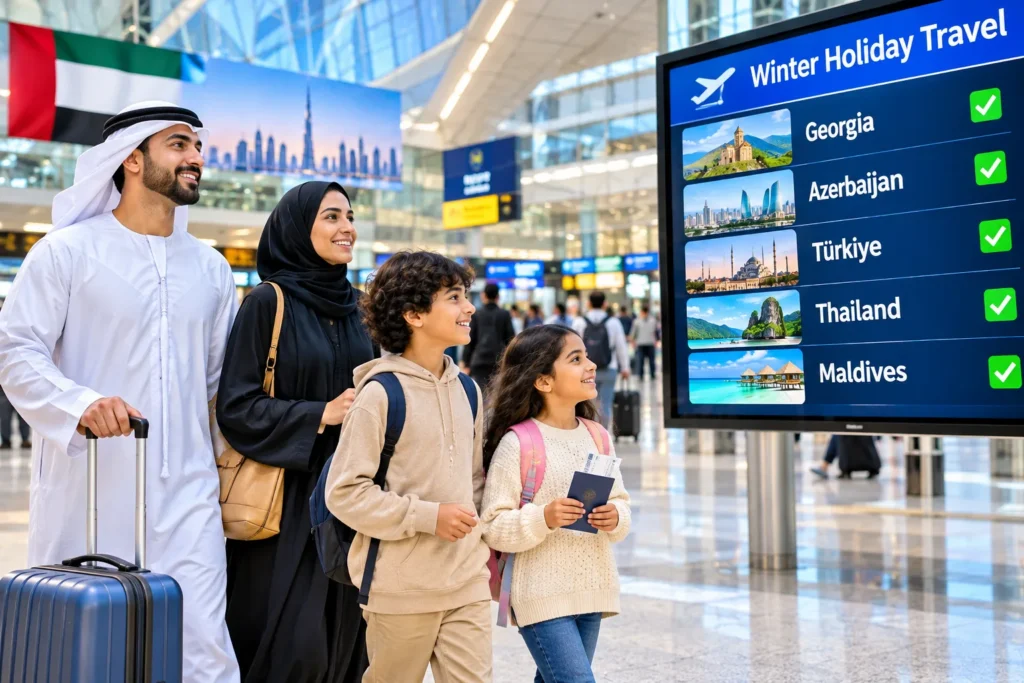
Prominent destinations benefiting from this geographic redirection include:
The Caucasus and Central Asia: Destinations such as Georgia, Azerbaijan, Armenia, Uzbekistan, and Kazakhstan provide simplified digital entry or border visas for UAE residents, supported by extensive direct flight connectivity from national carriers.
Southeast Asia: Thailand, Malaysia, and Indonesia continue to draw high family volumes through automated electronic travel authorizations and expansive visa exemption programs.
Island and Coastal Escapes: The Maldives, Seychelles, and Mauritius remain resilient luxury travel choices due to universal visa-free or straightforward visa-on-arrival policies upon landing.
By eliminating consular uncertainty, these partner markets provide reliable travel logistics for families seeking predictable winter holiday arrangements.
Domestic Staycations and Regional Travel Resilience
The procedural barriers affecting intercontinental journeys are also reinforcing the domestic and regional hospitality sectors. Official tourism indicators published by the UAE Ministry of Economy and Tourism demonstrate sustained domestic demand, with local hotel revenues, occupancy rates, and leisure spending showing consistent strength during the autumn and winter seasons.
Rather than navigating lengthy visa procedures abroad, an increasing number of residents choose domestic staycations, exploring luxury desert resorts, mountain lodges in Ras Al Khaimah, and cultural heritage developments in Abu Dhabi and Sharjah. Additionally, regional road trips across the Gulf Cooperation Council network provide accessible, high-standard leisure alternatives that require minimal advance visa processing.
As international diplomatic missions work to expand processing capacity through automated appointment scheduling and updated digital processing systems, the prevailing consumer behavior remains pragmatic. For UAE outbound travelers navigating the winter holiday season, procedural convenience and assured border clearance have become the primary determinants of global destination appeal.
For more travel news like this, keep reading Global Travel Wire