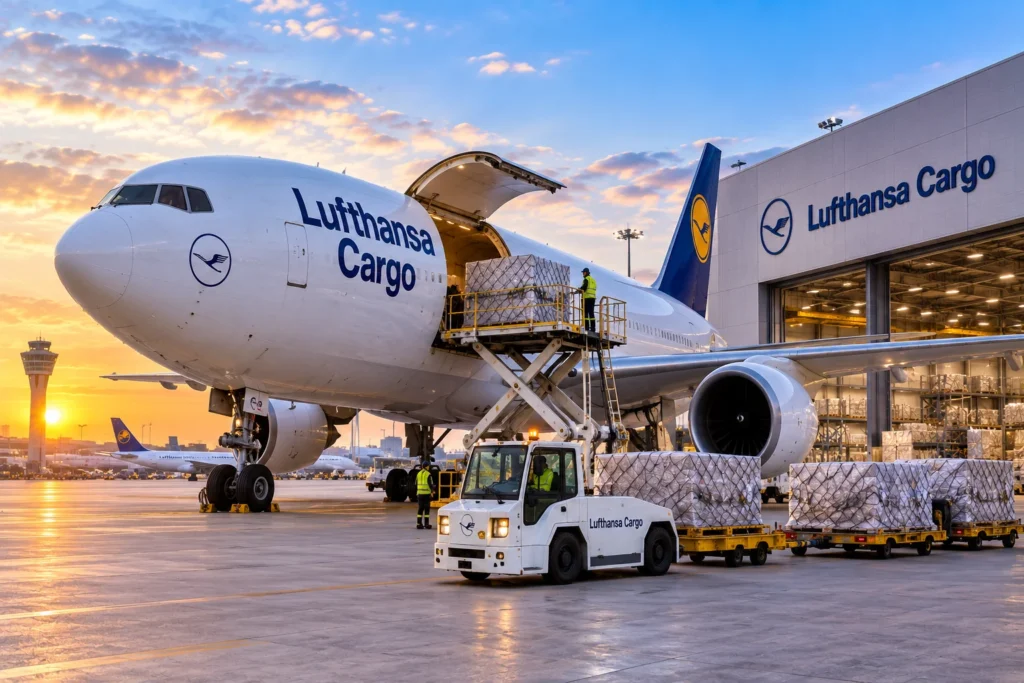
In a landmark strategic development marking the centennial year of Lufthansa’s corporate origins, Lufthansa Cargo has officially executed an agreement to acquire a one-hundred percent stake in LUG aircargo handling GmbH. This major acquisition establishes a robust foundation for long-term operational growth and significantly enhances air cargo infrastructure across Central Europe.
The corporate agreement, formally signed in September 2026, transfers full ownership of the established ground handler from its previous parent entity, the Dettmer Group, to Europe’s leading freight carrier. By securing immediately available ground handling facilities in its core domestic market, Lufthansa Cargo reinforces its competitive edge and expands its operational flexibility to accommodate growing international trade volumes.
The transaction represents a vital structural pillar in the carrier’s forward-looking business strategy. As global supply chains face ongoing volatility, expanding physical capacity at key aviation hubs remains essential for supporting export-oriented economies and preserving seamless connectivity across global trade corridors.
Expanding Aviation Logistics Capacity and Ground Operations
The integration of LUG aircargo handling GmbH brings extensive operational assets, deep industry experience, and specialized handling capabilities into Lufthansa Cargo’s overall domestic framework. With over six decades of air freight experience, LUG currently manages diverse cargo categories for major international airlines, supported by a workforce of approximately four hundred aviation logistics specialists.
The acquisition significantly expands physical logistics real estate, adding substantial covered warehouse space alongside extensive administrative infrastructure:
Covered Handling Facilities: Approximately 50,000 square meters of specialized warehouse space tailored for high-volume freight processing.
Administrative Infrastructure: An additional 18,000 square meters dedicated to office management, customs processing, and operational control.
Workforce Expertise: Immediate integration of a highly skilled labor force trained in complex freight logistics and specialized cargo segments.
This expanded physical footprint complements the massive ongoing modernization of Lufthansa Cargo’s primary ground hub facilities. Under the long-term LCCevo infrastructure program, the freight operator is investing approximately 600 million Euros into complete facility upgrades and technological automation. The strategic combination of newly acquired external facilities and modernized core infrastructure ensures that aviation logistics capacity can scale effectively to meet future market demands.
Continuity for International Freight Services and Trade Partners
Despite the full ownership transfer, the commercial transition is designed to preserve market stability and maintain unbroken operational continuity for existing logistics clients. Following the formal completion of the transaction, LUG aircargo handling GmbH will continue operating as an independent entity in the market, preserving its established brand identity, internal management structures, and client relationships.
Official executive statements from Lufthansa Cargo emphasize that targeted capital investments in domestic infrastructure serve a dual purpose: building operational resilience against market disruptions while elevating overall service reliability for international freight services. Enhancing ground efficiency directly benefits national export industries and international trade partners relying on timely transshipments through German hub locations.
Leadership from the selling entity, the Dettmer Group, expressed strong support for the strategic transition, noting that LUG’s long-term commercial trajectory and employee base remain well-positioned for sustained development under the global umbrella of Lufthansa Cargo.
The transaction remains subject to customary closing conditions, including required antitrust evaluations and regulatory approvals from relevant government authorities.
Strategic Implications for Global Trade and Logistics Networks
The expansion of domestic freight handling capacity reflects broader structural trends transforming the global air transport sector. Efficient ground processing is increasingly recognized as a critical determinant of overall air cargo speed, reliability, and cost-effectiveness.
Strengthening ground operations yields distinct advantages for international supply chains:
Hub Throughput: Faster aircraft turnaround times and streamlined cargo acceptance reduce ground delays for time-critical shipments.
Specialized Cargo Handling: Expanded warehouse capacity enables safer, temperature-controlled, and secure management of high-value goods, pharmaceutical products, and industrial equipment.
Systemic Resilience: Additional processing capacity absorbs sudden surges in shipping demand, mitigating airport congestion during peak seasonal transport periods.
As global commerce increasingly relies on rapid, resilient transport networks, investments in modern air cargo infrastructure remain indispensable. By pairing substantial physical expansions with capital investments in facility modernization, leading logistics providers ensure that international freight services can efficiently adapt to changing economic conditions and support long-term economic growth.
For more travel news like this, keep reading Global Travel Wire