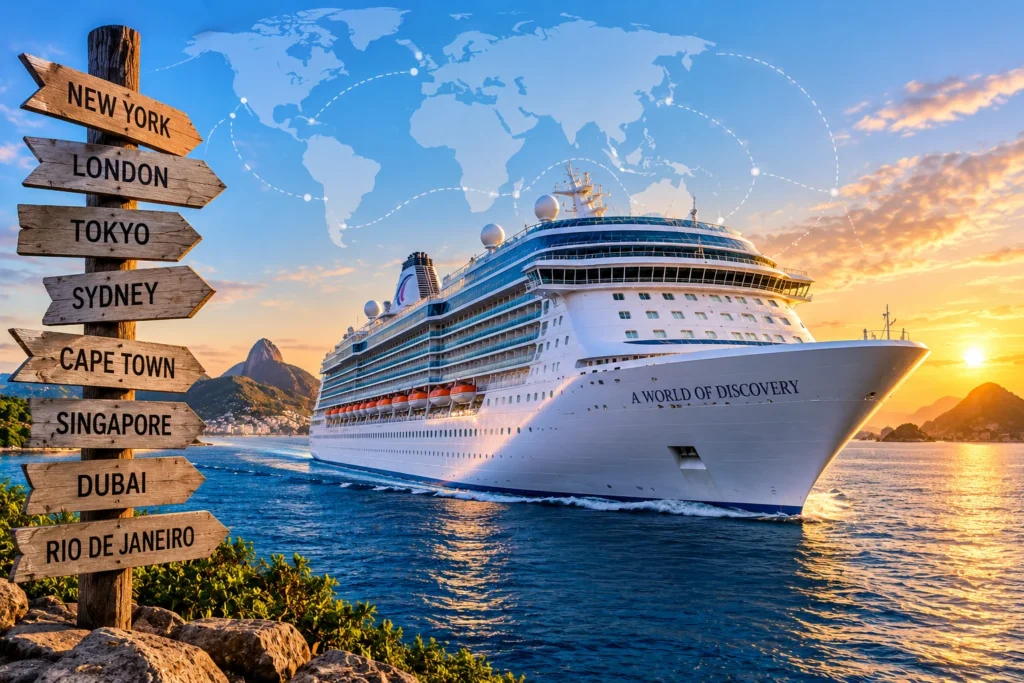
A historic milestone in maritime travel unfolded as the Regatta officially departed from the Port of Civitavecchia near Rome, embarking on a 371-day voyage across six continents. Smashed by nearly 100 days, the journey surpasses all previous duration benchmarks to become the longest world cruise ever scheduled in modern passenger shipping. Carrying approximately 670 international guests, the vessel is set to navigate through 220 ports of call across 62 countries over the course of a full calendar year.
The ambitious expedition marks the inaugural deployment for Explorations by Norwegian, a specialized venture established through a commercial collaboration between Flight Centre Travel Group and Norwegian Cruise Line. Designed to offer immersive, extended ocean travel, the venture signals a shift in consumer demand toward long-duration, destination-focused maritime tourism.
By extending the continuous sailing timeline past twelve months, the voyage transforms traditional round-the-world travel. Rather than switching transit modes or managing fragmented flight schedules, passengers remain aboard a single boutique vessel to traverse the globe at a measured pace.
Extended Sailing Timelines Reshape Long-Duration Cruise Trends
The global cruise sector has seen a steady escalation in itinerary lengths over recent years, driven by affluent retirees, remote professionals, and long-term leisure travelers seeking multi-destination experiences. Previous duration benchmarks included 245-day and 274-night global itineraries, which established high demand for extended residential sea travel.
The Regatta sailing exceeds previous records by nearly three months, establishing an unprecedented operational model for global itineraries. Aviation and maritime analysts note that the growth of long-stay cruising reflects broader changes in global travel behavior, with passengers prioritizing extended destination immersion over short, high-density vacations.
Operating a single continuous route for over a year requires complex logistical coordination, including port clearance arrangements across 62 sovereign maritime jurisdictions, specialized provisioning schedules, and continuous crew rotations. The success of the departure demonstrates the operational readiness of international port agencies to support extended maritime deployments.
Boutique Vessel Design Prioritizes Intimate Destination Access
Unlike modern multi-thousand-passenger megaships equipped with expansive amusement parks, the Regatta operates as a specialized mid-sized vessel featuring 348 passenger staterooms. The boutique ship profile enables access to smaller regional harbors, shallow river channels, and coastal ports that are physically inaccessible to larger commercial liners.
Shipboard amenities emphasize comfortable, long-term residential living. Guests have access to wellness spas, culinary dining venues, quiet library spaces, fitness centers, and live performance lounges designed for extended stays. The smaller passenger capacity fosters a close-knit onboard community while allowing port authorities to manage local visitor traffic sustainably.
The global itinerary spans a comprehensive range of geographic and cultural landscapes:
Europe & The Mediterranean: Calling at coastal destinations including Santorini, the Bay of Naples, and Scandinavian coastal hubs across Denmark and Finland.
Africa & The Indian Ocean: Navigating southward to dock at Cape Verde, South Africa’s Cape Town harbor, and the historic island ports of Zanzibar and Madagascar.
Asia & The Pacific: Traversing key regional transit stops including Sri Lanka, the Maldives, Japan, and coastal China.
The Americas & Fjords: Sweeping across transcontinental waterways, ranging from the glacial fjords of Alaska to the Amazon River basin and the Panama Canal.
Segmented Travel Models Expand Market Accessibility
While a portion of passengers are completing the full 371-day journey, operator scheduling incorporates flexible segment options for travelers unable to commit to an entire year at sea. The broader global itinerary is divided into 24 distinct regional segments, enabling guests to join specific legs ranging from 12 to 47 nights.
Tiered segment pricing allows travelers to select regional passages—such as a 19-night Mediterranean segment covering Turkey, Greece, and Malta—without purchasing the full transcontinental package. Fares for the complete year-long voyage start at comprehensive all-inclusive rates, covering specialty dining, daily shore excursion credits, satellite internet access, onboard gratuities, and laundry services essential for multi-month living.
The introduction of flexible segment booking models provides regional travel agencies with broader inventory to market to diverse consumer demographics. As the Regatta navigates its initial European ports, tourism boards worldwide are monitoring passenger flow metrics to evaluate the economic impact of long-duration cruise visits on local heritage sites, retail businesses, and regional tour operations.
For more travel news like this, keep reading Global Travel Wire