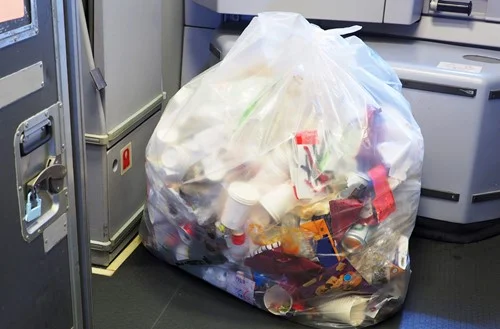
Airlines face a growing challenge in balancing passenger comfort with the materials left behind after landing. Industry research estimates that aviation generated 3.6 million tonnes of cabin waste in 2023, covering discarded food, packaging and other onboard materials.
The issue comes into focus as carriers invest in new amenities and entertainment. Singapore Airlines unveiled an expanded passenger experience on 6 November 2026. American Airlines has also announced plans to bring seatback entertainment across its narrowbody fleet.
These investments reflect the importance of comfort on long journeys. Their resource demands also give airlines a reason to examine which products passengers use, how much catering they load and what happens to materials after each flight.
Cabin Audits Reveal Differences Between Flight Lengths
A 2023–2024 audit programme examined 25 inbound flights arriving at Singapore Changi Airport. It recorded an average of 0.94 kilograms of cabin waste per passenger, or approximately 237.3 kilograms per flight.
Long-haul flights produced an average of 301.1 kilograms per flight and 1.22 kilograms per passenger. Their longer service periods and greater catering requirements help explain the difference.
The findings provide a benchmark for airlines reviewing their supplies. Measuring waste consistently can be difficult when catering contractors and cabin-cleaning teams handle separate streams. A complete count requires information from both.
The research also points to scope for improvement. An earlier Heathrow long-haul audit recorded approximately 1.43 kilograms per passenger, compared with 1.22 kilograms in the newer study.
Singapore Airlines Expands Amenities Across Cabins
Singapore Airlines’ announced upgrades span entertainment, dining and personal comfort products. Suites and First Class passengers will receive SISLEY amenities, while Business Class customers will get BYREDO products and sleeper suits.
Premium Economy amenities will feature INK & WATER. Economy passengers will receive collectible pouches containing travel essentials.
The airline also plans more than 100 new or refreshed dishes and an upgraded KrisWorld entertainment system. Features include 4K screens, Bluetooth connectivity and more than 2,500 entertainment choices.
For passengers, the value of an amenity varies with the journey. An eyeshade may be welcome on an overnight flight. A traveller carrying personal toiletries may use only part of a kit. That variation creates an opportunity to align supplies more closely with demand.
American Airlines Invests in Seatback Entertainment
American Airlines announced plans in August 2026 to introduce screens at every seat across its narrowbody fleet. Installation on new aircraft deliveries is expected to begin in 2028, followed by retrofits through the early 2030s.
The planned system includes 4K displays, Bluetooth connectivity and USB-C charging. Dedicated screens give passengers an entertainment option without relying on their phone’s battery or preparing downloaded content.
Equipment brings a different resource question from food and disposable amenities. Airlines must assess its weight, maintenance and replacement cycle alongside the passenger benefit. Lighter systems can help reduce the equipment load, while durable components can remain in service across many journeys.
Meal Forecasting Connects Comfort With Waste Reduction
Food creates a complex planning task. Airlines estimate how many passengers will want each dish, while accounting for special meals and operational reserves.
A preferred option can run out even when other meals remain uneaten. Advance selections give catering teams more information about those preferences before departure. Their usefulness depends on how accurately the selections translate into meals served.
Amenity requests could provide similar information. Allowing passengers to choose certain items ahead of travel would help airlines plan inventories around stated needs. Any change would also need clear instructions so travellers can obtain the essentials they require onboard.
Disposal Systems Shape What Can Be Recovered
Waste reduction continues after passengers leave the aircraft. Catering teams, cleaners and waste contractors need workable arrangements for separating materials and tracking what is discarded.
Reusable items bring their own requirements, including collection, cleaning and redistribution. Recycling also depends on the treatment rules that apply where an international flight lands.
For travellers, these processes are largely out of view. Their experience is shaped by the meal, blanket, toiletries or screen available at their seat. Airlines can assess that service more precisely by measuring usage alongside satisfaction. Knowing which items return unused gives procurement teams a basis for changing quantities, while preserving the products passengers rely on during the journey.
For more travel news like this, keep reading Global Travel Wire