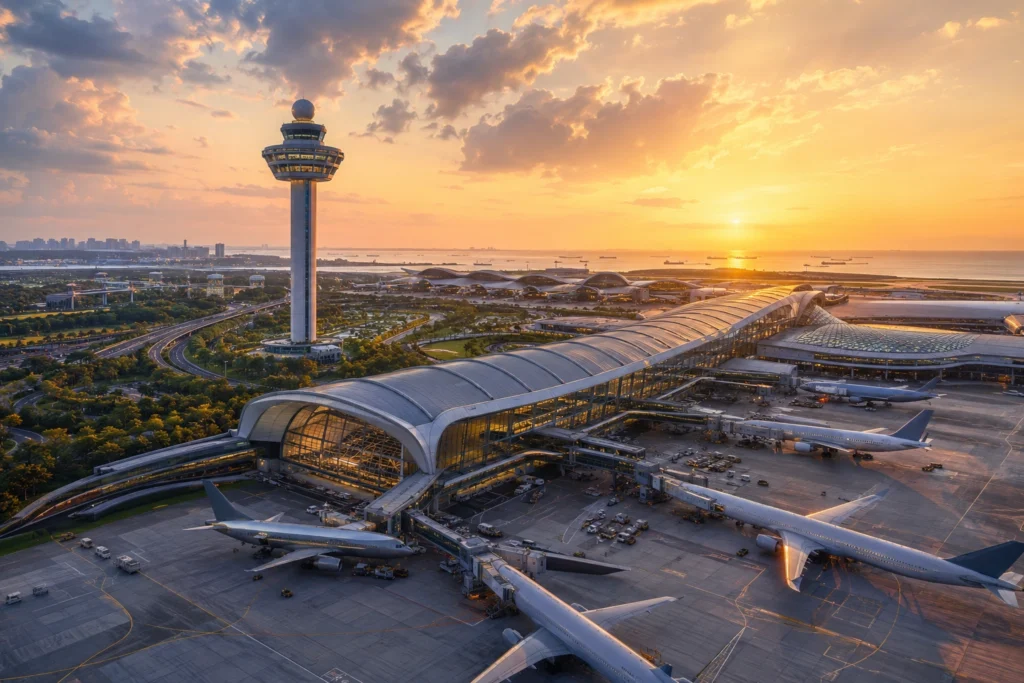
Asia-Pacific aviation is entering a decisive period as rising passenger demand pushes Singapore, Thailand, India and other major markets to expand airport infrastructure while managing the financial pressures associated with mega-hub development.
The region is expected to generate a substantial share of global aviation growth over the next two decades. This creates major opportunities for airlines, airports, tourism destinations, hotels and local economies. However, it also raises a critical question: can governments and airport operators add capacity without making air travel significantly more expensive for passengers?
The issue gained fresh attention during aviation industry discussions in Rio de Janeiro, where infrastructure costs, airport charges, sustainability and operational efficiency emerged as central concerns for the Asia-Pacific market.
Singapore, Thailand and India Expand Airport Capacity
Major airport projects are reshaping the region’s travel landscape.
Singapore Changi Airport is advancing its next phase of expansion as the city-state prepares for future passenger growth. The development is expected to strengthen Singapore’s position as one of the world’s leading transit hubs while supporting tourism, business travel and long-haul connectivity.
Thailand is also investing heavily in airport infrastructure as Bangkok seeks to accommodate higher passenger volumes. The country’s aviation network plays a crucial role in supporting tourism demand for Bangkok, Phuket, Chiang Mai, Krabi and island destinations.
India is facing an equally significant challenge. Rapidly expanding domestic and international travel demand is driving major airport investments across the country. Delhi is positioned as a key global gateway, while additional capacity developments in Mumbai and other cities are designed to support one of the world’s fastest-growing aviation markets.
Across the wider region, new airports and terminal projects in Vietnam, the Philippines and South Korea are also contributing to an unprecedented infrastructure pipeline.
Bigger Airports Must Not Create Higher Travel Costs
Airport expansion can improve connectivity, but airlines remain concerned about the cost of funding new infrastructure.
Large-scale construction projects require substantial capital investment. When airport operators recover these expenses through increased passenger charges or airline fees, travelers may face higher ticket prices.
This creates a difficult balance for policymakers. New terminals, runways and transport links are essential for tourism growth, but affordability remains one of the most important drivers of demand in Asia-Pacific markets.
Low-cost carriers have played a major role in expanding access to travel across the region. Millions of first-time flyers have entered the market through affordable routes connecting major cities with regional destinations. Rising airport charges could place pressure on this progress, particularly in price-sensitive markets.
Technology Can Unlock Additional Airport Capacity
Physical expansion alone may not solve the region’s long-term congestion challenges.
Airports also need to improve efficiency through better slot management, modernized airspace systems, digital identity tools and automated passenger processing. Biometric technology can reduce waiting times at check-in, security and immigration points, helping airports handle more passengers without relying only on larger terminals.
For travelers, these improvements can create smoother journeys. Faster processing, clearer airport navigation and more reliable flight schedules are increasingly important as hubs become busier.
Improved coordination between airlines, airports and air traffic authorities can also reduce delays and strengthen the overall passenger experience during peak travel periods.
Sustainable Aviation Fuel Remains a Key Challenge
Environmental sustainability is another major consideration.
Sustainable Aviation Fuel production is expected to reach approximately 2.4 million tonnes globally in 2026, representing around 0.8% of total jet fuel consumption. Although production is growing, availability remains limited and costs remain significantly higher than conventional fuel.
Asia-Pacific has the potential to become an important production region. India, China, Indonesia and Malaysia possess resources that could support future renewable fuel development, while Southeast Asia holds substantial long-term biomass potential.
However, airlines need reliable supply chains before large-scale purchasing mandates can be implemented effectively. Without sufficient production, sustainability targets may increase costs without delivering the intended environmental benefits.
Tourism Growth Depends on Smart Aviation Policy
The future of Asia-Pacific tourism is closely linked to aviation.
Singapore relies on efficient air connectivity to maintain its role as a global tourism and business hub. Thailand needs affordable flights to support its hotels, attractions and regional destinations. India requires stronger airport capacity to serve domestic travelers while attracting more international visitors.
Mega-hubs can create powerful economic benefits, supporting hospitality, retail, transport services and employment. Yet successful expansion requires more than construction.
Governments and airport operators must combine infrastructure investment with fair pricing, technology, efficient regulation and sustainable fuel development.
Asia-Pacific Aviation Will Shape Global Travel
The region is no longer simply following global aviation trends. It is increasingly defining them.
As Singapore, Thailand and India prepare for rising demand, their decisions will influence how airports around the world manage congestion, affordability and sustainability.
The next chapter of global aviation will depend on whether Asia-Pacific mega-hubs can grow without creating mega-costs for airlines and travelers.
For more travel news like this, keep reading Global Travel Wire