Travel operations at Delhi’s Indira Gandhi International Airport continued normally after a Swiss International Airlines flight aborted takeoff and was evacuated following a reported technical issue in one of its engines. The incident, which occurred shortly after midnight, drew attention to the robust safety procedures, emergency preparedness, and passenger support systems that help protect travelers at one of Asia’s busiest aviation gateways.
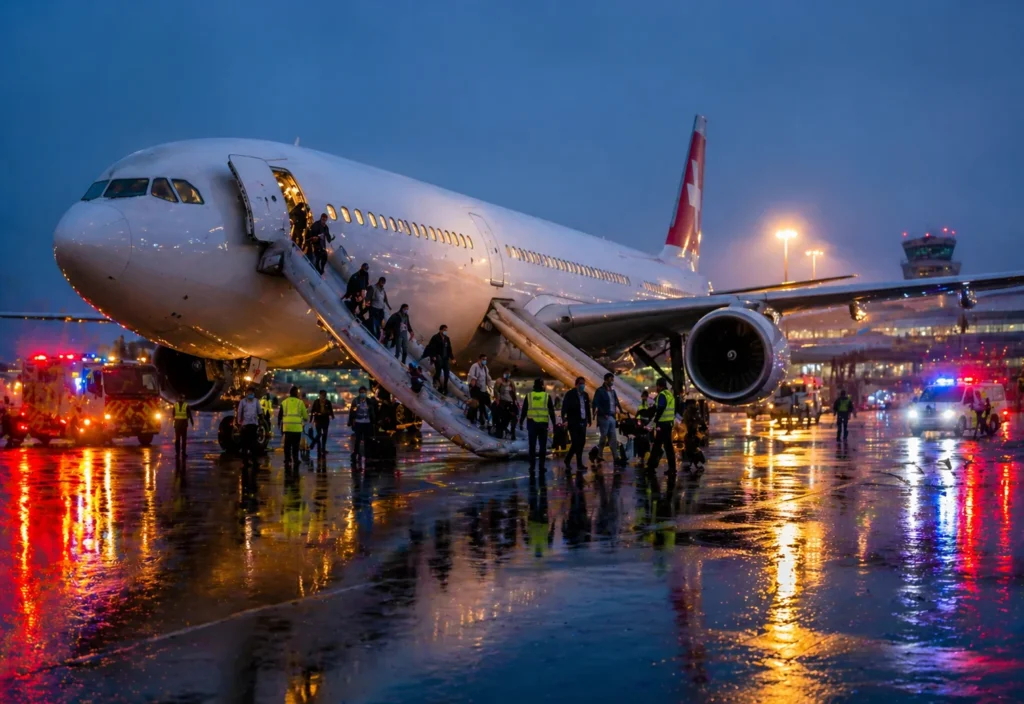
According to official airline information, the Airbus A330 operating as flight LX147 was preparing for departure to Europe when the crew detected an engine-related issue during the takeoff phase. As a precaution, the pilots rejected takeoff in line with established aviation safety protocols. The aircraft came to a stop safely, after which an evacuation was initiated.
All passengers and crew members exited the aircraft using emergency slides, while individuals unable to use the slides were assisted with airport stairs and ground support teams. Six passengers sustained minor injuries during the evacuation and received immediate medical attention. No serious injuries were reported.
The airline confirmed that passenger welfare teams were mobilized to support those affected. Travelers were provided assistance with rebooking, accommodation, and onward travel planning. Technical specialists are expected to inspect the aircraft and determine the exact cause of the reported engine issue.
For tourism and business travelers, the key message is reassurance. While unexpected operational incidents can occur in global aviation, the systems designed to protect passengers functioned as intended. Crew response, airport coordination, and emergency procedures helped ensure a controlled outcome with minimal long-term disruption.
Delhi’s Indira Gandhi International Airport is one of India’s most important tourism gateways, connecting international visitors to destinations across the country. From Delhi, travelers continue onward to Rajasthan’s heritage cities, Goa’s beaches, Kerala’s backwaters, the Himalayan states, spiritual circuits in Uttar Pradesh, wildlife parks in Madhya Pradesh, and cultural hubs such as Mumbai, Bengaluru, Chennai, and Kolkata.
The airport’s strategic role in India tourism means that operational resilience is essential. Large airports regularly conduct emergency readiness drills, safety reviews, terminal response planning, and coordination exercises involving airlines, medical teams, fire services, security agencies, and passenger service teams. Events like this demonstrate why such planning matters.
India has continued to strengthen its aviation and tourism infrastructure in recent years. Expanded terminals, digital passenger services, improved baggage systems, upgraded runways, and smarter traffic management have helped major airports handle growing demand from domestic and international travelers. Delhi remains central to this growth story as visitor arrivals and air connectivity continue to rise.
For international tourists arriving in India, airport experience plays a major role in destination perception. Fast assistance, clear communication, responsive staff, and visible safety measures contribute to traveler confidence. Even during irregular situations, how passengers are cared for often defines the overall experience. In this case, support services such as hotel accommodation and rebooking arrangements were activated quickly.
Travel advisors note that aviation incidents involving precautionary takeoff rejections are handled under strict professional procedures. Pilots are trained to stop departures whenever a technical parameter appears abnormal. This conservative approach is designed to prioritize safety above schedule performance, and it is a standard part of modern airline operations worldwide.
The broader tourism impact from the incident is expected to be limited. Flights at Delhi airport continued, and normal travel demand across India remains strong. Peak seasons for inbound tourism, domestic holidays, business events, weddings, conferences, and weekend city breaks continue to support high passenger traffic through the capital.
Delhi itself remains a leading destination, not only a transit hub. Visitors use the city as a base to explore UNESCO-recognized heritage landmarks, vibrant markets, culinary districts, museums, gardens, and contemporary entertainment zones. Many travelers combine Delhi with the Golden Triangle route linking Agra and Jaipur, one of India’s most popular visitor itineraries.
For passengers planning upcoming journeys, the incident is also a reminder of useful travel habits. Arriving early, keeping travel documents accessible, maintaining travel insurance, monitoring airline notifications, and staying calm during announcements can help during any schedule change or operational delay. Most disruptions are resolved with alternative arrangements and professional support.
India’s tourism outlook remains positive, supported by better connectivity, expanding hotel supply, improved highways, cruise development, heritage restoration, and strong domestic travel demand. Airports like Delhi serve as the first point of contact for millions of visitors, making service quality and safety standards especially important.
The response to the Swiss International Airlines event reflects the maturity of aviation operations in India’s capital. Quick decision-making by the flight crew, structured evacuation procedures, on-ground medical care, and passenger assistance all helped minimize the impact of an unexpected situation.
Travelers with upcoming departures or arrivals through Delhi can continue their plans with confidence. Airport systems remain active, tourism services are operating normally, and India’s capital continues to welcome leisure and business visitors from around the world.
As aviation networks grow and tourism expands, occasional technical events may occur, but effective response mechanisms are what matter most. Delhi airport’s handling of the situation reinforces its reputation as a resilient travel hub ready to support passengers while keeping journeys moving safely.