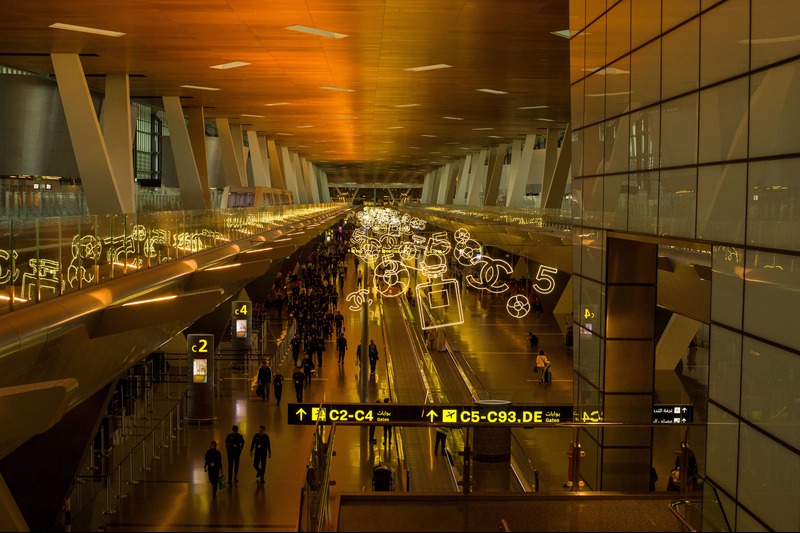
Dubai’s position as one of the world’s leading international aviation hubs is facing a significant challenge in 2026, as regional conflict continues to affect airline operations and passenger movement. Dubai International Airport (DXB) recorded 50.4 million passengers during the first nine months of the year, marking a 28.1% decline compared with the corresponding period in 2025.
The latest figures highlight the growing impact of geopolitical tensions on the global aviation and tourism industries. The Middle East conflict has disrupted flight operations, triggered intermittent airspace closures and affected travel confidence across several destinations. For Dubai, a major gateway connecting Europe, Asia, Africa and other international markets, these developments have created considerable pressure on passenger volumes and airline connectivity.
According to figures released by airport operator Dubai Airports on November 17, the decline reflects the continuing difficulties faced by the regional aviation sector, even as airlines gradually work towards restoring their regular services.
DXB Passenger Traffic Remains Under Pressure in 2026
The decline has also been evident in the airport’s quarterly performance. Dubai International Airport welcomed 18.8 million passengers during the third quarter of 2026, representing a 22.1% decrease compared with the same quarter last year.
The impact of the conflict has extended beyond individual flight cancellations. Several countries in the region intermittently closed their airspace during the early stages of the hostilities, forcing airlines to adjust flight schedules, reconsider routes and manage operational uncertainties. These developments affected both direct international travel and connecting journeys through major Gulf aviation hubs.
Dubai International Airport is particularly important to global connectivity because of its extensive network of international routes and its position as a major transfer point. Consequently, disruptions affecting the wider Middle East aviation network have had a noticeable effect on passenger movement through the airport.
Despite the challenging circumstances, Dubai Airports expects DXB to handle approximately 70 million passengers by the end of 2026, according to Chief Executive Officer Paul Griffiths. While this forecast remains below the passenger volumes recorded during stronger operating periods, it reflects expectations of continued recovery as airline services gradually return.
Airlines Gradually Resume Services Amid Regional Uncertainty
There have been some encouraging developments for the regional aviation industry, with several international airlines beginning to restore services to Dubai after suspending flights because of the conflict.
British Airways is among the carriers that have resumed flights to the emirate in recent months, Dubai Airports confirmed. The return of international airlines is an important development for the destination, particularly as Dubai continues to depend on strong international connectivity to support tourism, business travel and passenger transfers.
However, the recovery remains vulnerable to developments across the region. Recent attacks on Saudi Arabia by Yemen’s Iran-aligned Houthi movement have added another layer of uncertainty, complicating expectations of a full recovery in regional air travel.
Gulf airlines are among the world’s largest international carriers, and their operations play a significant role in connecting long-haul markets. Any prolonged disruption to their networks can influence travel schedules, passenger confidence and connectivity across multiple continents.
For travellers, these circumstances underline the importance of monitoring airline announcements, flight schedules and potential route changes when planning journeys through the Middle East. Airlines and airports will also need to maintain operational flexibility as the regional situation continues to evolve.
Dubai Maintains Its Position as a Global Travel Gateway
Despite the decline in passenger numbers, Dubai Airports has highlighted the continued importance of DXB as both an entry point for visitors travelling to the emirate and a connecting hub for international passengers.
The airport operator noted that direct and transfer passenger traffic remained broadly balanced during the year. This indicates that DXB continues to serve two important functions within international aviation: bringing tourists and business travellers directly to Dubai while facilitating connections between destinations worldwide.
This balance is particularly important for Dubai’s wider tourism economy. The emirate relies heavily on international accessibility to support its hotels, attractions, shopping destinations, business events and wider hospitality sector. Maintaining connectivity is therefore essential not only for airport operations but also for the performance of the broader visitor economy.
The coming months will be important in determining how quickly passenger traffic returns to stronger levels. The restoration of suspended airline services, improvements in regional airspace conditions and greater stability across the Middle East will all influence the pace of recovery.
For now, Dubai’s aviation sector faces the difficult task of navigating geopolitical uncertainty while keeping one of the world’s most important international travel gateways operational. Although the latest passenger figures reflect the scale of the disruption, the gradual return of airlines and the airport’s 70-million-passenger forecast suggest that the recovery process is continuing. Ultimately, the strength of that recovery will depend on how regional conditions develop and how quickly international travel confidence can be restored.