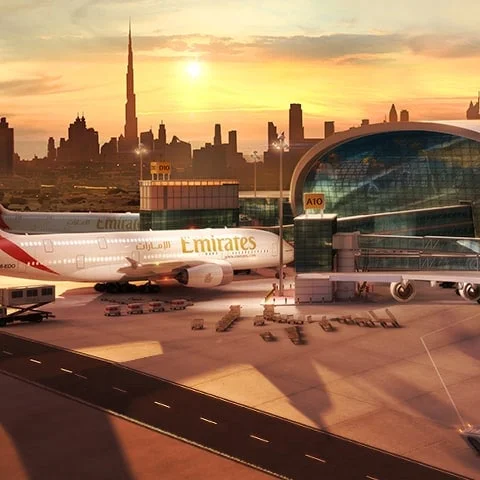
Dubai Airports and the Dubai Department of Economy and Tourism have joined airline discussions in Frankfurt to strengthen international connectivity ahead of winter. Their coordinated approach brings airport planning and destination promotion together as airlines assess future routes and passenger demand.
The meetings at Routes World focused on airline partnerships, changing travel patterns and opportunities across Dubai’s global network. Meanwhile, returning international carriers and recovering Emirates capacity are supporting preparations for the emirate’s traditionally busier travel season.
For visitors, the potential benefit is broader flight choice and more convenient access. However, the discussions do not constitute confirmed announcements of individual new routes.
Airport and Tourism Teams Coordinate Airline Engagement
Dubai Airports’ participation alongside the Department of Economy and Tourism connects aviation development with the city’s wider visitor economy.
Air services influence how easily travellers reach hotels, attractions, exhibitions and business districts. Destination demand, in turn, helps airlines assess whether routes can attract sufficient passengers.
The Frankfurt meetings provided an opportunity to discuss these relationships directly with airline partners. Dubai Airports identified stronger partnerships and readiness for future growth as priorities.
However, its announcement did not disclose specific airline agreements, financial incentives or new codeshare arrangements.
The immediate development is coordinated engagement with carriers. Any resulting services will require separate announcements covering destinations, frequencies and launch dates.
Summer Passenger Volumes Show Recovery Momentum
Dubai International Airport handled 31.5 million passengers during the first six months of 2026, following significant disruption across the regional operating environment.
That total represented a 31.3% decline against the same period in 2025. Nevertheless, monthly traffic strengthened during the second quarter.
Passenger numbers increased from 3.5 million in April to 4.5 million in May and five million in June.
Recovery continued into the summer, with more than six million passengers using DXB in both July and August.
These figures show improving monthly activity after disruption. They do not indicate that first-half traffic exceeded the previous year’s performance.
For tourism businesses, sustained recovery matters because dependable air access supports accommodation bookings, excursions and longer-term travel planning.
Emirates Capacity Supports the Winter Outlook
Dubai Airports’ latest partnership update identified Emirates as operating at 91% of its capacity before disruption. The figure provides a snapshot of recovery rather than confirmation of a complete network restoration.
Emirates remains central to Dubai’s international connections, serving passengers travelling to the city and those connecting between overseas destinations.
Its partnership with flydubai also broadens itinerary options through Dubai, including connections involving smaller regional markets.
For holidaymakers, the usefulness of those connections depends on available schedules, transfer times and ticket conditions.
Restored capacity can expand available travel options. However, it does not automatically establish lower fares or guarantee seats on every preferred departure.
Network Reach Creates Tourism Opportunities
By the end of the first half, almost 50 international airlines connected DXB with 217 destinations across 99 countries.
That geographic reach gives Dubai access to numerous visitor markets while supporting international business and connecting traffic.
Additional services could help hotels, restaurants, attractions and transport operators reach more potential customers. Their commercial benefit will depend on passengers choosing Dubai stays and purchasing local experiences.
Airport passenger totals also include connecting travellers. They should therefore remain separate from measures of international overnight visitors or hotel demand.
As winter schedules develop, confirmed frequencies and available seats will offer a clearer picture of access from individual markets.
Passenger Processing Remains an Operational Priority
Growing connectivity also requires efficient movement through airport facilities. Dubai Airports’ first-half figures showed strong performance across several passenger processing measures.
Approximately 99% of departing passengers completed passport control within ten minutes. More than 99% passed through security within five minutes.
These results describe measured performance during that reporting period. They do not guarantee identical processing times for every future journey.
Nevertheless, efficient terminal operations can support a smoother visitor experience, particularly when passengers coordinate connections or arrive during busy departure periods.
Travellers should continue following airline check-in guidance and allow sufficient time for airport procedures.
Al Maktoum Expansion Supports Longer-Term Ambitions
Alongside near-term operations at DXB, Dubai is developing Al Maktoum International Airport to accommodate future aviation growth.
The approved expansion carries an investment value of AED128 billion and an ultimate planned capacity of 260 million passengers annually.
That figure represents future infrastructure ambition, rather than capacity already available for the coming winter.
For now, Dubai’s priorities combine airline engagement, operational recovery and efficient passenger handling. The Frankfurt discussions support that approach, while travellers await specific route announcements that translate network planning into bookable journeys.
For more travel news like this, keep reading Global Travel Wire