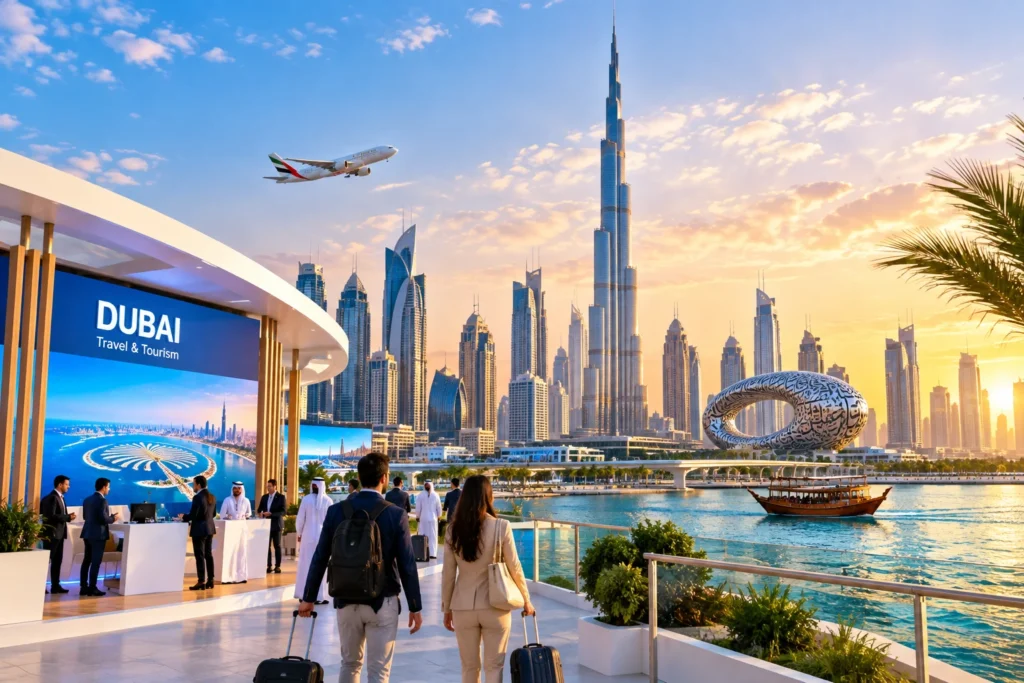
The global travel ecosystem has converged at the Dubai World Trade Centre for the 33rd edition of the Arabian Travel Market. Serving as a primary engine for international trade, policy alignment, and sector investment, the premier exhibition brings together 1,405 official tourism organizations, government entities, and specialized enterprises representing international destinations worldwide.
During an official tour of the venue, Sheikh Hamdan bin Mohammed bin Rashid Al Maktoum, Crown Prince of Dubai, Deputy Prime Minister, and Minister of Defence, emphasized the emirate’s decisive role in shaping the strategic direction of international leisure and business travel. The gathering provides a global platform where policymakers, chief executives, and technology pioneers align operational strategies to establish sustainable, high-growth frameworks for the global tourism economy.
Strategic Vision Drives Next-Generation Industry Transformation
Operating under the central theme of long-term sector transformation through technology and innovation, the summit focuses on structural shifts expected to redefine global visitor experiences over the coming decades. Official discussions concentrate heavily on integrating artificial intelligence, accelerating digital infrastructure deployment, advancing smart mobility networks, and adapting to evolving traveler expectations.
As international passenger volumes expand, national tourism authorities and corporate stakeholders face the imperative of balancing rapid growth with infrastructure resilience. The event provides a collaborative framework where public leadership and private sector innovators evaluate high-impact solutions to streamline international transit, upgrade municipal hospitality capacity, and preserve cultural heritage assets.
By hosting thousands of industry delegates, destination representatives, and commercial buyers, the exhibition reinforces Dubai’s position as an international hub connecting emerging and established travel markets across Europe, Asia, Africa, and the Americas.
Specialized Tech Hubs Showcase Frontier Tourism Solutions
A major highlight of this year’s programming is the dedicated focus on next-generation travel technologies. Specialized exhibition zones, including dedicated technology showcases and innovation hubs, feature live demonstrations of operational systems designed to enhance efficiency across the entire visitor journey.
Key technological areas highlighted across the exhibition floor include:
Deployment of enterprise artificial intelligence and machine learning models for personalized destination management and demand forecasting.
Implementation of robotics and automated guest service systems within modern airport terminals and hospitality operations.
Integration of immersive virtual technologies enabling interactive remote exploration of cultural landmarks and resort properties.
Development of smart mobility solutions, frictionless digital payment systems, and contactless passenger processing protocols.
Application of data-driven resource management platforms to minimize environmental footprints across global hotel portfolios.
These technical advancements demonstrate how digital systems are moving from auxiliary tools to core operational infrastructure, allowing destination managers to optimize visitor flow while reducing physical bottlenecks.
Comprehensive Conference Program Addresses Global Sector Priorities
Beyond the main exhibition floors, the event features an extensive multi-stage conference agenda designed to address systemic opportunities and challenges across international tourism. Industry leaders gather across dedicated presentation spaces—including the Global Stage, Future Stage, and specialized experience venues—to examine long-term economic trends, investment strategies, and policy developments.
Key conference tracks focus on critical commercial vectors, including aviation fleet expansion, sustainable hospitality development, luxury market shifts, and accessible travel infrastructure. Panel discussions analyze high-yield investment channels, public-private partnership models, and methods to strengthen destination resilience against global economic fluctuations.
Furthermore, international research institutions and strategic analysts present empirical insights into changing consumer behaviors. Discussions highlight growing demand for authentic cultural engagement, eco-certified lodging options, and seamless multi-modal transit options among modern international travelers.
Strengthening International Partnerships for Sustainable Growth
The annual gathering serves as a vital diplomatic and commercial platform for municipal tourism boards, regional development authorities, and global transport carriers. By facilitating direct bilateral negotiations and high-level networking, the event enables participating nations to formulate cross-border promotional campaigns, secure new direct flight routes, and attract foreign direct investment into municipal tourism infrastructure.
As public ministries and commercial operators work to meet ambitious long-term growth targets, collaborative platforms remain essential for establishing standardized sustainability metrics and operational best practices. The gathering in Dubai underscores an international commitment to building a tech-forward, resilient, and inclusive tourism industry capable of supporting economic development worldwide.
For more travel news like this, keep reading Global Travel Wire