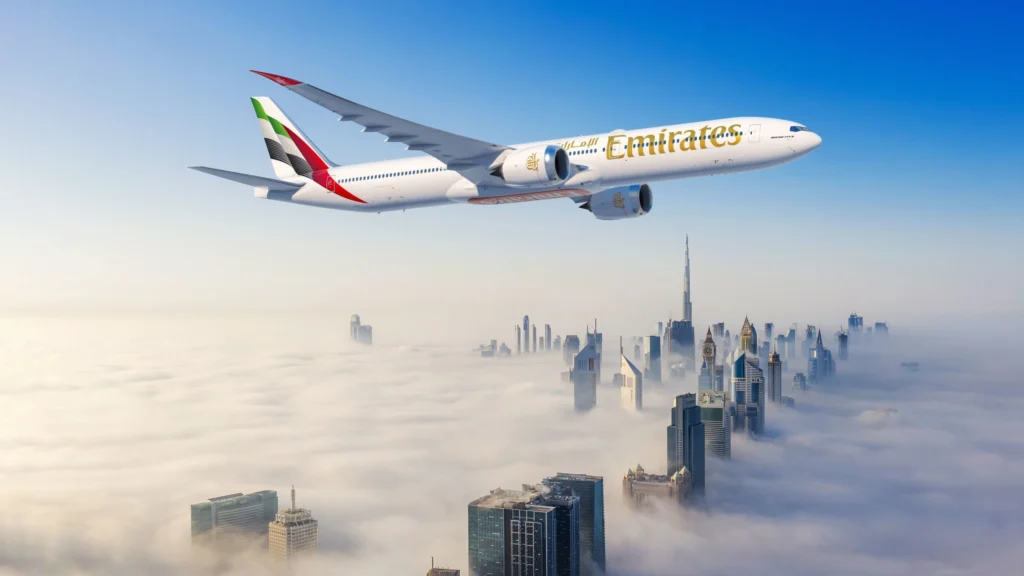
Dubai’s position as one of the world’s leading international aviation hubs could enter another major growth phase as Emirates prepares for the eventual arrival of its enormous Boeing 777X fleet.
Emirates has 270 Boeing 777X aircraft on order, making the next-generation wide-body programme central to its long-term fleet strategy. The aircraft are expected to support future capacity across routes linking Dubai with Asia, Europe, the Middle East, Africa and the Americas.
However, continued certification and delivery delays mean travelers will have to wait longer before the aircraft begins reshaping Emirates’ global network.
Boeing currently anticipates the first Boeing 777-9 delivery in 2027. Certification testing remains underway, with thousands of flight-test hours completed as Boeing works with aviation regulators toward entry into commercial service.
Early aircraft highlights programme challenges
The long development journey has also affected aircraft built during earlier phases of the programme.
One early Boeing 777-9 airframe originally associated with Emirates, known as WH007, was ultimately dismantled after spending years at Boeing’s Everett facilities. Bringing some early-production aircraft up to final certification standards can require extensive modifications as designs evolve during testing.
The development illustrates why certification delays matter far beyond aircraft factories.
Airlines plan fleets years in advance. When new aircraft arrive later than anticipated, carriers may need to retain existing jets longer, modify schedules or reconsider when additional routes and frequencies can be introduced.
For passengers, these decisions can influence future seat availability, aircraft interiors and the pace of network expansion.
Emirates places 777X at heart of growth
No airline has made a bigger commitment to the 777X programme than Emirates.
The Dubai-based carrier significantly expanded its commitment in November 2025 by ordering another 65 Boeing 777-9 aircraft. Emirates subsequently reported an order book containing 270 Boeing 777X aircraft, alongside Boeing 787s, Airbus A350s and freighters.
This scale reflects the importance of large wide-body aircraft to Emirates’ business model.
Dubai functions as a connecting hub between major global regions. Large aircraft allow Emirates to move substantial numbers of travelers through the city while connecting markets across Europe, Asia-Pacific, Africa, the Middle East and the Americas.
The airline’s existing Boeing 777 fleet already forms a backbone of its operations.
The 777X is intended to extend that wide-body strategy into a new generation.
New aircraft could transform passenger journeys
For international travelers, the importance of the Boeing 777X extends beyond fleet numbers.
The aircraft family has been developed to combine long-range capability with improved efficiency and a next-generation passenger environment.
Its wider cabin architecture and large windows are among features designed to improve the onboard experience, while its operational capabilities could help airlines efficiently serve high-demand intercontinental markets.
For Emirates, additional aircraft capacity could eventually support more frequencies on busy routes and provide greater flexibility when planning network expansion.
This could prove particularly important for travelers connecting through Dubai between Asian, European, African and American destinations.
More capacity can also support Dubai’s wider tourism economy by increasing opportunities for international stopovers and destination visits.
Delays create pressure on fleet planning
The biggest challenge remains timing.
The Boeing 777X was originally expected to enter airline service years earlier. Boeing now says first delivery of the 777-9 is anticipated in 2027 as testing and certification continue.
Such delays do not mean Emirates flights will suddenly disappear.
The airline continues operating its established Boeing 777 and Airbus A380 fleets while expanding its newer Airbus A350 operation. Emirates is also investing heavily in upgrading existing aircraft interiors as it prepares for longer-term fleet renewal.
However, delayed deliveries can affect how quickly an airline adds capacity or replaces older aircraft.
That matters as global aviation continues expanding.
Boeing’s latest long-term outlook forecasts demand for nearly 44,000 new commercial aircraft worldwide over the next two decades as airlines increase capacity and replace existing fleets.
Dubai connectivity could gain significantly
The eventual arrival of Emirates’ Boeing 777X fleet could have major implications for Dubai tourism.
More next-generation wide-body capacity could strengthen connections from major Asian cities, European capitals, Middle Eastern markets and destinations across the Americas.
Passengers may gain from increased capacity, modernized cabins and potential network growth as aircraft deliveries accelerate.
Hotels, attractions, restaurants, events and tourism businesses in Dubai could also benefit if greater airline capacity translates into higher international arrivals and longer stopovers.
Dubai’s geographic position already makes it a natural transfer point between continents. Emirates’ future fleet will be critical to maintaining that advantage.
A new era remains on the horizon
The dismantling of an early aircraft highlights just how complicated the Boeing 777X journey has become.
Yet the wider programme remains strategically important to Emirates and Dubai.
With 270 Boeing 777X aircraft on order and first deliveries now targeted from 2027, Emirates is preparing for one of the largest wide-body fleet transformations in global aviation.
For travelers, the real impact will emerge gradually.
As the aircraft enters service and deliveries expand, the 777X could help Emirates add capacity, modernize long-haul journeys and strengthen Dubai’s role as a gateway connecting the Middle East with Asia, Europe, Africa and the Americas.
For more travel news like this, keep reading Global Travel Wire