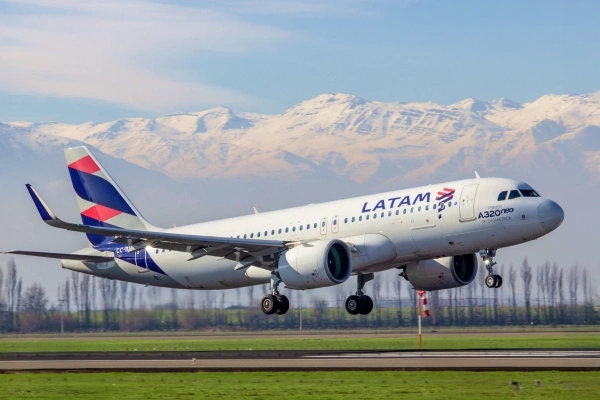
South Africa’s aviation links with Brazil are gaining strong momentum as South African Airways and LATAM Airlines strengthen direct connectivity across the South Atlantic.
Two high-demand services on the Cape Town–São Paulo corridor carried a combined 501 passengers. South African Airways flight SA 226 transported 219 passengers with an 88% occupancy rate. Meanwhile, LATAM Airlines flight LA 8061 carried 282 passengers with a 94% occupancy rate.
The strong performance highlights rising traveler confidence in direct air links between Southern Africa and South America. It also underlines the growing importance of the route for tourism, business travel, cultural exchange, and wider international mobility.
South African Airways supports direct travel demand
South African Airways operated flight SA 226 with an Airbus A330-300, carrying 219 passengers between Cape Town and São Paulo.
An 88% occupancy rate shows healthy demand for a long-haul route connecting two major international destinations.
Direct connectivity can significantly improve the traveler experience. Passengers can avoid complicated itineraries involving additional international connections, reducing overall journey complexity.
Cape Town remains one of South Africa’s most important tourism destinations. The city attracts international travelers with its coastline, mountain scenery, cultural attractions, food experiences, nearby wine regions, and adventure tourism.
São Paulo, meanwhile, serves as one of Brazil’s most important aviation and commercial gateways.
The route therefore supports more than point-to-point travel. It also creates access to wider tourism and business networks across both continents.
LATAM records powerful occupancy levels
LATAM Airlines flight LA 8061 demonstrated even stronger passenger performance.
The airline operated a Boeing 787-9 Dreamliner carrying 282 passengers and achieved a 94% occupancy rate.
Such a high load level reflects substantial traveler interest in nonstop connectivity between Cape Town and São Paulo.
LATAM’s network position also strengthens the value of the route.
São Paulo serves as a major gateway for onward connections across Brazil and other parts of South America. This allows passengers arriving from Cape Town to continue toward additional destinations without first traveling through Europe, the Middle East, or another distant hub.
Travelers from Brazil and surrounding markets also gain easier access to Cape Town and the wider Southern African tourism region.
More than 500 passengers highlight corridor strength
Together, South African Airways and LATAM Airlines carried 501 passengers across the two highlighted services.
The figure demonstrates how direct international air links can generate strong demand between geographically distant markets.
For tourism destinations, reliable aviation connectivity is critical.
More direct flights can reduce travel barriers and make destinations easier to reach. They can also support higher visitor spending across hotels, restaurants, attractions, transportation providers, tour operators, and local businesses.
South Africa stands to benefit from stronger access to Brazil’s large outbound travel market.
Brazil can similarly attract more visitors from South Africa and neighboring African markets seeking urban tourism, culture, nature, beaches, and multi-destination South American journeys.
Wide-body aircraft strengthen long-haul operations
Both airlines deployed wide-body aircraft designed for long-distance international services.
South African Airways used an Airbus A330-300, while LATAM operated a Boeing 787-9 Dreamliner.
These aircraft provide the capacity and range needed to support long-haul passenger demand across the South Atlantic.
Wide-body operations are particularly important on intercontinental routes where airlines must balance passenger comfort, capacity, cargo opportunities, and operational efficiency.
The deployment of these aircraft also reflects the strategic importance of maintaining direct links between major tourism and commercial centers.
Africa and South America are geographically connected by the South Atlantic, yet direct air links between the continents remain relatively limited compared with other global aviation markets.
Routes such as Cape Town–São Paulo therefore play an important role in reducing travel time and strengthening international accessibility.
Tourism opportunities grow across two continents
Improved air connectivity can also encourage travelers to build broader itineraries.
Visitors arriving in Cape Town can explore destinations across South Africa, including coastal regions, safari areas, cultural attractions, and neighboring Southern African countries.
Likewise, São Paulo provides access to a vast domestic and regional aviation network.
Passengers can continue toward other Brazilian destinations or connect to wider South American markets.
This creates opportunities for multi-country travel and stronger tourism exchange between two major regions.
Business travelers also benefit from improved direct access, particularly as South Africa and Brazil maintain important economic and commercial relationships.
Cape Town–São Paulo route gains strategic importance
The strong performance of SA 226 and LA 8061 demonstrates the growing value of direct Cape Town–São Paulo air connectivity.
With 501 passengers across two flights and occupancy levels reaching 88% and 94%, both services show encouraging demand.
For South Africa, stronger Brazilian connectivity can support international arrivals and reinforce Cape Town’s position as a globally accessible tourism destination.
For Brazil, the route expands access to African travelers while strengthening São Paulo’s role as a major international aviation gateway.
As global tourism continues to depend heavily on convenient air access, direct routes linking underserved intercontinental markets can become increasingly valuable.
The Cape Town–São Paulo corridor is emerging as an important aviation bridge between Southern Africa and South America, supporting tourism growth, business mobility, cultural exchange, and stronger international travel connections.
For more travel news like this, keep reading Global Travel Wire