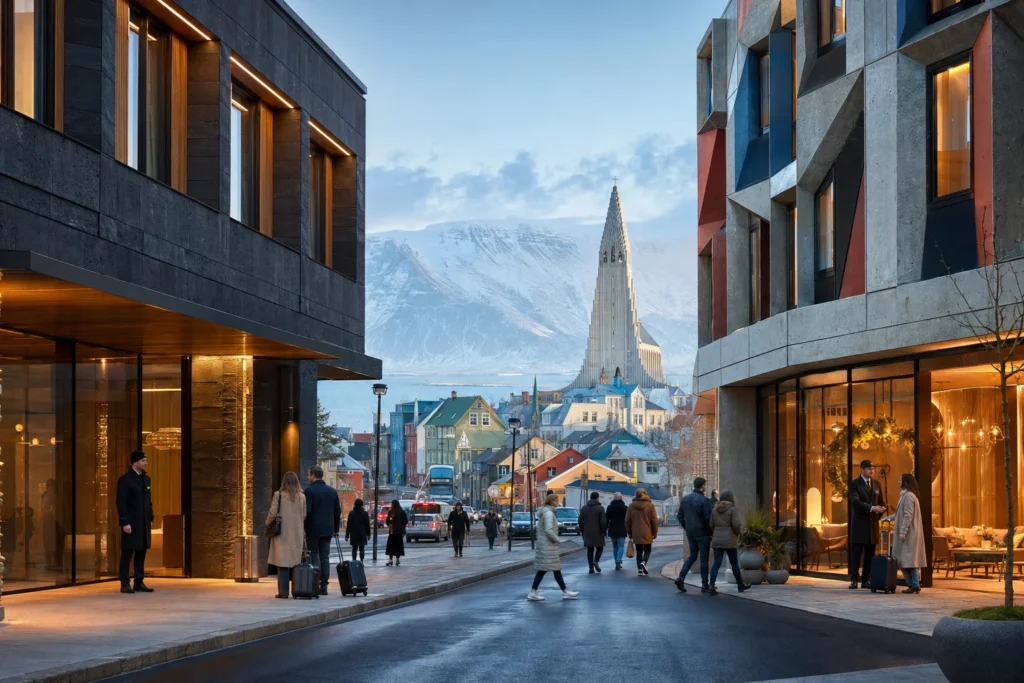
The international urban travel sector is experiencing a significant modern alignment as global hotel developers channel capital into specialized Nordic markets. Iceland’s capital city, Reykjavik, is entering a major new operational phase with the simultaneous launch of two highly anticipated lifestyle properties: Radisson RED Reykjavik and Hyatt Centric Reykjavik. These high-profile corporate additions expand the structural diversity of Iceland upscale accommodation options, dramatically altering the metropolitan landscape. By introducing these renowned hospitality flags to the downtown commercial core, global management networks are reinforcing the capital’s positioning as a premium, year-round hub for international leisure tourists, cross-border corporate stopover travelers, and remote digital professionals.
Official real estate and development indexes published by national tourism boards indicate that this dual corporate debut marks a clear departure from a market traditionally managed by domestic entities and independent regional boutique labels. As international airline routing networks expand multi-city flight programs connecting North America and continental Europe via Keflavik International Airport, the demand for predictable, amenity-dense lifestyle lodging has escalated. The deployment of these premium branded facilities ensures that the domestic hospitality industry can absorb high-volume visitor traffic while maintaining global operational benchmarks.
Radisson RED Debuts Progressive Scandinavian Concept
The official launch of Radisson RED Reykjavik introduces a distinctive, design-forward lodging model explicitly engineered to capture a modern segment of international travelers. The property features 211 structurally optimized guestrooms designed with contemporary aesthetic themes that draw inspiration from Iceland’s volcanic geology, basalt formations, and vivid natural mineral palettes. Positioned in the heart of the downtown district, the high-density hotel integrates modular social venues, communal working spaces, and multi-functional gathering facilities tailored to younger corporate travelers and digital nomads.
A primary highlight of the building is its custom multi-level rooftop venue, which features a glazed panoramic elevator system. This architectural design offers visitors clear views across the capital skyline, historical ports, and neighboring coastal margins. Furthermore, regional environmental monitoring filings show that the facility operates under a highly efficient sustainability framework. By leveraging Iceland’s near-complete reliance on green, renewable geothermal and hydroelectric power grids, the property maintains an exceptionally low carbon baseline, integrating water conservation metrics and eco-smart temperature infrastructure across all floors.
Hyatt Centric Introduces Premier Downtown Launchpad
Just a short distance away along Laugavegur, Reykjavik’s historic principal avenue for retail and cultural exhibition, the Hyatt Centric Reykjavik marks a separate landmark development for the country’s luxury sector. As the corporation’s initial branded flag within Iceland, the 169-room lifestyle property functions as a strategic base camp for incoming tourists seeking immediate, walkable access to historic galleries, geothermal public pools, and regional culinary centers. The guestrooms are built with distinct local textures and acoustic triple-glazed window configurations to ensure absolute insulation from the vibrant municipal entertainment strip outside.
The commercial infrastructure of the property includes three separate food and beverage concepts, anchored by a signature dining venue called Hlé, which utilizes fresh, seasonal Icelandic agricultural goods and local maritime catches. The property also features an elevated rooftop bar designed to provide clear views of the evening sky, maximizing visitor engagement during the winter Northern Lights season and the extended daylight windows of the summer months. To capture high-value corporate group travel, the building features a versatile ballroom capable of accommodating up to 160 guests for events, paired with state-of-the-art wellness suites and comprehensive electric vehicle charging stations.
Statistical Growth Patterns in the Capital Lodging Market
The simultaneous introduction of these separate properties injects nearly 380 premium rooms into the capital’s active hotel inventory. Regional tourism census reports show that prior to these additions, Reykjavik functioned as the country’s single largest hospitality market, offering a baseline capacity of roughly 5,620 rooms distributed across 60 certified hotel properties. The addition of these global brands addresses a structural capacity challenge during compressed travel periods, ensuring the municipal infrastructure can process massive influxes of visitors without sacrificing premium service quality.
National tourism board statistics highlight that the country manages an annual stream of nearly 2.3 million international overnight visitors, with the capital serving as the universal gateway for long-haul arrivals. Historical occupancy benchmarks for the metropolitan hotel network averaged an impressive 74.7 percent, a figure that sits comfortably above general national averages. The high baseline occupancy rate demonstrates a resilient travel market that benefits substantially from balanced seasonal travel demand, driven by summer nature tours and winter wellness excursions centered around iconic geothermal installations like the nearby Sky Lagoon.
Long-Term Diplomatic and Tourism Development Projections
The continuous arrival of institutional hospitality brands demonstrates a powerful vote of confidence in Iceland’s long-term tourism economy. By aligning local property developments with globally recognized operational standards, corporate entities are successfully making Reykjavik highly competitive against established mainland European city-break destinations. The presence of these international flags provides global frequent-travel program members with clear incentives to choose Iceland for extended multi-day vacations, routing capital directly into the broader regional economy.
As national development agencies look toward future travel cycles, the focus remains firmly on promoting balanced visitor management across all seasons. The deployment of design-focused, asset-heavy lifestyle properties provides municipal planners with a secure foundation to expand premium cultural tourism, elevate domestic culinary initiatives, and minimize seasonal economic dips. Through ongoing infrastructure modernizations, absolute structural sustainability, and strategic cross-border airline alliances, the capital city continues to solidify its role as an iconic, resilient model for modern sustainable travel on the global stage.
For more travel news like this, keep reading Global Travel Wire