Port of Cape Town Named Africa’s Leading Cruise Hub
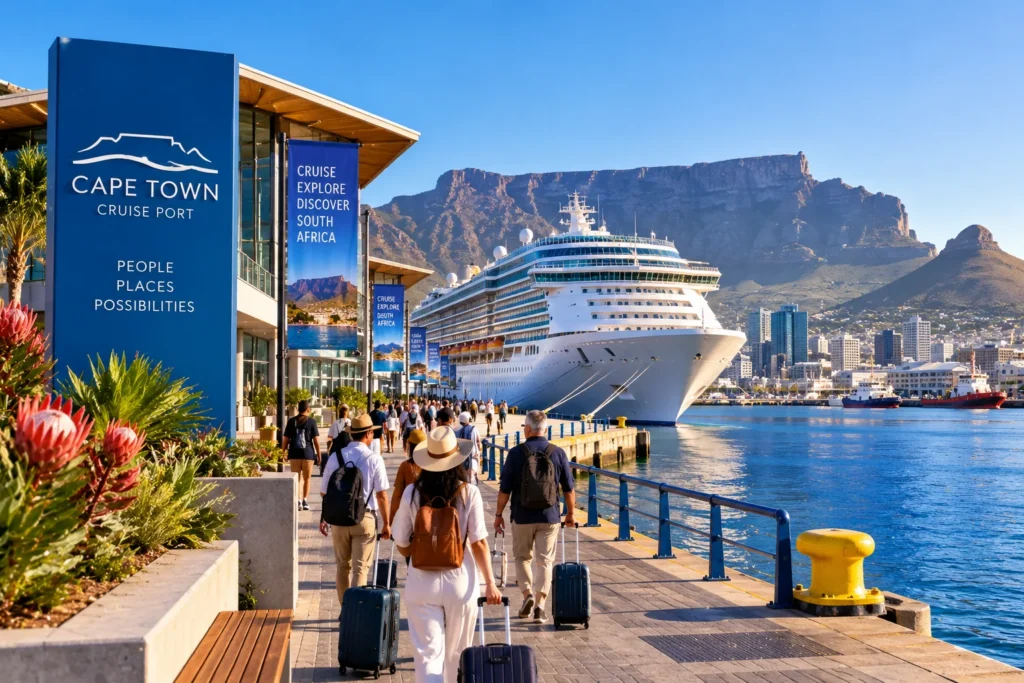
Docking in Cape Town remains one of the world’s most dramatic maritime arrivals. As ocean liners enter Table Bay, passengers gather on outdoor decks to take in views of Table Mountain framing the city skyline. Disembarking into the dedicated cruise terminal at the V&A Waterfront provides travelers with immediate access to fine dining, boutique shopping, and urban cultural attractions located within walking distance of the gangway.
This guest-centric operational standard was formally recognized at the World Travel Awards Africa Gala Ceremony in Zanzibar, where Transnet National Ports Authority (TNPA) confirmed that the Port of Cape Town was crowned Africa’s Leading Cruise Port for 2026. The continental award reinforces the city’s standing as a primary gateway for international cruise lines operating across the South Atlantic and Indian Ocean routes.
Transition to Major Turnaround Hub Boosts Economic Impact
Cape Town’s cruise strategy has expanded beyond short port-of-call stops. The city has established itself as a premier turnaround destination, serving as the official starting or ending point for extended global itineraries. When major ocean liners like Cunard’s Queen Mary 2 or residential vessels like The World dock in Table Bay, thousands of international passengers finish their itineraries locally, while a new wave of incoming travelers arrives to embark.
The transition from a transit stop to a turnaround hub generates substantial economic value across the Western Cape:
Extended Hotel Stays: Turnaround passengers frequently book multi-day stays at luxury hotels before or after their sailings, exploring urban cultural sites and booking excursions into the nearby Cape Winelands.
Direct Local Tourism Expenditure: Official economic impact analysis from Wesgro indicates that cruise liner arrivals contribute over R1.79 billion to the Western Cape provincial economy, supporting thousands of jobs across hospitality, private ground transport, guiding, and retail sectors.
Sustained Supply Chain Demand: Homeporting vessels require extensive onshore provisioning, utilizing local agricultural, bunkering, and maritime maintenance services.
Cruise Cape Town Initiative Drives Multi-Port Coastal Strategy
The operational success of Cape Town’s cruise infrastructure extends well beyond the city limits. Coordinated through the Cruise Cape Town initiative—a public-private partnership involving Wesgro, the City of Cape Town, Transnet National Ports Authority, and the V&A Waterfront—the surge in cruise traffic is driving a broader multi-port strategy along South Africa’s southern coastline.
Secondary coastal ports, including Mossel Bay, Saldanha Bay, and Hermanus, are becoming integral stops on regional itineraries. In Mossel Bay, cruise visitors disembark for shore excursions to explore coastal nature reserves and heritage sites, injecting tourist spend directly into regional small businesses and local tour operators.
By combining modern terminal facilities, strong public-private governance, and diverse regional shore excursions, South Africa is establishing a resilient framework for maritime tourism. As global cruise operators expand their southern hemisphere deployments, the Port of Cape Town remains a vital anchor for regional economic development and international ocean travel.
For more travel news like this, keep reading Global Travel Wire