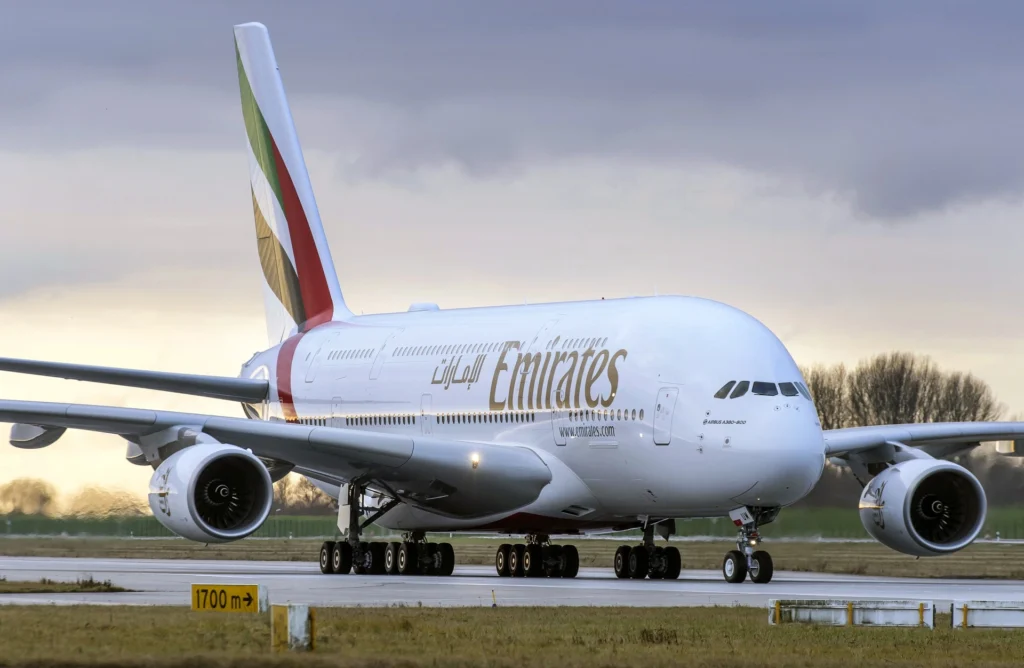
Emirates is set to transform onboard connectivity by equipping its Airbus A380 fleet with Starlink high-speed Wi-Fi, giving passengers free ultra-fast internet for streaming, gaming, video calls and real-time work at 40,000 feet. The rollout, beginning in 2026, marks one of the most ambitious in-flight technology upgrades in commercial aviation and positions the Dubai-based carrier at the forefront of connected air travel.
The move is significant for travelers and the aviation industry alike. Reliable internet has become one of the most requested airline services, especially on long-haul routes. By introducing Starlink’s low-latency satellite network across its flagship fleet, Emirates is responding to growing passenger expectations while raising the benchmark for premium and economy travel experiences.
New Standard for In-Flight Connectivity
For years, airline Wi-Fi has often meant slow speeds, unstable connections and limited functionality. Emirates aims to change that with a service designed to perform more like home broadband than traditional onboard internet.
Using Starlink’s low Earth orbit satellite network, the airline says passengers will be able to browse, stream content, join video meetings and stay productive throughout their journey. The lower orbit of the satellites reduces latency, creating a faster and smoother digital experience than older geostationary systems.
That improvement could reshape how travelers view long-haul flying. Instead of disconnecting for hours, passengers may be able to work efficiently, stay in touch with family or enjoy uninterrupted entertainment from takeoff to landing.
Why the A380 Is First in Line
Emirates has selected the Airbus A380 for the first phase of the rollout, a strategic choice given the aircraft’s status as the airline’s flagship and one of the most recognizable planes in global aviation.
Each aircraft will be fitted with up to three Starlink antennas, specifically configured to cover the A380’s double-deck cabin layout. This is designed to ensure strong and consistent service for passengers across both upper and lower decks, regardless of where they are seated.
The A380 is already known for spacious cabins, premium lounges and an enhanced long-haul experience. Adding next-generation internet strengthens its appeal at a time when travelers increasingly compare airlines based on onboard technology as much as seat comfort or catering.
Major Benefits for Business and Leisure Travelers
The upgrade has wide appeal across customer segments.
For business travelers, dependable high-speed internet can turn flight time into productive work time. Tasks such as cloud collaboration, email, presentations and video conferencing become more realistic when bandwidth is strong and delays are low.
For leisure travelers, the benefits are equally clear. Families can stream entertainment, gamers can enjoy smoother online play and passengers can remain active on social platforms throughout the flight.
As bleisure travel continues to grow, where travelers combine work and leisure in one trip, onboard connectivity is becoming more valuable than ever.
Free Wi-Fi Across All Cabins
One of the most consumer-friendly aspects of the announcement is that Emirates plans to provide the upgraded Starlink service free of charge to all passengers, regardless of cabin class.
That decision could become a competitive differentiator. While some carriers still charge for premium access or limit free internet to messaging, Emirates is signaling a more inclusive model that benefits economy, business and first-class travelers alike.
For passengers, it adds tangible value to the ticket price. For the airline, it supports customer loyalty and reinforces its premium global brand image.
Fleet-Wide Expansion Planned
The A380 rollout is only the beginning. Emirates plans to retrofit both its A380 and Boeing 777 fleets with Starlink technology, with completion targeted by 2027 and installations accelerating through 2026.
Once complete, the project would deliver a more consistent passenger experience across the network, whether customers are flying regional services or ultra-long-haul intercontinental routes.
Fleet-wide consistency matters for frequent flyers and corporate travel buyers who increasingly prioritize dependable service standards across multiple aircraft types.
Wider Impact on Global Aviation
Emirates’ decision is likely to influence the broader airline market. When one of the world’s most prominent international carriers adopts new passenger technology at scale, competitors often face pressure to respond.
That could accelerate investment in better connectivity across the industry, benefiting travelers worldwide. Improved onboard internet may also open new revenue opportunities through digital services, onboard retail, entertainment partnerships and enhanced loyalty engagement.
For airports and destinations, more connected passengers can continue trip planning, bookings and purchases while in transit, extending travel spending beyond the aircraft cabin.
Future of Flying Is Always Online
The introduction of Starlink Wi-Fi on Emirates aircraft highlights how aviation is evolving beyond transport alone. Airlines are increasingly expected to deliver seamless digital environments that mirror everyday life on the ground.
For Emirates, the upgrade reinforces its reputation for innovation and premium service. For passengers, it means the era of buffering, dropped signals and disconnected journeys could soon be fading fast.
For more travel news like this, keep reading Global Travel Wire