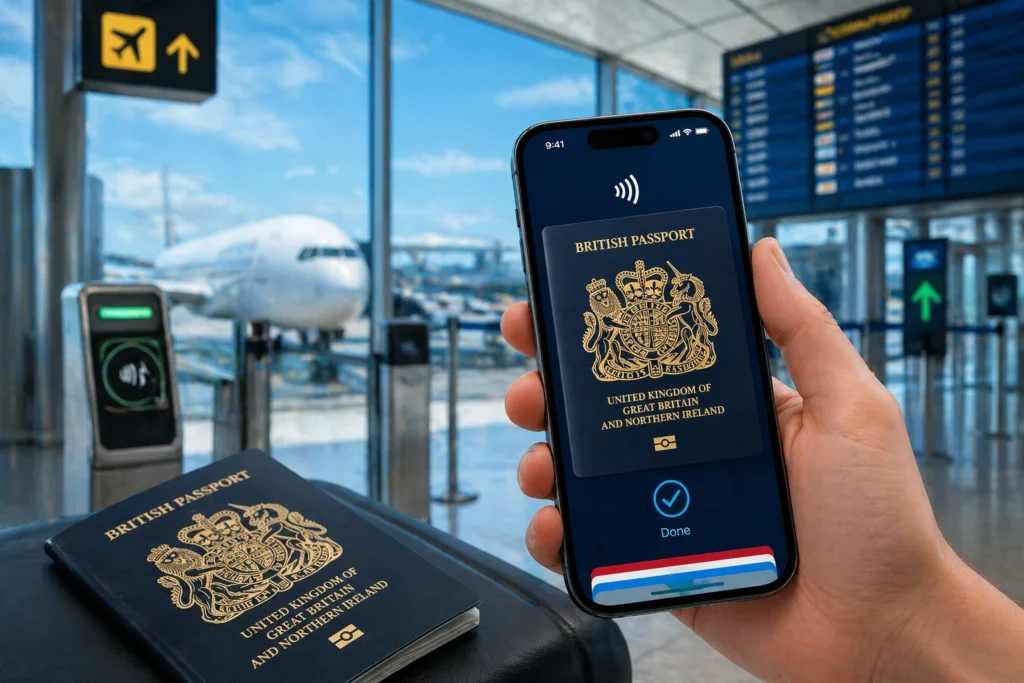
The United Kingdom has joined a growing group of countries supporting the Google Wallet digital passport feature, expanding a major shift toward faster, safer and more seamless travel experiences. Alongside the United States, Singapore, Taiwan, Brazil and other markets, the UK’s participation highlights accelerating momentum behind digital identity tools that allow travelers to securely store passport details on Android devices for use in approved travel and service environments.
The development is significant for global tourism, aviation and digital mobility. As airports, airlines and travel platforms seek to reduce friction across the customer journey, digital passports are emerging as a practical solution for identity verification, app-based check-ins and secure access to participating services. While physical passports remain essential for border crossings, mobile identity tools are increasingly reshaping how travelers move through the wider travel ecosystem.
United Kingdom Strengthens Digital Travel Push
The UK rollout began in late 2025, allowing eligible passport holders to add their travel document to Google Wallet through NFC scanning of the passport chip and biometric face verification. This combination of chip-based authentication and facial security adds a strong layer of protection while simplifying access to identity checks in supported environments.
For British travelers, the benefits extend beyond convenience. Faster identity verification can reduce delays during check-in processes, hotel registration and selected security touchpoints. It also aligns with wider traveler expectations for mobile-first journeys where smartphones act as boarding passes, payment tools and trip planners.
As one of the world’s busiest outbound travel markets, the UK’s adoption could help normalize digital identity use across international travel.
United States Set the Early Pace
The United States was the first market to introduce the feature, launching in early 2025. U.S. travelers can use the digital passport for identity checks at participating security checkpoints, helping accelerate airport processing while reducing reliance on manual document presentation.
This early deployment demonstrated how digital IDs can integrate into existing aviation systems at scale. It also showed strong consumer appetite for services that save time and reduce airport stress.
For airlines and airports, smoother identity verification can support better passenger flow, shorter queues and improved operational efficiency.
Singapore Expands Smart Travel Leadership
Singapore’s launch in April 2026 further reinforces its reputation as one of the world’s most advanced travel and technology hubs. The city-state has consistently invested in smart mobility, automated border systems and digital public services, making the digital passport a natural next step.
Travelers in Singapore can use the feature for approved airline, airport and service interactions, adding another layer of convenience in a market known for premium passenger experience.
As a major aviation crossroads in Asia, Singapore’s embrace of digital identity tools could influence broader regional adoption.
Taiwan Advances Secure Mobility
Taiwan also joined the program in April 2026, allowing passport holders to digitize their official travel document for secure identity verification in supported apps and services. The move supports Taiwan’s broader digital modernization efforts and reflects increasing demand for secure, encrypted mobile credentials.
For travelers, digital IDs can simplify pre-trip tasks such as bookings, registrations and service access while reducing repetitive document uploads across multiple platforms.
That efficiency is particularly valuable for frequent flyers and business travelers managing multiple journeys each year.
Brazil Adds Momentum in Latin America
Brazil’s adoption in April 2026 extends the technology into one of the world’s largest travel markets. With strong domestic aviation demand and a major international tourism sector, Brazil’s participation could create significant scale for digital passport usage in the Americas.
The feature is expected to support app-based identity checks and tourism-related services, helping streamline traveler interactions while maintaining strong privacy protections through encryption and biometric consent systems.
For inbound tourism, smoother digital processes can improve visitor confidence and reduce friction during trip planning and arrivals.
Why This Matters for Tourism and Airlines
Digital identity is rapidly becoming a core part of modern travel. Airlines benefit when passengers can verify identity faster during check-in and boarding. Airports gain from more efficient passenger movement. Hotels and travel platforms can reduce manual data entry and improve customer onboarding.
For travelers, the biggest gain is simplicity. Instead of juggling multiple documents, passwords and repetitive forms, users can rely on one secure mobile credential for approved use cases.
That convenience is especially relevant as blended travel, self-service journeys and mobile booking habits continue to grow worldwide.
Security Remains Central
A major reason for adoption is the emphasis on user control. The digital passport can only be shared with explicit consent, while biometric verification and encrypted data handling help protect sensitive information. NFC scanning of the physical passport chip adds another level of authenticity during setup.
This balance between convenience and security will be crucial as more governments evaluate digital identity tools.
What Comes Next
The expansion of Google Wallet digital passport support suggests wider international growth ahead. More countries are likely to explore mobile passports, digital IDs and integrated travel credentials as part of future tourism and transport strategies.
For now, the UK joining the expanding network is another strong signal that the future of travel is becoming more connected, more efficient and increasingly digital-first.
For more travel news like this, keep reading Global Travel Wire