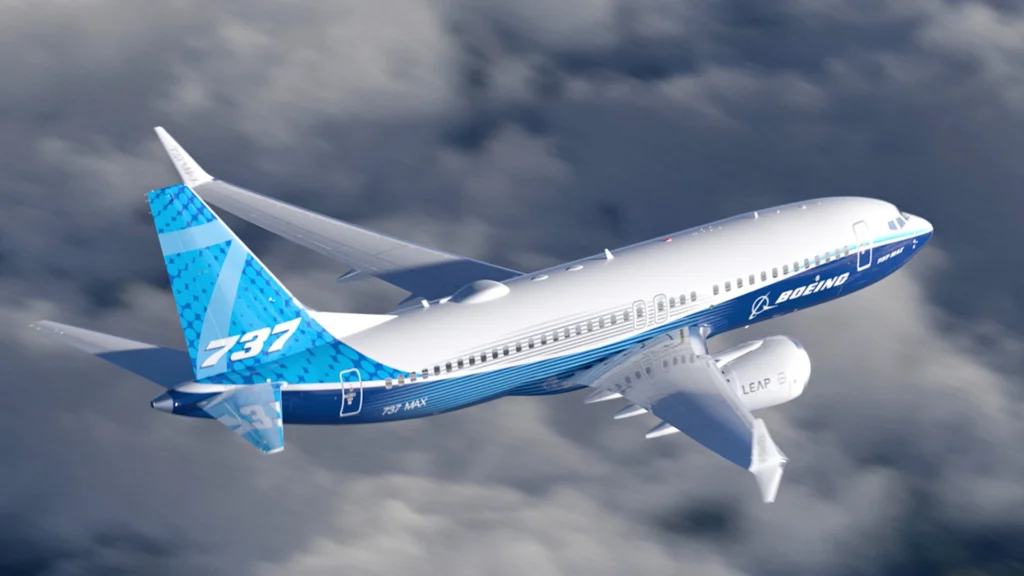
The United States Federal Aviation Administration has proposed mandatory passenger-seat inspections for certain Boeing 737 MAX aircraft after identifying installations that may not comply with approved safety requirements.
The proposal, published on July 27, 2026, would affect an estimated 453 aircraft registered in the United States. It applies to certain Boeing 737-8, 737-9 and 737-8200 aircraft equipped with track-mounted passenger seat assemblies covered by the regulatory action.
The FAA has not grounded the aircraft, and the measure is currently a proposed airworthiness directive rather than a final rule. However, affected operators would be legally required to complete the inspections and necessary corrective work if the proposal is adopted.
The development could also influence overseas aviation regulators because Boeing 737 MAX aircraft operate extensively across international airline networks.
Incorrect Seat Fittings Created Safety Concern
The proposed directive followed a report that some passenger seat assemblies were not correctly installed in their floor tracks.
According to the FAA’s technical findings, aft fitting shear plungers on certain seats may not have been lowered correctly or engaged with the seat tracks. These fittings help secure each passenger seat assembly to the aircraft floor.
An incorrectly installed seat could potentially disengage from its track when exposed to increased loads, severe turbulence or the forces involved in an emergency landing.
The FAA warned that a displaced seat could injure passengers or crew members. It could also obstruct an aisle and slow the evacuation of an aircraft during an emergency.
The issue concerns the installation of cabin components rather than the aircraft’s engines, flight controls or operating software.
Operators Would Inspect Both Seat Tracks
Under the proposal, airlines and other affected operators would be required to conduct detailed inspections of the fittings securing each relevant passenger seat assembly.
The checks would cover the fittings attached to the left and right seat tracks. Maintenance teams would verify that the seats were installed in the approved configuration and that their attachment mechanisms were correctly engaged.
Where an inspection identifies an incorrectly installed assembly, the operator would need to reinstall or correct the affected seat before completing the required compliance process.
The proposal refers operators to a Boeing special attention requirements bulletin dated December 10, 2025, which contains technical procedures for completing the work.
Aircraft records may also help operators determine which seating installations require attention. However, physical checks are central to ensuring that affected seats remain correctly secured.
Proposed Rule Is Not an Immediate Grounding
Passengers should note that the FAA action does not represent an immediate fleet-wide grounding of Boeing 737 MAX aircraft.
The agency has issued a notice of proposed rulemaking and opened a public-comment period. Comments are due by September 10, 2026, after which the FAA can review industry feedback before deciding whether to publish a final airworthiness directive.
The final rule may retain the proposal, introduce amendments or clarify compliance requirements.
Airworthiness directives become legally enforceable once they are formally adopted. They require operators to resolve identified unsafe conditions within specified operating-hour, flight-cycle or calendar deadlines.
Airlines routinely incorporate such work into scheduled maintenance programmes where permitted. This approach can reduce passenger disruption while ensuring that aircraft remain compliant.
Global Regulators Could Follow FAA Findings
Although the proposal estimates 453 affected US-registered aircraft, its wider significance extends beyond the United States.
Boeing 737 MAX jets operate with airlines across Europe, Asia, Africa, the Middle East, Australia and the Americas. International aviation regulators often review FAA directives involving aircraft designed and manufactured in the United States.
Other authorities may issue corresponding instructions for locally registered aircraft after examining the FAA’s findings and Boeing’s technical information.
This regulatory coordination is important because airlines frequently operate the same aircraft type across borders. Common inspection standards can help maintain consistent safety requirements throughout the global fleet.
However, the number of aircraft affected outside the United States will depend on individual configurations, seat installations and decisions by national regulators.
Inspections May Cause Limited Operational Impact
The proposed inspection campaign is unlikely to produce disruption comparable with a fleet grounding.
Airlines could perform many checks during overnight maintenance, planned inspections or other periods when aircraft are not scheduled to fly. Corrective work may require additional time where technicians identify improperly installed seats.
Operational effects will depend on the number of relevant seats, maintenance capacity and the compliance schedule included in any final directive.
If several aircraft require checks simultaneously, some operators may temporarily adjust aircraft assignments. Nevertheless, passengers would generally not see significant network changes unless inspections uncover wider installation problems.
Carriers remain responsible for ensuring that aircraft comply with all applicable safety rules before entering passenger service.
Boeing 737 MAX Remains Important to Airlines
The Boeing 737 MAX family remains a major part of short- and medium-haul aviation.
Airlines use the aircraft for domestic services, regional routes and selected longer international journeys. Its capacity and fuel efficiency have made it central to fleet-renewal plans and network growth strategies.
The seat inspection proposal illustrates how aviation oversight extends beyond major mechanical systems. Cabin seats, floor fittings, emergency equipment and interior components must also satisfy strict certification and maintenance standards.
For travellers, the FAA action demonstrates the preventive nature of aviation regulation. Authorities can require inspections before a reported installation problem develops into a more serious operational event.
The proposed Boeing 737 MAX seat inspections are therefore intended to protect passengers, cabin crews and emergency evacuation routes while reinforcing consistent maintenance standards across one of the world’s most widely operated aircraft families.
For more travel news like this, keep reading Global Travel Wire