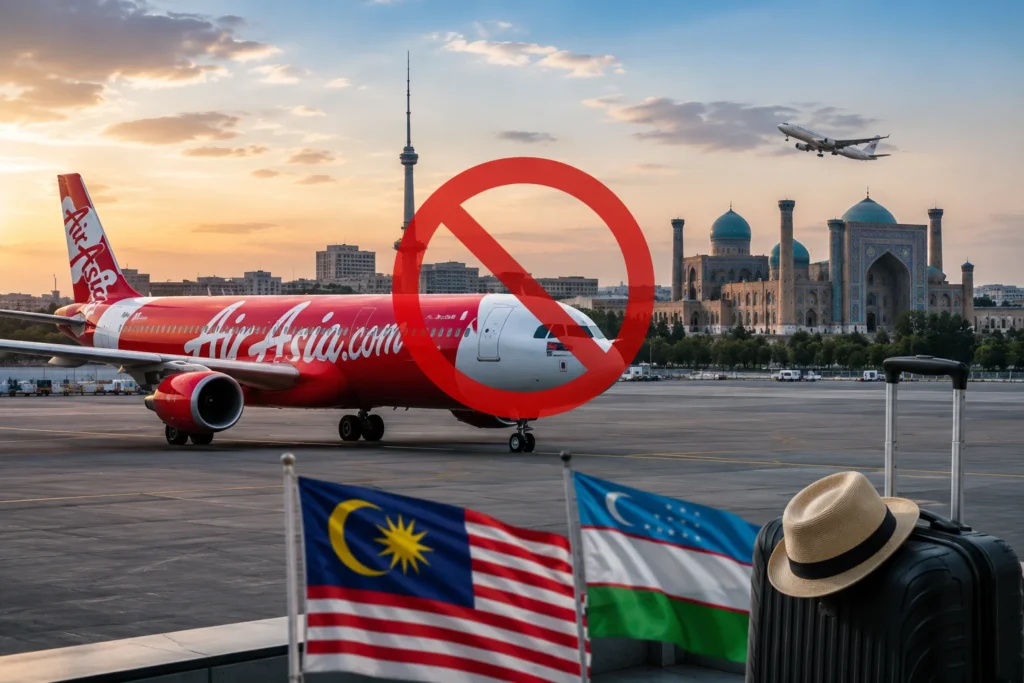
Direct air travel between Southeast Asia and Central Asia is set to undergo a major shift following official flight schedule updates. AirAsia X has formally confirmed the open-ended suspension of its direct flight service connecting Kuala Lumpur International Airport to Tashkent International Airport.
Effective September 2, 2026, the carrier will stop operating its scheduled nonstop link between Malaysia and Uzbekistan. With the route already removed from reservation platforms, travelers can no longer purchase new tickets for this service.
For international tourists, business executives, and regional transit passengers, the operational halt removes a key direct bridge between two growing economic and cultural regions.
Route Details: What Travelers Need to Know
Official carrier flight schedules confirm that all direct operations on the Kuala Lumpur–Tashkent corridor will cease from early September 2, 2026. The airline has provided no prospective restart date for the market.
Key operational changes include:
Carrier: AirAsia X
Corridor: Kuala Lumpur International Airport (KUL) to Tashkent International Airport (TAS)
Status: Suspended from September 2, 2026
Resumption Timeline: None announced
Inventory Access: Route removed from active reservation systems
Passenger Options: Direct rebooking or refund assistance for valid ticket holders
Because no direct AirAsia X flights will operate between Malaysia and Uzbekistan beyond the September cutoff date, passengers with existing travel arrangements must review their itineraries immediately.
Impact on Tourism and Business Mobility
The elimination of this direct air link affects several key travel segments across both nations:
Silk Road Leisure Tourism
Uzbekistan has experienced significant international visitor growth driven by its iconic UNESCO World Heritage sites in Samarkand, Bukhara, Khiva, and Tashkent. The nonstop connection offered a simplified itinerary for Southeast Asian tourists exploring Central Asia’s cultural heritage.
Regional Aviation Hub Connections
Kuala Lumpur International Airport serves as a major gateway for the broader Southeast Asian region. The direct service enabled smooth transit options for international travelers connecting through Malaysia to reach Uzbekistan without requiring complex multi-carrier arrangements.
Business and Trade Relations
Bilateral commercial activity between Malaysia and Central Asian markets relies heavily on efficient transit links. Corporate passengers utilizing the route face increased journey times and potential transit layovers when scheduling upcoming business travel.
Tour Operator Networks
Travel agencies and commercial tour operators featuring joint Malaysia-Uzbekistan packages will need to restructure their transportation logistics. Transitioning to multi-leg connecting flights could lead to adjusted travel schedules and higher itinerary costs.
Guidance for Passengers Holding Existing Reservations
Official airline advisories urge affected passengers to take prompt action through direct customer service channels. Ticket holders scheduled to travel on or after September 2, 2026, are advised to undertake the following steps:
Contact the Operating Carrier Immediately: Access official digital support portals, mobile applications, or customer service helplines to verify reservation status.
Review Refund and Rerouting Eligibility: Request clarification regarding full ticket refunds, flight credits, or alternative routing arrangements based on original booking terms.
Confirm Alternative Travel Routes: Research alternative multi-stop flights operated by regional carriers servicing Central Asia and Southeast Asia.
Verify Transit Requirements: When selecting connecting itineraries through third-country hubs, travelers should review layover regulations, visa-free transit limits, and baggage policies.
Monitor Official Channels: Passengers are encouraged to rely exclusively on direct announcements from official aviation authorities and carrier portals for current flight information.
Strategic Importance of Air Connectivity Between Malaysia and Uzbekistan
Direct international flights play an important role in driving bilateral tourism, trade, and cultural exchange. Nonstop services provide convenience that encourages leisure travel, particularly among holidaymakers who prioritize minimal transit times.
Uzbekistan’s ongoing initiatives to expand its international tourism footprint rely heavily on international airlift capacity. The direct service from Kuala Lumpur supported inbound visitor traffic while simultaneously promoting outbound tourism from Central Asia into Malaysia’s hospitality and healthcare sectors.
Airline route adjustments across the global aviation industry frequently reflect broader operational planning, fleet deployment strategies, and international market conditions. While network evaluations remain an ongoing part of commercial aviation management, the loss of direct connectivity presents short-term logistical challenges for travelers navigating the corridor.
Without a direct replacement announced, passengers moving between Malaysia and Uzbekistan after September 2, 2026, will need to rely on multi-segment itineraries via established regional transit hubs. Travelers should allow extra transit buffer time and verify all entry and transit documentation prior to departure.
For more travel news like this, keep reading Global Travel Wire