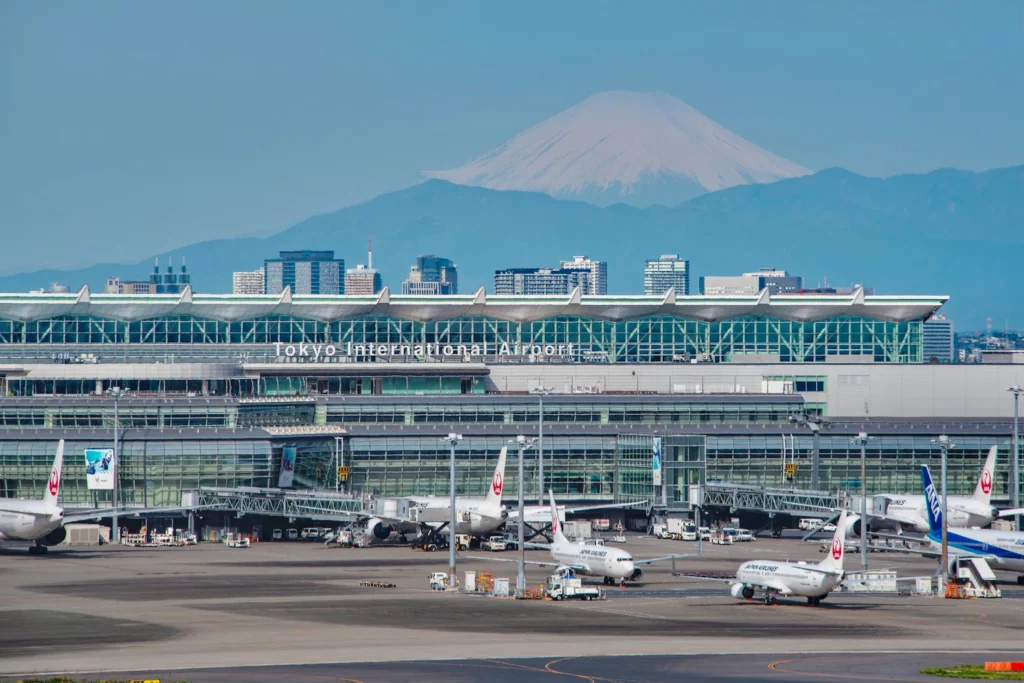
Japan is preparing a major railway upgrade designed to create a more direct connection between Narita International Airport and Tokyo Haneda Airport, potentially transforming transfers between the capital region’s two principal aviation gateways.
The planned Limited Express service will combine new infrastructure with existing railway corridors to simplify journeys for international visitors, domestic passengers and business travellers. Current transfers can take around 90 minutes and may involve connecting trains, airport buses or road journeys affected by traffic conditions.
Under the proposed phased development, an enhanced Limited Express service is expected to connect Narita Airport with Oshiage Station in Tokyo’s Sumida Ward from 2028. During the 2030s, trains are planned to continue towards Haneda Airport through the Toei Asakusa and Keikyu railway networks.
Once completed, the service could create a more integrated airport system while strengthening Tokyo’s position as a globally competitive tourism and aviation hub.
Faster Airport Transfers for International Visitors
Narita and Haneda perform different but complementary roles within Japan’s aviation network. Narita remains an important gateway for international services, while Haneda handles an extensive domestic network alongside a growing portfolio of international routes.
Passengers arriving at Narita before transferring to domestic flights from Haneda must currently allow substantial time between services. Travellers unfamiliar with Tokyo’s transport system can also face challenges when navigating connections with luggage or managing tight schedules.
A direct or more seamless Limited Express operation would reduce this complexity. Passengers could remain on one connected railway service instead of changing between several transport modes, making the journey easier to understand and potentially more reliable.
The improvement would be particularly valuable for first-time visitors, families, older travellers and passengers carrying large amounts of baggage. Greater predictability could also help airlines and travel companies develop more practical itineraries involving flights from both airports.
Railway Infrastructure Upgrades Support New Service
Delivering the Narita–Haneda airport rail link will require substantial upgrades across the existing network.
Keisei Electric Railway is expected to lead the initial phase by improving services between Narita Airport and Oshiage. Additional elevated tracks and expanded facilities are planned around the Narita Sky Access Line to accommodate more Limited Express operations.
Sections of the wider railway network currently operating with limited track capacity are also expected to receive improvements. Adding tracks would allow trains to move in both directions more efficiently, reduce operational bottlenecks and support higher service frequencies.
The future extension towards Haneda is expected to use the Toei Asakusa Line and Keikyu Line, both of which already form important parts of Tokyo’s metropolitan rail system.
Integrating the airport service with existing corridors should allow Japan to improve connectivity without constructing an entirely separate railway. However, coordinated infrastructure, signalling, timetabling and station upgrades will be necessary to maintain reliability across the interconnected networks.
Express Train Capacity Could Nearly Double
The infrastructure programme is expected to increase the number of Limited Express trains that can operate each hour, with capacity potentially rising to nearly twice the current level.
More frequent departures would give passengers greater flexibility and reduce waiting times, especially during peak tourism seasons and busy airport operating periods.
Additional rail capacity could also ease pressure on airport buses and roads between Chiba Prefecture and central Tokyo. Moving more airport passengers by train would support Japan’s wider emphasis on efficient public transport while reducing exposure to road congestion.
Frequency will be essential to the project’s success. International passengers often arrive at irregular times, and a direct service becomes significantly more useful when travellers do not need to wait long between departures.
The project could also strengthen connections between Narita Airport and eastern Tokyo, including the Oshiage area, which provides access to major visitor districts and attractions.
Tourism Growth Increases Demand for Better Connectivity
The rail development comes as Japan experiences strong international visitor demand. Official Japan National Tourism Organization figures recorded 3.56 million visitor arrivals in May 2026, following more than 3.69 million in April.
Increasing arrivals are placing greater importance on airport accessibility, passenger capacity and straightforward onward transport. Visitors expect to move efficiently from airports to hotels, attractions, business districts and domestic destinations.
An improved airport-to-airport connection could encourage travellers to combine Tokyo with Kyoto, Osaka, Sapporo, Fukuoka and other destinations served extensively from Haneda.
Hotels, tour operators and local businesses may also benefit when visitors can build more flexible multi-city itineraries. Easier transfers can reduce uncertainty at the beginning or end of a journey, supporting a more positive overall visitor experience.
Tokyo Moves Towards an Integrated Aviation Future
The Narita–Haneda express project forms part of a broader modernisation of airport access around Tokyo. Separate developments, including JR East’s Haneda Airport Access Line, are also expected to improve rail connections between Haneda and central Tokyo during the next decade.
Together, these investments could create a more connected metropolitan transport system linking airports, commercial districts and tourism centres.
The Narita–Haneda service remains a phased, long-term infrastructure project, meaning passengers will not receive the complete airport-to-airport connection immediately. Nevertheless, the planned 2028 service improvements and later extension towards Haneda establish a clear direction.
By combining higher train frequency, upgraded tracks and direct railway operations, Japan is laying the foundation for a faster and more passenger-friendly airport transfer experience. The project could ultimately turn Narita and Haneda from two separately accessed airports into a more unified gateway supporting Tokyo tourism and nationwide travel.
For more travel news like this, keep reading Global Travel Wire