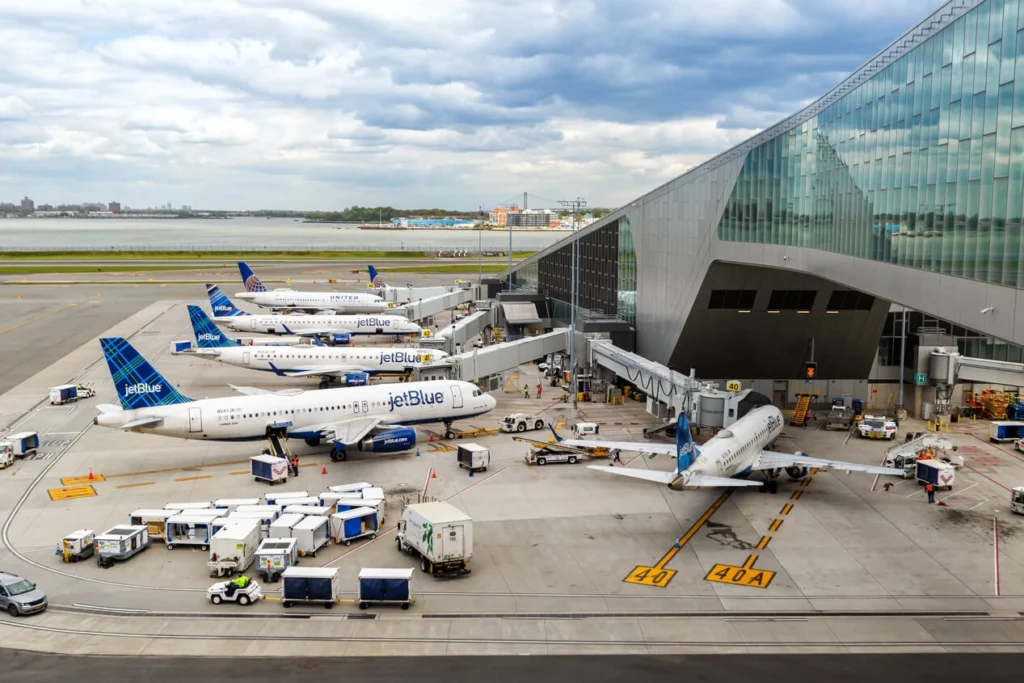
New York City’s LaGuardia Airport plunged into severe operational turmoil after a sinkhole forced the emergency closure of a major runway while powerful thunderstorms swept across the region, triggering widespread flight cancellations and delays during one of the busiest travel periods of the year. More than 400 flights were cancelled and hundreds more delayed as the disruptions rippled through the entire New York metropolitan aviation network.
The dual crisis struck during the peak Memorial Day travel rush, intensifying congestion for airlines, passengers, and airport authorities already managing heavy seasonal demand. Travelers using LaGuardia, John F. Kennedy International Airport, and Newark Liberty International Airport were advised to closely monitor flight schedules, prepare for extended delays, and allow additional time for ground transportation and terminal processing.
Authorities confirmed that emergency engineering crews immediately responded after a sinkhole was discovered during a routine runway inspection at LaGuardia Airport.
Sinkhole Forces Emergency Runway Closure
The Port Authority of New York and New Jersey reported that the sinkhole was identified around 11:00 a.m. EST on Runway 4/22, prompting an immediate shutdown of the runway for all arrivals and departures. Emergency maintenance teams worked overnight to assess damage and stabilize the affected area.
With Runway 4/22 closed, airport operations were reduced to a single active runway, dramatically limiting aircraft movement capacity at LaGuardia during one of the heaviest domestic travel periods in the United States.
The operational bottleneck quickly led to cascading delays throughout the airport system as airlines struggled to manage schedules, aircraft positioning, gate assignments, and passenger connections.
Aviation analysts noted that infrastructure-related disruptions at capacity-constrained airports such as LaGuardia can rapidly spread across national flight networks, especially during holiday travel periods when schedules operate near maximum capacity.
Severe Storms Intensify Flight Disruptions
The situation worsened as intense thunderstorms moved across New York City and the surrounding region, creating additional operational restrictions for airlines and air traffic controllers. Severe weather conditions reduced visibility, slowed aircraft movement, and disrupted arrival and departure sequencing.
Flight tracking data showed more than 250 additional cancellations and over 320 delays as airlines attempted to dynamically adjust schedules amid unsafe flying conditions and reduced runway availability.
Carriers were forced to reposition aircraft, delay crew rotations, and reroute incoming flights, creating widespread logistical complications throughout the Northeast air corridor.
The Federal Aviation Administration also implemented capacity management measures affecting multiple airports in the region to maintain safety during the weather disruptions.
Delta, American and JetBlue Face Heavy Impact
Delta Air Lines experienced the largest operational impact at LaGuardia, with more than 90 flights cancelled and hundreds more delayed during the crisis. American Airlines and JetBlue Airways also reported significant disruptions as the runway closure and storms affected schedules throughout the day.
Southwest Airlines saw comparatively lighter disruption levels, with only limited delays reported.
Passengers encountered long terminal wait times, overcrowded gate areas, baggage delays, and difficulty securing rebooked flights as customer service systems came under pressure during the peak travel rush.
Travel industry experts warned that recovery operations could continue for several days due to aircraft displacement and crew scheduling challenges across multiple airline networks.
Ground Transportation Problems Compound Delays
Air travel complications were further intensified by major ground transportation disruptions around New York City. A brush fire near Amtrak rail infrastructure and along sections of the New Jersey Turnpike created additional congestion for passengers attempting to reach airports or connect between transit systems.
Regional rail passengers experienced delays and limited service availability, while road congestion significantly increased travel times for airport transfers and rideshare services.
The combination of air and ground transportation disruptions highlighted the interconnected vulnerability of the New York metropolitan travel system during emergency situations.
Tourism and hospitality businesses across the region also faced operational strain as delayed travelers extended hotel stays, altered itineraries, and sought alternative transportation arrangements.
Disruptions Spread Across JFK and Newark
The operational crisis extended beyond LaGuardia and affected the entire New York regional airspace.
John F. Kennedy International Airport recorded more than 180 delays and over 60 cancellations as incoming traffic management restrictions slowed operations throughout the day. Newark Liberty International Airport also reduced hourly flight capacity from 77 flights to 56 due to ongoing air traffic controller shortages.
Officials indicated that some Newark restrictions could remain in place for several weeks, potentially prolonging disruption risks across the Northeast aviation corridor.
International and domestic passengers connecting through New York airports may continue experiencing schedule instability, particularly during peak summer travel demand.
Travelers Urged to Remain Flexible
Authorities and airlines are strongly advising travelers to continuously monitor airline alerts, mobile applications, and airport updates before departing for terminals. Flexible travel planning remains essential as recovery operations continue across the region.
Passengers are also encouraged to consider alternative airports, adjust connection times, and prepare for extended processing and baggage handling delays.
The LaGuardia crisis underscores how sudden infrastructure failures and severe weather can rapidly disrupt major aviation hubs, especially during peak travel periods. As emergency repairs and operational recovery efforts continue, travelers throughout the New York region should remain prepared for ongoing delays, schedule changes, and transportation challenges.
For more travel news like this, keep reading Global Travel Wire