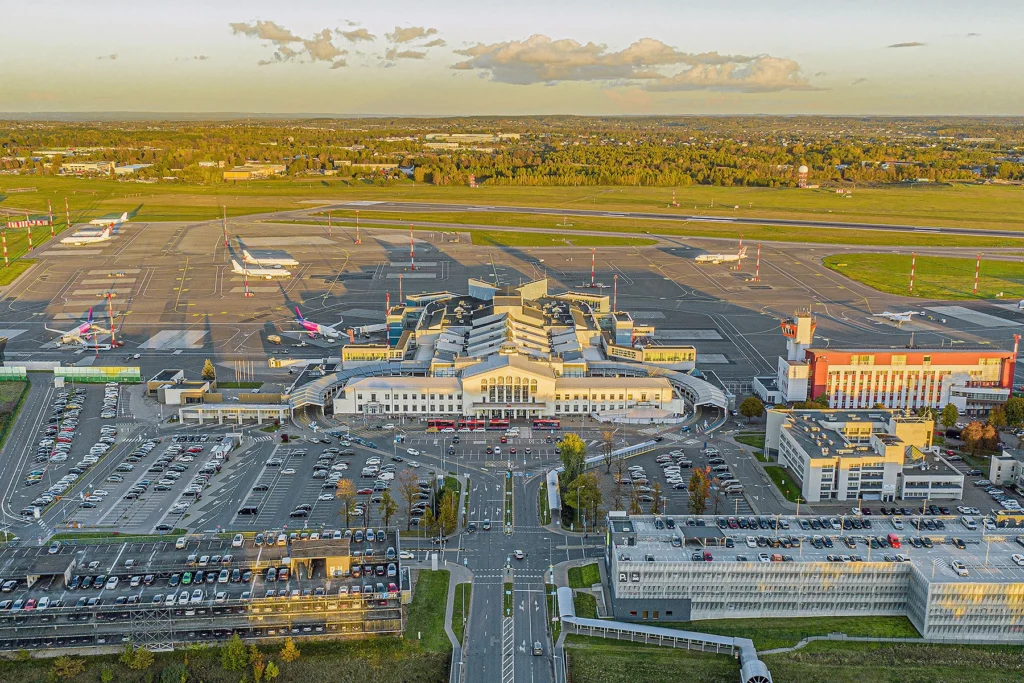
Lithuania’s airport network reached a new passenger record in June 2026 as growing travel demand strengthened the country’s links with the United Kingdom, Poland and other major European markets.
Vilnius, Kaunas and Palanga airports collectively handled almost 742,000 passengers during June. The achievement made it the busiest month recorded across the Lithuanian Airports network.
Official transport statistics placed the total number of arriving and departing passengers at approximately 740,100. Lithuanian Airports reported 741,800 travellers using its facilities, reflecting differences between aviation reporting methods.
Passenger traffic increased by 11.2% compared with June 2025. The result also continued an exceptional start to the year, with every month during the first half of 2026 producing a new record for the airport network.
Vilnius leads record passenger performance
Vilnius Airport recorded the strongest growth during June. More than 547,000 passengers travelled through the capital’s main gateway, representing a year-on-year increase of 13.1%.
Kaunas Airport handled almost 156,000 passengers, with traffic rising by 6.4%. Palanga Airport served nearly 39,000 travellers, an increase of 4.8% from the same month in 2025.
The combined performance demonstrates that passenger demand is expanding across the country rather than concentrating entirely in Vilnius.
Lithuanian Airports also handled nearly 5,800 flights during June. This represented a 9.4% increase compared with the previous year. More than 4,200 of those services operated through Vilnius Airport.
The growth followed Lithuania’s record-breaking aviation performance in 2025, when its three airports collectively served almost 7.16 million passengers.
Scheduled services support aviation growth
Scheduled flights remained the main foundation of Lithuania airport passenger traffic during the 12 months ending in June 2026.
Scheduled passenger numbers increased from approximately 437,900 in February to 637,700 in June. The recovery reflected stronger spring demand followed by the beginning of Europe’s peak summer travel season.
Regular services provide essential connections for inbound tourism, outbound holidays, visiting friends and relatives, and corporate mobility. They also support airlines by creating predictable demand throughout the year.
Non-scheduled flights made an additional contribution. Charter passenger volumes increased from around 30,400 in February to more than 102,000 in June.
These seasonal operations are particularly important for package holidays and leisure travel. Their recovery during May and June showed renewed demand for organised summer tourism.
United Kingdom remains an important market
The United Kingdom continues to play an important role in Lithuania’s international tourism economy.
Around 16,000 visitors from the UK stayed in Lithuanian accommodation establishments during the first quarter of 2026. Britain was therefore among the country’s leading international visitor markets.
Travel between the two countries benefits from long-standing cultural, business and community connections. A sizeable Lithuanian population in Britain also supports consistent demand for journeys involving friends and relatives.
However, the relationship extends beyond diaspora travel. British visitors contribute to city breaks, heritage tourism, cultural attractions, restaurants and hotel demand.
Direct air connections make destinations such as Vilnius and Kaunas accessible for shorter European holidays. Reliable services also support business meetings and professional travel between the two markets.
Poland strengthens regional visitor demand
Poland was another leading source of international visitors during early 2026.
Approximately 28,000 Polish tourists stayed in Lithuania during the first quarter. This placed Poland alongside Germany as one of Lithuania’s largest inbound markets after neighbouring Latvia.
Geographical proximity encourages frequent journeys for weekends, cultural visits and regional touring. Shared history and close economic relationships also support business and educational travel.
Road and rail connections remain important, while air services strengthen access for passengers travelling between major cities or connecting through Lithuania’s airport network.
Polish visitors can easily combine Lithuania with wider Baltic itineraries. This supports multi-destination tourism and strengthens cooperation between Central and Northern European travel markets.
International tourism records strong growth
Lithuanian accommodation providers welcomed approximately 935,000 guests during the first quarter of 2026. This represented growth of 19% compared with the same period in 2025.
International visitor numbers increased by 23% to around 258,000. Domestic tourism also expanded by 17%, reaching approximately 677,000 travellers.
Vilnius attracted the largest number of international visitors, welcoming around 146,000 foreign guests. Kaunas followed with approximately 51,000, while Klaipėda and Druskininkai also benefited from overseas demand.
These figures demonstrate how improving aviation access can support tourism beyond airport terminals.
International passengers create demand for accommodation, restaurants, attractions, local transportation and guided experiences. Regional airports can also distribute visitors more widely by providing direct access to coastal and secondary destinations.
Airport expansion supports tourism resilience
Lithuania’s aviation growth creates opportunities for airlines to increase frequencies, introduce new routes and extend seasonal services.
Higher passenger volumes can also encourage investment in terminals, security systems and traveller facilities. Vilnius and Kaunas airports have already introduced modern screening technology intended to make passenger journeys more convenient.
Continued growth will require airports and tourism businesses to manage capacity while maintaining service quality. Strong scheduled connectivity must also be balanced with charter operations serving seasonal leisure markets.
Lithuania’s record June performance confirms the country’s expanding position within European aviation. With strong demand from Poland, the United Kingdom and other major markets, its airports are helping the tourism industry reach more international visitors while supporting regional mobility, hospitality growth and year-round economic activity.
For more travel news like this, keep reading Global Travel Wire