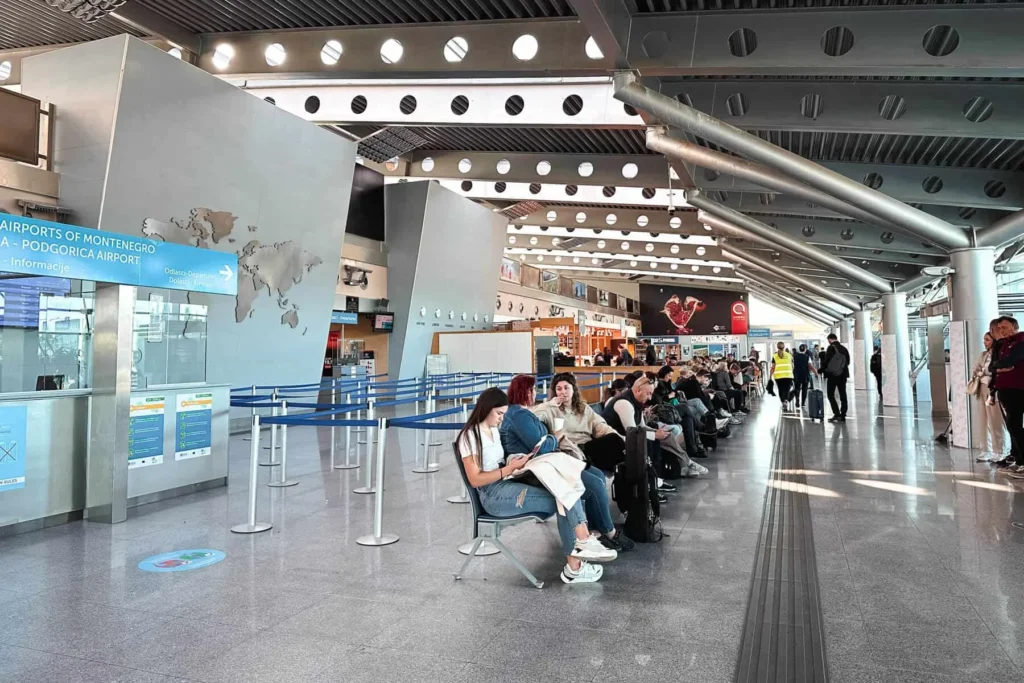
Montenegro’s two international airports have jointly welcomed more than three million passengers during 2026, marking a major aviation milestone.
Podgorica Airport and Tivat Airport crossed the threshold on September 18. They achieved the result almost two and a half months earlier than in 2025.
The milestone demonstrates a faster pace of passenger growth across Montenegro’s principal international gateways. It also signals rising travel demand for the increasingly popular Balkan destination.
Air connectivity remains essential for international visitors travelling to Montenegro’s cities, mountain landscapes and Adriatic resorts. Therefore, stronger airport traffic could benefit hotels, restaurants, attractions and local transport providers throughout the country.
The opening of Wizz Air’s Podgorica operating base during spring 2026 supported the increase. Additional airline capacity and route development have created more opportunities for international and domestic travellers.
However, rising traffic is also increasing pressure on airport infrastructure. Airports of Montenegro CEO Roko Tolić has highlighted the urgency of planned improvements at both gateways.
Podgorica and Tivat Reach Milestone Early
Montenegro’s airports reached three million combined passengers in December 2025. Crossing the same threshold by September 18 this year represents a significant acceleration.
The available figures cover the combined performance of Podgorica and Tivat airports. They do not provide separate passenger totals for each gateway.
Nevertheless, both airports play distinct roles within Montenegro’s tourism and aviation network.
Podgorica Airport provides access to the national capital and inland destinations. It also supports business travel, family visits and connections across the wider country.
Meanwhile, Tivat Airport serves as a vital gateway to Montenegro’s Adriatic coastline. It provides convenient access to the Bay of Kotor and nearby coastal resorts.
Together, the airports connect visitors with different parts of the country. Their combined growth could help Montenegro distribute tourism activity across urban, coastal and inland destinations.
The milestone follows the busy spring and summer travel periods. These seasons traditionally attract stronger visitor activity and greater demand for flights to Montenegro.
Wizz Air Base Strengthens Connectivity
Wizz Air’s new operating base at Podgorica Airport has emerged as a major reported driver of passenger growth.
An airline base can support more frequent operations, improved aircraft deployment and stronger route development. It may also provide travellers with greater flexibility when planning regional and international journeys.
Expanded capacity from Podgorica could improve Montenegro’s links with European markets. It also creates more outbound options for residents and supports business connectivity.
The available information does not identify the individual routes generating the largest increases. It also does not separate the exact passenger contribution from Wizz Air’s operations.
Even so, the base represents an important development for Montenegro’s aviation market. Greater airline activity can increase destination visibility and make the country easier to reach.
This accessibility matters for accommodation providers, tour operators, restaurants and visitor attractions. These businesses depend on reliable transport links to attract international customers.
However, the final economic impact will depend on visitor spending, travel duration and seasonal distribution. Encouraging travellers to explore beyond established coastal destinations could spread those benefits more widely.
Airport Upgrades Gain Greater Urgency
Rapid passenger growth is increasing the importance of infrastructure investment at Podgorica and Tivat airports.
Tolić has connected the milestone with the need to advance planned upgrades at both locations. Growing traffic requires facilities capable of processing passengers safely and efficiently.
Airport improvements can cover terminal space, security, baggage handling and passenger processing. They can also include airside infrastructure and services supporting aircraft operations.
The announcement does not specify which projects will receive priority. It also provides no confirmed investment values or completion schedules.
However, the demand for additional capacity could become particularly visible during peak travel periods. Limited terminal space and processing constraints may affect comfort when many flights operate within short periods.
Well-planned improvements could create smoother arrivals and departures. They could also strengthen the first impression that international visitors receive when entering Montenegro.
Airport development therefore has consequences beyond aviation. Efficient facilities can support destination competitiveness and improve the overall visitor journey.
Tourism Businesses Could Benefit From Demand
Montenegro’s rising passenger total creates potential opportunities across its tourism economy.
Visitors arriving through Tivat can reach established coastal centres and the Bay of Kotor. Those using Podgorica can explore the capital, inland attractions and wider regional destinations.
Higher passenger volumes may increase demand for hotels, holiday rentals, restaurants, transfers and guided experiences. Local retailers and cultural attractions could also benefit from additional visitor spending.
However, passenger numbers alone do not reveal changes in hotel occupancy, tourism receipts or average stays. Further official statistics would provide a clearer measure of the economic impact.
Sustaining growth outside the main summer period will also remain important. Better year-round connectivity could support city breaks, cultural tourism, nature travel and business visits.
This would reduce pressure on peak months while giving tourism businesses more stable demand throughout the year.
Montenegro Aviation Enters New Growth Phase
Reaching three million passengers before the end of September places Montenegro’s aviation sector firmly on a faster growth path.
The milestone shows that Podgorica and Tivat airports are handling stronger combined demand than during the previous year. Wizz Air’s Podgorica base has added momentum by supporting expanded capacity and connectivity.
The next challenge involves matching passenger growth with suitable facilities, reliable services and effective destination management.
Planned airport improvements could help Montenegro protect travel quality while accommodating further expansion. Their impact will depend on project scale, funding and timely delivery.
For travellers, additional airline services may create more route choices and convenient access to Montenegro. Passengers should still review flight schedules and airport guidance before departure.
Montenegro’s 2026 milestone ultimately reflects both aviation growth and rising destination appeal. Sustained investment could turn that momentum into wider, longer-term benefits for tourism communities across the country.
For more travel news like this, keep reading Global Travel Wire