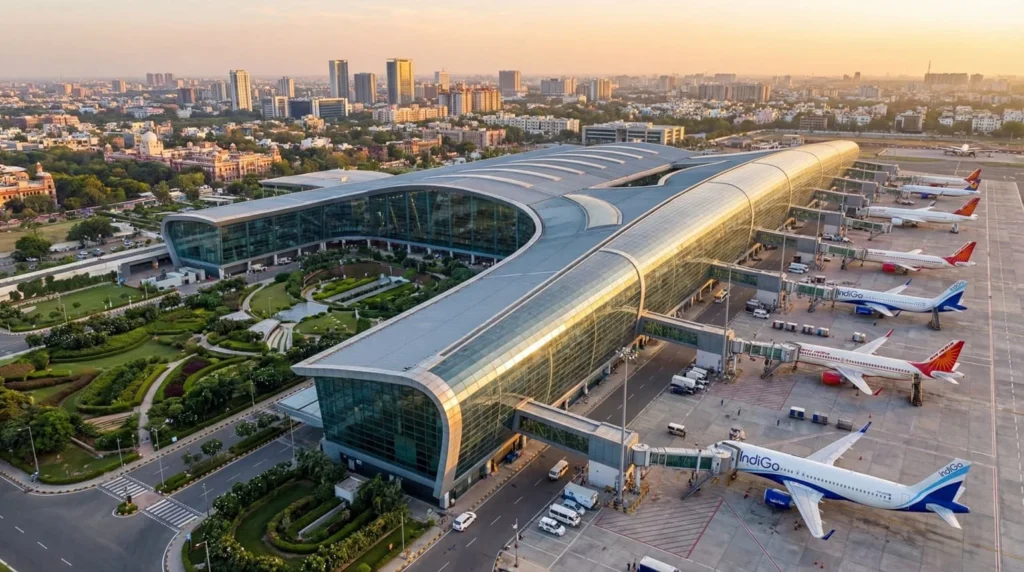
Navi Mumbai International Airport handled more than 27,000 passengers and 212 aircraft movements on 19 November 2026, recording its busiest operational day. Scheduled passenger services accounted for 173 movements, with cargo and general aviation contributing the remaining 39.
IndiGo led passenger flight activity, followed by Akasa Air, Air India Express and FLY91. The milestone comes as the airport develops its domestic network and prepares for future international services, expanding its role within the Mumbai Metropolitan Region’s aviation system.
Passenger Flights Make Up Most Daily Activity
The airport recorded 87 scheduled passenger arrivals and 86 departures during the day. Together, they represented approximately 81.6% of all aircraft movements.
An aircraft movement counts one arrival or departure. The total of 212 therefore measures flight operations across the day.
Cargo services contributed ten arrivals and ten departures. General aviation added eight arrivals and 11 departures, bringing the airport’s overall total to 105 arrivals and 107 departures.
This distribution shows the range of activity managed alongside regular passenger services.
IndiGo Accounts for Seven in Ten Passenger Movements
IndiGo operated 122 scheduled passenger movements, divided equally between 61 arrivals and 61 departures. Its share represented approximately 70.5% of the airport’s scheduled passenger activity that day.
Akasa Air followed with 35 movements, comprising 18 arrivals and 17 departures. Air India Express recorded five arrivals and five departures, while FLY91 operated three of each.
The four airlines together accounted for all 173 scheduled passenger movements reported.
These figures describe operational activity on one day. They provide no breakdown of passenger numbers, seat capacity or revenue by airline, so movement shares should be interpreted within that scope.
Passenger Milestone Puts Terminal Services in Focus
The passenger total exceeded 27,000, setting a daily record alongside the airport’s highest aircraft movement count.
Handling that volume requires coordination across check-in, security screening, baggage processing and boarding. Arriving passengers also depend on baggage delivery and onward transport to complete their journeys.
For travellers, the airport’s developing network creates another option within the metropolitan region. The practical value of that choice depends on available routes, departure times and access from their starting point.
The announcement provides no comparison with the previous daily record or a longer-term passenger growth rate.
Cargo and General Aviation Add to the Total
Cargo and general aviation accounted for approximately 18.4% of the day’s aircraft movements.
Their presence adds operational requirements beyond scheduled passenger handling. Aircraft parking, ground services and airfield access must accommodate different types of flights within the same airport environment.
Cargo activity supports goods moving through the aviation network. General aviation covers operations outside regular scheduled airline services.
The reported movement figures establish the scale of those activities on 19 November. Cargo tonnage and further details about general aviation operations were absent from the supplied announcement.
Domestic Connectivity Shapes the Airport’s Early Role
Domestic services remain central to Navi Mumbai International Airport’s developing passenger operation.
The participation of four scheduled airlines gives the airport a growing operating base. Future services will depend on airline decisions, demand and the arrangements required to support each route.
For visitors travelling to the Mumbai region, airport selection will also affect the ground journey. Accommodation location, meeting venues and onward connections can all influence which departure or arrival option works best.
Travel agents and corporate planners will need to assess those details alongside ticket prices when comparing itineraries.
International Services Remain a Future Milestone
The airport is preparing for international operations as part of its wider development. Such services would require coordinated passenger facilities, border processing, customs and airline arrangements.
The latest traffic announcement provides no confirmed start date for international passenger flights or a list of committed routes.
Travellers planning overseas journeys should therefore use published airline schedules when arranging bookings. Future announcements will establish which destinations become available and when services begin.
For tourism businesses, those confirmed connections will determine how the airport can support international packages and visitor arrivals.
Longer-Term Performance Will Show the Wider Impact
The Navi Mumbai Airport traffic record demonstrates the volume handled during a single operating day. Assessing sustained performance will require passenger trends, punctuality information and further network developments over time.
The airport credited operational teams, authorities, airlines and other stakeholders for coordinating the activity.
As services develop, that cooperation will remain relevant to managing busy periods and maintaining consistent passenger processing.
For now, the 19 November figures mark a measurable step in the airport’s progress. More than 27,000 passengers used its facilities while scheduled flights, cargo and general aviation shared the airfield throughout its busiest day.
For more travel news like this, keep reading Global Travel Wire