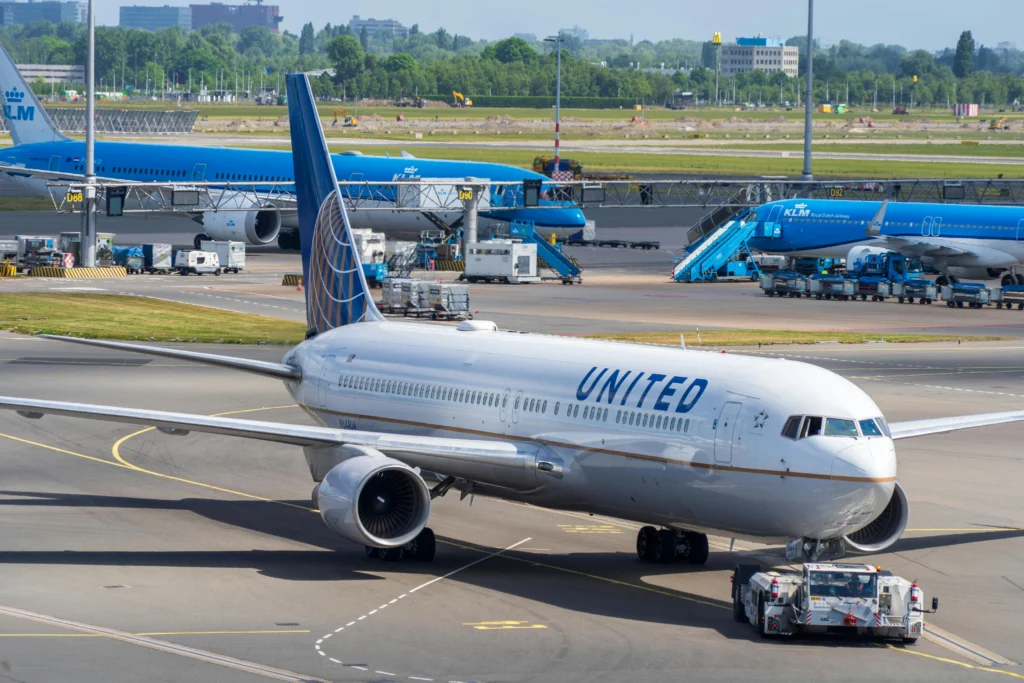
A newly delivered United Airlines Boeing 787 Dreamliner operating an international service was forced to return to Singapore shortly after departure following reports of an unusual electrical smell inside the cabin. The precautionary diversion has drawn attention across the aviation and tourism sectors, especially as the aircraft had recently entered commercial service with upgraded premium cabins designed for long-haul travelers.
The incident involved a Boeing 787-9 Dreamliner, one of the most advanced widebody aircraft used for global tourism and business travel. United Airlines confirmed that the affected flight was canceled due to a maintenance issue after the aircraft landed safely and underwent engineering inspections.
For travelers, the event highlights the aviation industry’s strong safety systems, where even minor onboard concerns are treated seriously to protect passengers and crew.
Aircraft Had Recently Entered Service
The aircraft had joined United Airlines’ fleet earlier this year after delivery from Boeing and final preparation checks. It was one of the first planes to feature the airline’s latest onboard product enhancements, including upgraded premium seating and redesigned long-haul cabins.
The aircraft had initially been used on domestic routes as part of standard operational familiarization before being assigned to major international services. This is common industry practice, allowing airlines to monitor aircraft performance, train crews, and complete service refinements before long-haul deployment.
The flight from Singapore to San Francisco was part of that international rollout when the issue occurred.
What Happened During the Flight
According to airline operational updates, the aircraft departed Singapore as scheduled but later returned after crew detected an electrical odor in the cabin. In commercial aviation, unusual smells linked to electrical systems are handled with immediate caution because they can indicate overheating components, ventilation issues, or other technical concerns requiring inspection.
The pilots requested a return to Singapore, where airport and airline teams were prepared for the aircraft’s arrival. The aircraft landed safely, and passengers were assisted following the cancellation of the onward service.
No injuries were reported, and the diversion was completed as a precautionary safety measure.
Why Safety Diversions Matter in Tourism
Emergency diversions can appear alarming, but in modern aviation they are a sign that safety procedures are working exactly as intended. Airlines and regulators require crews to act quickly whenever there is uncertainty involving aircraft systems, smoke, unusual smells, or technical warnings.
For the tourism industry, this approach helps maintain confidence in air travel. Millions of passengers fly daily across international networks, and precautionary returns are part of a system designed to minimize risk.
Travelers often see diversions as disruptions, but they are also evidence that airlines prioritize safety over schedules, costs, or operational convenience.
Impact on Travelers and Schedules
The cancellation affected passengers booked on the long-haul route between Singapore and San Francisco, an important connection for tourism, business travel, and transit passengers. When a long-haul service is canceled, airlines typically activate customer support measures such as rebooking, hotel accommodation where required, and alternate routing.
Because long-distance aircraft rotations are tightly planned, one technical issue can also affect later flights if the aircraft is temporarily removed from service. That is why airlines maintain backup planning, spare aircraft options, and engineering support at key international hubs.
Travelers booked on nearby dates are usually advised to monitor flight status updates and contact the airline if rebooking assistance is needed.
Boeing 787 Dreamliner’s Role in Global Tourism
The Boeing 787 Dreamliner has become one of the most important aircraft types in international tourism. Known for fuel efficiency, quieter cabins, improved humidity levels, and long-range capability, it allows airlines to connect cities directly without relying only on major hubs.
This has supported tourism growth by opening nonstop routes between destinations that previously required connections. Cities in Asia, Europe, North America, the Middle East, and Oceania have all benefited from expanded long-haul connectivity using the Dreamliner.
For passengers, the aircraft is popular because of larger windows, lower cabin altitude pressure, and a generally more comfortable long-haul experience.
New Premium Travel Competition
The diverted aircraft also represented part of United Airlines’ broader strategy to strengthen its premium travel offering. Global airlines are increasingly investing in upgraded business class suites, premium economy cabins, and enhanced onboard services to attract higher-yield leisure travelers and corporate customers.
Premium tourism has grown strongly in recent years, with many travelers willing to spend more for privacy, comfort, lounge access, and better sleep on long journeys. New-generation cabins are central to airline competition on high-demand international routes.
Although the diversion delayed the rollout of this aircraft, such incidents are unlikely to alter the wider trend toward premium-focused long-haul travel investment.
Maintenance Checks and Ferry Flights Explained
Following the cancellation, the aircraft later departed on a non-passenger repositioning service back to the airline’s base. These flights, often called ferry flights, are commonly used when an aircraft needs maintenance, specialist inspections, or technical support at another location.
Operating without passengers gives engineers and operations teams greater flexibility while reducing inconvenience to travelers. It also allows the airline to return the aircraft to a main maintenance center where specialist teams and spare parts may be more readily available.
Passengers should note that ferry flights are a routine part of airline fleet management and do not automatically indicate a major defect.
What Travelers Should Know
For tourists planning international trips, the key takeaway is that diversions remain rare and are handled under strict global aviation standards. Airlines train crews extensively for abnormal situations, while airports coordinate emergency readiness, passenger care, and aircraft recovery processes.
If a disruption occurs, travelers can reduce stress by:
- Keeping airline app notifications active
- Carrying essential items in hand luggage
- Maintaining flexible onward plans when possible
- Checking travel insurance coverage
- Monitoring official airline updates during delays
Prepared travelers often recover more easily from schedule changes.
Outlook for International Travel
Despite occasional technical disruptions, demand for long-haul travel remains strong. Airlines continue investing in new aircraft, premium cabins, and expanded route networks to meet growing tourism demand worldwide.
The safe return of the United Airlines Boeing 787 Dreamliner to Singapore demonstrates how aviation systems are built to respond quickly when issues arise. While the incident caused inconvenience, it also reinforced a message travelers value most: passenger safety remains the highest priority in global tourism.